
As of June 2026, buying an apartment in Paris means planning around €9,900 per m², or about $1,070 per sq ft, before buyer costs, financing costs and building charges.
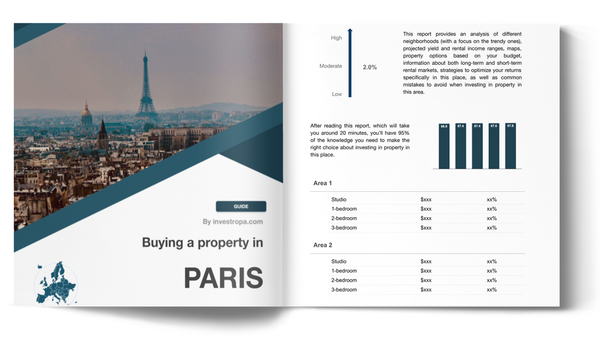
We constantly update this blog post so the Paris apartment prices, mortgage assumptions and buyer costs stay useful for readers looking at the Paris property market in 2026.
Paris is not a cheap apartment market, but the 2026 market is easier to read than the overheated 2020 to 2021 market.
The key point for a foreign buyer is simple: the purchase price is only the starting number, not the real all-in budget.
And if you’re planning to buy here, read what went wrong for other property buyers in Paris before you commit.
Insights
- Paris apartment prices in June 2026 are no longer falling sharply, but the citywide market looks more stable than booming, with normal apartments around €9,700 to €10,500 per m².
- A €600,000 resale apartment in Paris usually needs about €645,000 all-in before moving costs, because buyer acquisition costs often add around 7% to 8%.
- Small apartments in Paris are more expensive per m² than larger flats, so a studio can look affordable in total price but expensive for every square meter bought.
- The cheapest Paris neighborhoods are not always the best value, because street quality, metro access and resale liquidity matter more than a low €/m² number alone.
- New-build apartments in Paris cost about 20% to 25% more per m² than resale apartments, even after allowing for lower acquisition fees.
- Paris rent control matters for investors, because a high purchase price and capped rents can make gross yields look lower than in many other French cities.
- For foreign buyers, the real affordability barrier in Paris is often not the monthly mortgage payment, but the cash deposit plus buyer fees due at completion.
- Paris property tax is still low compared with the value of the asset, but copropriété charges and future building works can be much more painful.
- In Paris, one old building can be a better buy than another old building on the same street if the roof, façade, lift and energy works have already been handled.
How much do apartments really cost in Paris in 2026?
What's the average and median apartment price in Paris in 2026?
As of June 2026, the estimated median apartment price in Paris is about €430,000, or about $500,000, and the estimated average apartment price in Paris is closer to €520,000, or about $600,000.
This comes from a typical Paris apartment price of about €9,900 per m², or about $11,500 per m², which is about €920 per sq ft, or about $1,070 per sq ft.
For most standard apartments in Paris in 2026, a realistic purchase range is about €250,000 to €950,000, or about $290,000 to $1.1 million, depending mainly on size, arrondissement, floor, building quality and renovation level.
How much is a studio apartment in Paris in 2026?
As of June 2026, a typical studio apartment in Paris costs about €245,000, or about $285,000, for a normal small unit in a non-luxury building.
In practical terms, entry-level to mid-range studios in Paris often sit around €160,000 to €280,000, or about $185,000 to $325,000, while high-end studios in Saint-Germain-des-Prés, Odéon, Invalides or Île Saint-Louis can reach €350,000 to €500,000, or about $405,000 to $580,000.
Most studio apartments in Paris are small by international standards, usually about 18 to 25 m², which is why the total price looks lower even when the €/m² price is high.
How much is a one-bedroom apartment in Paris in 2026?
As of June 2026, a typical one-bedroom apartment in Paris costs about €370,000, or about $430,000, for a standard flat of around 35 to 40 m².
Entry-level to mid-range one-bedroom apartments in Paris often cost €280,000 to €430,000, or about $325,000 to $500,000, while high-end one-bedroom apartments in the 6th, 7th, prime 4th or prime 16th can cost €520,000 to €750,000, or about $600,000 to $870,000.
A normal one-bedroom apartment in Paris is usually about 32 to 42 m², so every extra square meter matters a lot in the final price.
How much is a two-bedroom apartment in Paris in 2026?
As of June 2026, a typical two-bedroom apartment in Paris costs about €600,000, or about $700,000, for a standard family-friendly flat of around 60 m².
Entry-level to mid-range two-bedroom apartments in Paris usually cost €450,000 to €700,000, or about $520,000 to $810,000, while high-end two-bedroom apartments in Saint-Germain, Invalides, Gros-Caillou or Notre-Dame can cost €900,000 to €1.3 million, or about $1.04 million to $1.51 million.
Before relying on these numbers to buy, read what went wrong for other property buyers in Paris and what they wish they had checked earlier.
How much is a three-bedroom apartment in Paris in 2026?
As of June 2026, a typical three-bedroom apartment in Paris costs about €875,000, or about $1.02 million, for a family-sized flat in a normal non-prime area.
Entry-level to mid-range three-bedroom apartments in Paris usually cost €750,000 to €1.05 million, or about $870,000 to $1.22 million, while high-end three-bedroom apartments in the 6th, 7th, 8th and prime 16th often cost €1.3 million to more than €2.5 million, or about $1.51 million to more than $2.9 million.
A typical three-bedroom apartment in Paris is usually about 75 to 90 m², but supply is uneven because many central buildings have either small flats or very large prestige apartments.
What's the price gap between new and resale apartments in Paris in 2026?
As of June 2026, new-build apartments in Paris cost about 20% to 25% more per m² than resale apartments, mainly because new supply inside Paris is very limited.
A reasonable estimate for new-build apartments in Paris is about €12,400 per m², or about $14,400 per m², which is about €1,150 per sq ft, or about $1,340 per sq ft.
For resale apartments in Paris, the practical benchmark is closer to €10,200 to €10,500 per m², or about $11,800 to $12,200 per m², which is about €950 to €975 per sq ft, or about $1,100 to $1,130 per sq ft.
The expensive mistakes property buyers keep repeating
Deposits lost, defects missed, documents misunderstood and costs discovered too late. See the real cases before your savings are on the line.
Can I afford to buy in Paris in 2026?
What's the typical total budget (all-in) to buy an apartment in Paris in 2026?
As of June 2026, the typical all-in budget to buy a standard apartment in Paris is about €645,000, or about $750,000, if the purchase price is around €600,000.
This all-in Paris apartment budget usually includes the purchase price, acquisition costs, transfer taxes, notary fees, land registration costs, mortgage guarantee costs, bank fees, survey or broker costs and possible buyer-side agency fees.
You can also read the mistakes and real buyer experiences we collected for Paris.
What down payment is typical to buy in Paris in 2026?
As of June 2026, a foreign buyer in Paris should often expect a down payment of 25% to 30%, which means about €150,000 to €180,000, or about $174,000 to $209,000, on a €600,000 apartment before buyer costs.
The minimum down payment for a strong French-resident buyer can sometimes be closer to 10% to 20%, but many banks are more cautious with non-resident buyers.
For better mortgage terms in Paris in 2026, a foreign buyer should usually plan for 30% down plus acquisition costs in cash, because that makes the file easier for the lender to accept.
The traps foreign buyers keep discovering in France
Foreign buyers use different agents, documents and assumptions. See the problems that show up when you do not know the local shortcuts yet.
Which neighborhoods are cheapest or priciest in Paris in 2026?
How much does the price per m² for apartments vary by neighborhood in Paris in 2026?
As of June 2026, apartment prices in Paris range from about €7,000 to more than €20,000 per m², or about $8,100 to more than $23,200 per m², depending on the exact neighborhood and street.
The most affordable Paris neighborhoods are usually Goutte d’Or, La Chapelle, Flandre-Aubervilliers, Pont de Flandre, Porte de la Villette, Porte de Montreuil and parts of Belleville, where many normal apartments sit around €7,000 to €9,000 per m², or about $8,100 to $10,400 per m².
The most expensive Paris neighborhoods are Saint-Germain-des-Prés, Odéon, Invalides, Saint-Thomas-d’Aquin, Gros-Caillou, Notre-Dame and parts of the 7th and 6th, where good apartments often sit around €15,000 to €20,000 per m², or about $17,400 to $23,200 per m².
What neighborhoods are best for first-time buyers on a budget in Paris in 2026?
As of June 2026, the top three Paris neighborhoods for first-time buyers on a budget are Flandre-Aubervilliers, Goutte d’Or and Belleville, because each area still trades below the Paris average while staying connected to the city.
In these budget-friendly Paris neighborhoods, a realistic apartment price range is about €7,000 to €9,200 per m², or about $8,100 to $10,700 per m², which means many studios and one-bedrooms are still below €350,000, or about $405,000.
These areas offer metro access, everyday shops, strong rental demand and a more realistic entry price than western or central Paris.
The trade-off is that street selection matters a lot, because two addresses in the same Paris neighborhood can feel very different for safety, noise, resale demand and long-term comfort.
Which neighborhoods have the fastest-rising apartment prices in Paris in 2026?
As of June 2026, the Paris neighborhoods with the strongest price momentum are prime rebound areas like Saint-Germain-des-Prés, lifestyle mid-market areas like Batignolles and Jourdain, and redevelopment edges like Porte de Clichy and Porte de Montreuil.
A realistic estimate is that these stronger Paris micro-markets are up about 2% to 5% year over year, while the wider Paris apartment market is closer to flat or slightly positive.
The main driver is not one single trend, but a mix of returning wealthy buyers, better mortgage visibility, transport improvements, limited supply and buyers preferring lively neighborhoods with easy resale.
Don't take our word for it. Read what buyers actually said
Every trap comes from a real buyer experience, dispute, review, forum post or local report. Open the original source and judge it for yourself.
What extra costs will I pay on top of the apartment price in Paris in 2026?
What are all the buyer closing costs when you buy an apartment in Paris?
For a typical €600,000 resale apartment in Paris, buyer closing costs are about €45,000 to €60,000, or about $52,000 to $70,000, depending on whether the buyer uses a mortgage.
The main Paris buyer closing costs are transfer taxes, notary regulated fees, registration costs, administrative disbursements, mortgage guarantee costs, bank fees and sometimes buyer-side agency fees.
The biggest closing cost is usually the transfer tax part of the French acquisition fees, not the notary’s own remuneration.
Some costs can vary, especially mortgage fees, broker fees and agency-fee structure, but transfer taxes and regulated notary fees are not freely negotiable.
On average, how much are buyer closing costs as a percentage of the purchase price for an apartment in Paris?
In Paris, buyers should usually budget about 7% to 8% of the purchase price for acquisition costs on an existing apartment.
The realistic range for most standard Paris apartment transactions is about 7% to 10%, with the higher end usually applying when mortgage guarantee costs, bank fees or buyer-paid agency fees are included.
These fees are exactly the kind of costs buyers often discover too late. See the cost mistakes and surprises buyers reported in Paris.
Don't discover after signing what other buyers learned too late
Some of the most expensive property mistakes look obvious only afterwards. Read the cases before the contract makes them your problem.
What are the ongoing monthly and yearly costs of an apartment in Paris in 2026?
What are typical HOA fees in Paris right now?
In Paris, HOA fees are usually called copropriété charges, and a normal apartment owner should budget about €190 to €230 per month, or about $220 to $265 per month, for a 50 m² apartment.
A realistic range runs from about €80 per month, or about $95, for a small basic studio to more than €500 per month, or about $580, for a larger apartment in a building with lift, caretaker, collective heating or costly maintenance needs.
What utilities should I budget monthly in Paris right now?
For a typical apartment in Paris in 2026, a reasonable monthly utility budget is about €150 to €230, or about $175 to $265, for a two-bedroom owner-occupied flat.
The realistic range is about €70 to €110 per month, or about $80 to $130, for a studio and about €220 to €330 per month, or about $255 to $380, for a larger three-bedroom apartment.
This Paris utility budget usually includes electricity, heating and hot water when individually billed, internet, basic water and small recurring household energy costs.
The most expensive utility is usually heating, especially in older Paris apartments with weak insulation or individual electric heating.
How much is property tax on apartments in Paris?
For a typical Paris apartment in 2026, annual property tax is often about €700 to €1,100, or about $810 to $1,275, for a normal two-bedroom apartment.
Paris property tax is calculated from the cadastral rental value of the property, not from the market price, so a very expensive apartment does not pay tax in the same way as a simple percentage of its sale price.
A realistic Paris property-tax range is about €250 to €450 per year, or about $290 to $520, for a studio and about €1,000 to €1,600 per year, or about $1,160 to $1,855, for a larger three-bedroom apartment.
What's the yearly building maintenance cost in Paris?
For a normal Paris apartment, the recurring building maintenance cost is usually included in copropriété charges, but owners should still reserve about €15 to €30 per m² per year, or about $1.60 to $3.25 per sq ft per year, for future capital works.
For most Paris apartments, this means about €300 to €700 per year, or about $350 to $810, for a studio and about €1,400 to €2,700 per year, or about $1,625 to $3,130, for a three-bedroom apartment.
Building maintenance in Paris usually covers shared areas, roof, façade, lift, courtyard, plumbing, heating systems, building insurance, cleaning and repairs voted by the copropriété.
In Paris, normal maintenance is usually inside HOA charges, but major works are often separate and can arrive as large one-off payment calls.
How much does home insurance cost in Paris?
For a Paris apartment in 2026, typical home insurance costs about €180 to €350 per year, or about $210 to $405, for a standard owner-occupied flat.
The realistic range is about €120 to €200 per year, or about $140 to $230, for a studio and about €300 to €500 per year, or about $350 to $580, for a larger apartment with stronger coverage.
Home insurance is not always legally mandatory for an owner-occupier in the same way it is for tenants, but a Paris apartment owner should treat it as essential because water damage, theft and copropriété risks are common.
Know what to look for before you visit a property
Buyers often notice the problem only after moving in. See what others missed during viewings and which questions would have exposed it earlier.
What sources have we used to write this blog article?
Whether it’s in our blog articles or our buyer-mistake research for Paris, we rely on the strongest methodology we can and don’t throw out numbers at random.
We also aim to be fully transparent, so below we’ve listed the authoritative sources we used, and explained how we used them and the methods behind our estimates.
| Source | Why we trust it | How we used it |
|---|---|---|
| Chambre des Notaires de Paris | It is based on notarised sales, not asking prices. | We used it as the transaction-price anchor for Paris apartments. We also used its rolling three-month methodology to avoid overreacting to listings. |
| Immobilier.notaires.fr | It is the national notarial portal for French property prices. | We used it to confirm that official notarial sources support the Paris price framework. We treated it as a conservative market check. |
| MeilleursAgents | It combines notarial data, public data and agency information. | We used it for June 2026 Paris apartment €/m² and short-term momentum. We cross-checked its estimate against SeLoger and notarial data. |
| SeLoger | It is one of France’s largest property portals. | We used it to cross-check apartment €/m² and neighborhood ranges. We also used its market bands to make the article more practical. |
| Le Figaro Immobilier | It gives another private-sector benchmark with old and new prices. | We used it for the new-build versus resale price gap. We treated it as a cross-check rather than the main source. |
| Observatoires des loyers | It reports observed rents for Paris intra-muros. | We used it to keep rent and yield assumptions realistic. We preferred observed median rents over luxury furnished asking rents. |
| OLAP | It is the rent observatory for the Paris area. | We used it as a rent-market reference for Paris apartments. We also used it to understand how rents differ by zone. |
| DRIHL Île-de-France | It is the official state service for Paris rent control. | We used it to explain why Paris rental income is capped. We also used it to avoid overstating achievable investor yields. |
| Ville de Paris rent-control tool | It gives the official local interface for reference rents. | We used it to confirm how rent control applies in Paris. We kept the explanation simple for foreign buyers. |
| Banque de France | It is France’s central bank and official mortgage source. | We used it for the 2026 French mortgage environment. We then translated that into practical affordability assumptions for Paris buyers. |
| Service-public.fr usury-rate updates | It is the official French public-service portal. | We used it to frame maximum legal borrowing-cost rules. We used it as a financing sanity check. |
| Notaires de France | It is the national notarial source for acquisition fees. | We used it for old-property and new-property acquisition-cost ranges. We separated taxes from the notary’s own remuneration. |
| impots.gouv.fr | It is the official French tax authority. | We used it for the structure of transfer taxes on existing property. We used it to explain the 5.81% maximum tax component. |
| Service-public.fr acquisition-fee simulator | It is an official public simulator for buyer costs. | We used it to check the order of magnitude of acquisition costs. We then adapted the result to Paris apartment examples. |
| Ville de Paris taxes page | It is the city’s own fiscal information page. | We used it for local tax context. We also used it to explain why taxe foncière is not based on market value. |
| Foncia charges observatory | It comes from a large French property-management network. | We used it for Paris copropriété charge estimates. We converted annual owner charges into monthly apartment budgets. |
| ADEME energy-price indicator | It tracks French household energy-price trends. | We used it for utility-cost context in 2026. We adjusted the result for smaller Paris apartments and shared heating. |
| SDES | It is France’s official environmental statistics service. | We used it for household energy and housing-cost context. We kept the article focused on what an apartment buyer actually pays. |
| Service-public.fr DPE 2026 update | It explains the official 2026 DPE change. | We used it to understand energy-performance context. We did not turn it into a direct price forecast. |
| Meilleurtaux home-insurance data | It gives current insurance benchmarks for Paris apartments. | We used it to estimate annual home-insurance costs. We cross-checked it with other insurance comparison datasets. |
One evening of reading can save years of expensive mistakes
Before you commit a large part of your savings, spend one evening learning what went wrong for buyers who were in your position before you.
