
Reviewed by the researcher who helped assess buyer mistakes and real-world purchase problems in France.
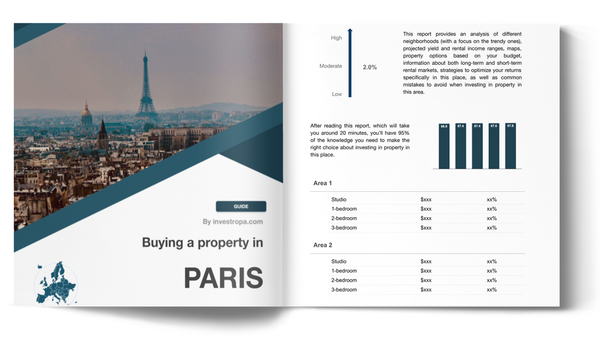
Everything you need to know about where to buy property in Paris is explained in this article, which we update regularly.
We base our analysis on a mix of official government data, real estate portal figures, and local market insights to give you the most accurate picture of each neighborhood.
We aim to help you identify the Paris neighborhoods that match your investment goals, whether you want strong rental yields, long-term appreciation, or just a place you love.
And if you’re planning to buy here, read what went wrong for other property buyers in Paris before you commit.
What's the Current Real Estate Market Situation by Area in Paris?
Which areas in Paris have the highest property prices per square meter in 2026?
As of early 2026, the three most expensive neighborhoods in Paris are Saint-Germain-des-Pres in the 6th arrondissement at around 16,700 euros per square meter, Ile Saint-Louis in the 4th arrondissement at roughly 15,400 euros per square meter, and the Palais-Royal area in the 1st arrondissement where prices regularly exceed 15,000 euros per square meter.
In these prime Paris neighborhoods in 2026, typical prices range from about 12,500 euros per square meter for properties needing renovation up to 25,000 euros per square meter or more for exceptional apartments with high ceilings, views, and premium finishes.
Each of these high-priced Paris neighborhoods commands premium values for distinct reasons:
- Saint-Germain-des-Pres (6e): Historic literary prestige, walkability to Luxembourg Gardens, and international buyer demand.
- Ile Saint-Louis (4e): Extreme scarcity with only a few hundred addresses on the entire island, plus Seine views.
- Palais-Royal (1er): Central location steps from the Louvre, quiet courtyards, and strong resale liquidity.
Found a place and not sure about the price? Ask us.
Which areas in Paris have the most affordable property prices in 2026?
As of early 2026, the most affordable Paris neighborhoods for property buyers include Pont-de-Flandre in the 19th arrondissement at approximately 7,000 euros per square meter, Saint-Blaise in the 20th arrondissement at around 7,600 euros per square meter, and Goutte d'Or-Chateau Rouge in the 18th arrondissement at roughly 7,800 euros per square meter.
In these budget-friendly Paris neighborhoods in 2026, you can find properties ranging from about 5,300 euros per square meter for older buildings needing work up to 11,500 euros per square meter for renovated units in better micro-locations.
The main trade-offs in these lower-priced Paris areas vary by neighborhood: Pont-de-Flandre can feel disconnected from central Paris charm and has some noisy traffic corridors; Saint-Blaise has mixed building quality and less tourist appeal; Goutte d'Or-Chateau Rouge has high price dispersion street-to-street with some blocks lagging behind others in quality and reputation.
Which Areas in Paris Offer the Best Rental Yields?


Got a question about the market in France?
Prices, areas, rentals: ask us what you'd ask a friend who knows. Free reply within 12 hours.
Ask us your question →
Which neighborhoods in Paris have the highest gross rental yields in 2026?
As of early 2026, the Paris neighborhoods delivering the highest gross rental yields include Pont-de-Flandre in the 19th arrondissement at approximately 4.6 percent, Saint-Blaise in the 20th arrondissement at around 4.4 percent, and Belleville in the 20th arrondissement at roughly 3.8 to 4.2 percent.
Across Paris as a whole in 2026, typical gross rental yields for investment properties range from about 2.5 percent in ultra-prime central areas up to nearly 5 percent in the most affordable outer neighborhoods.
These top-yielding Paris neighborhoods deliver higher returns for specific reasons:
- Pont-de-Flandre (19e): Purchase prices drop faster than rents, and metro access keeps tenant demand steady.
- Saint-Blaise (20e): Affordable entry prices attract investors while local renter pools remain deep.
- Belleville (20e): Strong appeal to young professionals and artists keeps vacancy low despite older building stock.
Not sure it'll pay off as a rental? Send us the numbers.
Which Areas in Paris Are Best for Short-Term Vacation Rentals?
Which neighborhoods in Paris perform best on Airbnb in 2026?
As of early 2026, the Paris neighborhoods that perform best on Airbnb in terms of occupancy and nightly rates include Ile Saint-Louis in the 4th arrondissement, Saint-Germain-des-Pres in the 6th arrondissement, and the Palais-Royal area in the 1st arrondissement, all of which attract strong international tourist demand.
In these top-performing Paris short-term rental areas in 2026, well-managed properties can generate monthly revenues ranging from about 2,500 euros for a small studio up to 6,000 euros or more for a well-located one-bedroom, though actual figures depend heavily on seasonality and legal compliance.
Each high-performing Paris Airbnb neighborhood succeeds for distinct reasons:
- Ile Saint-Louis (4e): Iconic Seine-side location and extreme scarcity make it irresistible to visitors.
- Saint-Germain-des-Pres (6e): International brand recognition and walkable access to major attractions.
- Palais-Royal (1er): Central positioning near the Louvre and luxury shopping supports premium nightly rates.
Which tourist areas in Paris are becoming oversaturated with short-term rentals?
The three Paris tourist areas showing signs of short-term rental oversaturation in early 2026 are Ile Saint-Louis in the 4th arrondissement, the Palais-Royal zone in the 1st arrondissement, and Saint-Germain-des-Pres in the 6th arrondissement, all of which combine extreme tourist demand with high enforcement attention from the city.
In these oversaturated Paris areas, the density of active short-term rental listings is among the highest in the city, with some micro-zones having more than 10 percent of residential units listed on platforms, according to Inside Airbnb data and City of Paris monitoring.
The main indicator of oversaturation in these Paris neighborhoods is the combination of tightened regulation (the 90-day annual cap for primary residences), increased fines for violations reaching up to 50,000 euros, and the city's public commitment to rebalancing housing stock, which creates legal and financial risk for new investors entering the short-term rental market.
Which Areas in Paris Are Best for Long-Term Rentals?
Got a question about renting out in France?
Rules, yields, managers: tell us your plan and we'll reply within 12 hours, for free.
Ask us your question →
Which neighborhoods in Paris have the strongest demand for long-term tenants?
The Paris neighborhoods with the strongest long-term tenant demand in early 2026 include Porte Saint-Denis-Paradis in the 10th arrondissement, Batignolles-Cardinet in the 17th arrondissement, Buttes-Chaumont in the 19th arrondissement, and Saint-Blaise in the 20th arrondissement.
In these high-demand Paris rental neighborhoods in 2026, well-priced apartments typically rent within two to four weeks, and vacancy rates remain low throughout the year due to strong underlying demand from working professionals and students.
Different tenant profiles drive demand in each of these Paris neighborhoods:
- Porte Saint-Denis-Paradis (10e): Young professionals attracted by central location and nightlife.
- Batignolles-Cardinet (17e): Families and couples seeking a village feel with good schools.
- Buttes-Chaumont (19e): Families drawn by park access and relatively larger apartments.
- Saint-Blaise (20e): Budget-conscious renters and students needing affordable Paris addresses.
The key amenity that makes these Paris neighborhoods attractive to long-term tenants varies: Porte Saint-Denis-Paradis offers excellent metro connectivity; Batignolles-Cardinet provides local markets and green spaces; Buttes-Chaumont has its famous park; Saint-Blaise delivers affordability with reasonable commute times.
Thinking of renting it out? Tell us where and we'll tell you what to watch for.
What are the average long-term monthly rents by neighborhood in Paris in 2026?
As of early 2026, average long-term monthly rents per square meter in key Paris neighborhoods range from about 27 euros in Pont-de-Flandre (19th) up to approximately 38 euros in Saint-Germain-des-Pres (6th), meaning a 45 square meter apartment would cost between roughly 1,200 euros and 1,700 euros per month depending on location.
In the most affordable Paris neighborhoods like Pont-de-Flandre and Saint-Blaise in early 2026, entry-level apartments of 30 to 40 square meters typically rent for between 800 euros and 1,100 euros per month.
In mid-range Paris neighborhoods like Batignolles-Cardinet and Belleville in early 2026, average-sized apartments of 40 to 50 square meters typically rent for between 1,300 euros and 1,600 euros per month.
In the most expensive Paris neighborhoods like Saint-Germain-des-Pres and Palais-Royal in early 2026, high-end apartments of 50 to 70 square meters typically rent for between 1,900 euros and 2,800 euros per month.
Which Are the Up-and-Coming Areas to Invest in Paris?
Which neighborhoods in Paris are gentrifying and attracting new investors in 2026?
As of early 2026, the Paris neighborhoods that are gentrifying and attracting new investors include Porte Saint-Denis-Paradis in the 10th arrondissement, Goutte d'Or-Chateau Rouge in the 18th arrondissement, and Pont-de-Flandre in the 19th arrondissement, all of which offer relatively affordable entry prices with improving local amenities.
These gentrifying Paris neighborhoods have experienced varied price appreciation in recent years: some micro-streets have seen gains of 3 to 5 percent annually as new cafes and shops open, while other blocks within the same neighborhood remain stable or lag behind, creating opportunities for selective buyers.
Got a question about property in France?
Buying, owning or renting out: ask us and get a real answer within 12 hours. Free.
Ask us your question →Which areas in Paris have major infrastructure projects planned that will boost prices?
The Paris-area neighborhoods most likely to benefit from major infrastructure projects in 2026 and beyond include zones near future Grand Paris Express stations, particularly around Saint-Denis-Pleyel, the Saclay plateau south of Paris, and areas along the future Line 15, Line 16, and Line 17 corridors.
The key infrastructure project is the Grand Paris Express, a massive new metro network with 200 kilometers of new track and 68 new stations, with Line 18 opening its first section in late 2026, followed by Line 15 South expected in 2027, and Lines 16 and 17 extending into the northern suburbs.
Historically in Paris, neighborhoods gaining new metro access have seen price increases of 5 to 15 percent over the years following station openings, though the effect depends on how underserved the area was before and how much development accompanies the new transit link.
Not sure the price you're looking at is fair? Send it to us.

We made this infographic to show you how property prices in France compare to other big cities across the region. It breaks down the average price per square meter in city centers, so you can see how cities stack up. It’s an easy way to spot where you might get the best value for your money. We hope you like it.
Which Areas in Paris Should I Avoid as a Property Investor?
Which neighborhoods in Paris with lots of problems I should avoid and why?
The Paris neighborhoods that present the most challenges for investors in early 2026 are not entire arrondissements but rather specific micro-locations within otherwise acceptable areas, particularly noisy road corridors, buildings with heavy upcoming renovation costs, and zones with heightened short-term rental enforcement.
Here are the main issues affecting certain Paris investment locations:
- Some streets in Pont-de-Flandre (19e): Heavy traffic noise near major axes reduces tenant appeal and resale value.
- Parts of Goutte d'Or-Chateau Rouge (18e): High price dispersion street-to-street, with some blocks lagging significantly.
- Prime tourist zones (1er, 4e, 6e): Short-term rental restrictions make investor "Plan A" legally risky.
For these Paris neighborhoods to become viable investment options, the problematic streets would need traffic calming or urban improvements, lagging blocks would need sustained retail and residential upgrades, and short-term rental regulations would need to ease, which seems unlikely given current policy direction.
Which areas in Paris have stagnant or declining property prices as of 2026?
As of early 2026, the Paris areas most prone to price stagnation include some ultra-prime neighborhoods like Saint-Germain-des-Pres and Ile Saint-Louis, where transaction volumes have thinned and buyers have more negotiating power, as well as parts of Goutte d'Or-Chateau Rouge where some blocks continue to underperform.
These stagnating Paris areas have seen minimal price growth or slight declines of roughly 1 to 3 percent over the past couple of years, as higher interest rates reduced buyer appetite for low-yield trophy assets and uneven neighborhood quality limited demand in transitional zones.
The underlying causes of price stagnation vary by Paris area:
- Saint-Germain-des-Pres and Ile Saint-Louis: Low yields around 2.5 to 3 percent make financing-dependent buyers hesitant.
- Parts of Goutte d'Or-Chateau Rouge (18e): Building quality and reputation disparities create buyer uncertainty.
- Prime central Paris generally: Already-high prices leave little room for appreciation in a soft market.
Which Areas in Paris Have the Best Long-Term Appreciation Potential?
Got a question about your France purchase?
Taxes, contracts, banks, permits: tell us where you're stuck. We reply within 12 hours, for free.
Ask us your question →Which areas in Paris have historically appreciated the most recently?
The Paris areas that have seen the strongest appreciation over the past five to ten years include select pockets in the 10th, 18th, 19th, and 20th arrondissements, where prices started from a lower base and benefited from improving amenities, transit access, and spillover demand from more expensive central neighborhoods.
Here are approximate appreciation figures for top-performing Paris areas:
- Porte Saint-Denis-Paradis (10e): Roughly 25 to 35 percent total appreciation over the past decade.
- Parts of Batignolles (17e): Approximately 20 to 30 percent appreciation as the area gentrified.
- Belleville (20e): Around 15 to 25 percent appreciation driven by creative industry appeal.
The main driver of above-average appreciation in these Paris areas was the combination of improving local retail and dining scenes, better perceived safety, and the natural price catch-up effect as buyers priced out of central Paris sought alternatives with good metro connections.
Torn between areas? Tell us what you're after and we'll help you narrow it down.
Which neighborhoods in Paris are expected to see price growth in coming years?
The Paris neighborhoods expected to see the strongest price growth in coming years include Pont-de-Flandre in the 19th arrondissement, Saint-Blaise in the 20th arrondissement, and areas near future Grand Paris Express stations, all of which combine relatively affordable entry prices with improving connectivity or amenities.
Projected annual price growth for these high-potential Paris neighborhoods varies:
- Pont-de-Flandre (19e): Estimated 2 to 4 percent annual growth as Grand Paris Express improves access.
- Saint-Blaise (20e): Estimated 2 to 3 percent annual growth driven by yield-seeking investors.
- Grand Paris Express corridor areas: Potentially 3 to 5 percent annually as new stations open.
The single most important catalyst for future price growth in these Paris neighborhoods is the continued rollout of the Grand Paris Express, which will dramatically improve commute times and make outer neighborhoods more attractive to both tenants and owner-occupiers.
We made this infographic to show you how property prices in France compare to other big cities across the region. It breaks down the average price per square meter in city centers, so you can see how cities stack up. It’s an easy way to spot where you might get the best value for your money. We hope you like it.
What Do Locals and Expats Really Think About Different Areas in Paris?
Which areas in Paris do local residents consider the most desirable to live?
The Paris areas that local residents consider most desirable to live in early 2026 include Saint-Germain-des-Pres in the 6th arrondissement, the Marais area in the 3rd and 4th arrondissements, Batignolles in the 17th arrondissement, and the area around Parc des Buttes-Chaumont in the 19th arrondissement.
Each of these desirable Paris neighborhoods attracts locals for different reasons:
- Saint-Germain-des-Pres (6e): Cultural prestige, excellent cafes, and walkability to Luxembourg Gardens.
- Le Marais (3e-4e): Historic charm, vibrant street life, and central location.
- Batignolles (17e): Village atmosphere with local markets and family-friendly feel.
- Buttes-Chaumont (19e): Green space, larger apartments, and a sense of community.
These locally-preferred Paris areas tend to attract established professionals and families with moderate to high incomes, who prioritize quality of life and community feel over pure investment returns.
Local preferences in Paris often align with what foreign investors target in prime central areas, but diverge in neighborhoods like Batignolles and Buttes-Chaumont, which locals value for livability while many foreign investors overlook them in favor of more postcard-perfect locations.
Got a question about the paperwork in France?
Notary, tax number, bank, residence permit: ask us. We reply within 12 hours, for free.
Ask us your question →Which neighborhoods in Paris have the best reputation among expat communities?
The Paris neighborhoods with the best reputation among expat communities in early 2026 include Saint-Germain-des-Pres in the 6th arrondissement, the Marais in the 3rd and 4th arrondissements, and the area around Palais-Royal in the 1st arrondissement.
Expats prefer these Paris neighborhoods for specific reasons:
- Saint-Germain-des-Pres (6e): International recognition, English-friendly services, and easy navigation.
- Le Marais (3e-4e): Walkable charm, diverse dining, and proximity to major attractions.
- Palais-Royal (1er): Ultra-central location with quiet courtyards and easy airport access.
The typical expat profile in these popular Paris neighborhoods includes affluent professionals on international assignments, retirees seeking a pied-a-terre, and entrepreneurs who value central locations and the "classic Paris" experience.
Which areas in Paris do locals say are overhyped by foreign buyers?
The three Paris areas that locals commonly say are overhyped by foreign buyers in early 2026 are Ile Saint-Louis in the 4th arrondissement, the Palais-Royal zone in the 1st arrondissement, and Saint-Germain-des-Pres in the 6th arrondissement.
Locals believe these Paris areas are overvalued for specific reasons:
- Ile Saint-Louis (4e): Prices reflect scarcity and prestige, not rental income or practical livability.
- Palais-Royal (1er): Trophy location commands premiums far beyond fundamental value.
- Saint-Germain-des-Pres (6e): Gross yields around 2.7 percent mean you pay for the story, not cash flow.
Foreign buyers typically see iconic addresses, easy resale to other international buyers, and the emotional appeal of owning in a famous Paris neighborhood, which locals often value less because they focus on practical factors like commute times, local services, and price-to-quality ratios.
Which areas in Paris are considered boring or undesirable by residents?
The Paris areas that residents commonly consider less exciting or undesirable include Pont-de-Flandre in the 19th arrondissement, Saint-Blaise in the 20th arrondissement, and some parts of the 13th arrondissement, though "boring" often translates to "affordable and functional" for investors.
Residents find these Paris areas less appealing for specific reasons:
- Pont-de-Flandre (19e): Less postcard charm, fewer trendy restaurants, and a more residential feel.
- Saint-Blaise (20e): Mixed building quality and less tourist appeal than central neighborhoods.
- Parts of the 13th arrondissement: Modern architecture and suburban feel lack historic Paris character.
What sources have we used to write this blog article?
Whether it’s in our blog articles or our buyer-mistake research for Paris, we rely on the strongest methodology we can and don’t throw out numbers at random.
We also aim to be fully transparent, so below we've listed the authoritative sources we used, and explained how we used them and the methods behind our estimates.
| Source | Why It's Reliable | How We Used It |
|---|---|---|
| SeLoger | One of France's largest property portals with consistent neighborhood-level data. | We pulled January 2026 sale prices and rents by quartier. We used their price bands to compute gross rental yields. |
| Notaires du Grand Paris | Official notary body recording actual transaction prices in the Paris region. | We cross-checked SeLoger figures against notarized sales data. We used historical series to identify appreciation trends. |
| Paris Open Data | Official city open data portal with rent control references and housing statistics. | We grounded our rent discussion in regulatory reality. We explained why market rent and legal rent can diverge. |
| Inside Airbnb | Independent dataset quantifying short-term rental presence across Paris neighborhoods. | We identified where listings cluster and assessed oversaturation risk. We used it alongside city data for balance. |
| City of Paris (Ville de Paris) | Official municipal source for policy announcements and regulatory changes. | We referenced their short-term rental rules and enforcement stance. We explained why STR strategy carries legal risk. |
| Societe du Grand Paris | Government agency managing the Grand Paris Express metro expansion project. | We sourced infrastructure timelines and station locations. We estimated how new metro access could affect prices. |
| MeilleursAgents | Real estate platform with arrondissement-level price tracking and market reports. | We validated SeLoger data against their estimates. We used their historical series for long-term appreciation analysis. |
| Service-Public.fr | French government's official information portal for rules and procedures. | We grounded advice on what foreigners can do when buying. We referenced the notary process and ownership steps. |
| Impots.gouv.fr | Official French tax authority with definitive information on property taxes. | We flagged when foreign buyers might face IFI wealth tax. We explained how taxes affect after-tax returns. |
| AirROI | Structured private dataset with clear short-term rental metrics and update dates. | We used their Paris snapshot for listing counts and occupancy rates. We treated it as one triangulation point among several. |
