
Authored by the expert who managed and guided the team behind the France Property Pack
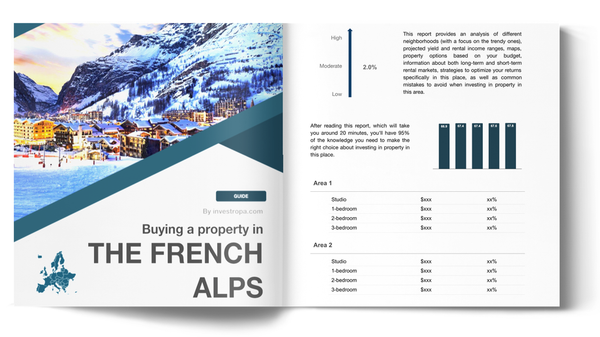
Yes, the analysis of the French Alps' property market is included in our pack
Buying property in the French Alps in 2026 requires knowing exactly which micro-markets offer real value and which ones carry hidden risks.
We constantly update this blog post with the latest transaction data, rent figures, and regulatory changes so you always have current information.
This guide breaks down every major Alpine area by price, yield, and investment potential using hard evidence from official French sources.
And if you're planning to buy a property in this place, you may want to download our pack covering the real estate market in the French Alps.

Fact-checked and reviewed by our local expert
Laurence Rapp 🇬🇧
Sales representative at Skiing Property


What's the Current Real Estate Market Situation by Area in the French Alps?
Which areas in the French Alps have the highest property prices per square meter in 2026?
As of early 2026, the three most expensive areas in the French Alps are Courchevel 1850 in the Tarentaise valley, Val d'Isère's central and La Daille sectors, and Méribel Centre in the heart of Les 3 Vallées.
In these ultra-prime French Alps locations, typical prices range from 12,000 to 30,000 euros per square meter, with ski-in/ski-out properties in Courchevel 1850 sometimes exceeding this upper band.
Each of these top-tier French Alps markets commands premium prices for distinct reasons:
- Courchevel 1850: extreme building scarcity combined with global ultra-high-net-worth demand for "address prestige"
- Val d'Isère (La Daille, Le Fornet): high altitude guarantees long ski seasons and strict planning limits new supply
- Méribel Centre: central position in the world's largest connected ski area creates year-round rental demand
- Megève (Mont d'Arbois): village charm attracts buyers seeking four-season Alpine lifestyle, not just skiing
- Chamonix (Les Praz, Les Bois): iconic Mont Blanc views plus easy Geneva airport access for international buyers
Which areas in the French Alps have the most affordable property prices in 2026?
As of early 2026, the most affordable property markets in the French Alps with genuine investment potential are Grenoble's outer neighborhoods like Eaux-Claires and Saint-Bruno, Chambéry's Bissy and Le Biollay districts, Albertville's residential pockets near Conflans, and Gap's family-oriented sectors near the train station.
In these more accessible French Alps locations, typical prices range from 2,000 to 4,500 euros per square meter, which is three to eight times lower than prime ski resorts.
However, buyers should understand the trade-offs in each area: Grenoble's affordable districts often have older housing stock requiring energy upgrades, Chambéry lacks the glamour of lakeside Annecy despite similar fundamentals, Albertville's market is more cyclical and tied to local employment, and Gap attracts mainly regional rather than international demand.
You can also read our latest analysis regarding housing prices in the French Alps.
Get fresh and reliable information about the market in the French Alps
Don't base significant investment decisions on outdated data. Get updated and accurate information.

Which Areas in the French Alps Offer the Best Rental Yields?
Which neighborhoods in the French Alps have the highest gross rental yields in 2026?
As of early 2026, the French Alps neighborhoods delivering the highest gross rental yields are Grenoble's Saint-Bruno and Berriat districts at roughly 5 to 6.5 percent, Chambéry's station area and Laurier neighborhood at around 4.5 to 6 percent, and Annemasse's central sectors near the Léman Express rail connection at approximately 4 to 5.5 percent.
Across the French Alps as a whole, typical gross rental yields for long-term rentals range from 2.5 percent in prime resort locations to 6.5 percent in working-class urban neighborhoods.
These top-yielding French Alps neighborhoods outperform because each has a specific demand driver:
- Grenoble (Saint-Bruno, Berriat, Eaux-Claires): deep tenant pool from universities, tech companies, and hospitals keeps vacancy low
- Chambéry (station area, Laurier): strong rail connections to Lyon attract commuters willing to pay steady rents
- Annemasse (central sectors): cross-border workers commuting to Geneva support rents despite lower purchase prices
- Annecy (Novel, Cran-Gevrier, Seynod): lifestyle desirability ensures fast tenant turnover but yields compress near the lake
Finally, please note that we cover the rental yields in the French Alps here.
Get to know the market before buying a property in the French Alps
Better information leads to better decisions. Get all the data you need before investing a large amount of money.
Which Areas in the French Alps Are Best for Short-Term Vacation Rentals?
Which neighborhoods in the French Alps perform best on Airbnb in 2026?
As of early 2026, the French Alps neighborhoods generating the strongest Airbnb performance are Courchevel 1850's ski-in/ski-out buildings, Val d'Isère's La Daille and central village sectors, Méribel Centre and Méribel-Mottaret, and Chamonix's Les Praz and Argentière hamlets.
Top-performing short-term rental properties in these prime French Alps locations can generate between 3,000 and 15,000 euros in gross monthly revenue during peak winter weeks, though annual averages vary significantly based on summer demand and property quality.
Each of these French Alps short-term rental hotspots succeeds for different reasons:
- Courchevel 1850 (front de neige): highest willingness-to-pay clientele seeking luxury ski-in/ski-out convenience
- Val d'Isère (La Daille, central): long snow-sure season means bookable weeks extend into late April
- Méribel Centre: families value village atmosphere plus access to all three valleys of the ski area
- Chamonix (Les Praz, Argentière): summer hiking demand balances winter skiing for year-round occupancy
- Tignes (Val Claret, Le Lac): glacier skiing attracts pre-season training camps and early-bird holidaymakers
By the way, we also have a blog article detailing whether owning an Airbnb rental is profitable in the French Alps.
Which tourist areas in the French Alps are becoming oversaturated with short-term rentals?
The three French Alps tourist areas showing the clearest signs of short-term rental oversaturation are the Chamonix valley (including Chamonix, Les Houches, and Vallorcine), Annecy's Old Town and immediate lakeside sectors, and the Morzine/Avoriaz corridor in the Portes du Soleil ski area.
In Chamonix alone, the municipality has moved toward implementing permit quotas and registration requirements starting in 2025, while Annecy's hyper-central zones face similar local enforcement tools enabled by the November 2024 national law on tourist rentals.
The clearest indicator of oversaturation in these French Alps markets is not just listing density but active municipal intervention: when local governments start capping permits, requiring registration, and tightening co-ownership rules, it signals that resident pressure and housing shortages have reached a political tipping point that will constrain future rental income.
Make a profitable investment in the French Alps
Better information leads to better decisions. Save time and money. Download our data.
Which Areas in the French Alps Are Best for Long-Term Rentals?
Which neighborhoods in the French Alps have the strongest demand for long-term tenants?
The French Alps neighborhoods with the strongest long-term tenant demand are Grenoble's Championnet, Île Verte, and Europole districts, Annecy's Novel, Cran-Gevrier, and Seynod areas, Annemasse's central sectors near rail stations, and Chambéry's station neighborhood and Laurier district.
In these high-demand French Alps rental markets, well-priced apartments typically find tenants within two to four weeks, with vacancy rates staying below 5 percent in the most sought-after micro-locations.
The tenant profiles driving demand differ by neighborhood:
- Grenoble (Championnet, Île Verte): university students, research scientists, and hospital staff seeking walkable urban living
- Annecy (Novel, Cran-Gevrier, Seynod): young professionals and families priced out of lakeside areas but wanting Annecy lifestyle
- Annemasse (central): cross-border commuters working in Geneva but preferring French cost of living
- Chambéry (station area, Laurier): regional employees and students valuing TGV connections to Lyon and Paris
What makes these French Alps neighborhoods particularly attractive to long-term tenants is consistent access to employment hubs, public transit, schools, and daily amenities that make year-round life practical rather than just scenic.
Finally, please note that we provide a very granular rental analysis in our property pack about the French Alps.
What are the average long-term monthly rents by neighborhood in the French Alps in 2026?
As of early 2026, average long-term monthly rents in the French Alps vary substantially by location: Annecy averages around 16 to 22 euros per square meter, Grenoble ranges from 12 to 18 euros per square meter, Chambéry sits between 11 and 15 euros per square meter, and resort towns show highly seasonal pricing that makes annual averages less meaningful.
In the most affordable French Alps neighborhoods like Grenoble's Eaux-Claires or Chambéry's outer districts, a small 30 to 40 square meter apartment typically rents for 400 to 600 euros per month.
In mid-range French Alps neighborhoods such as Annecy's Novel or Grenoble's Championnet, a standard 50 to 60 square meter apartment usually commands 700 to 1,000 euros per month.
In premium French Alps neighborhoods like Annecy's lakeside sectors or Annecy-le-Vieux, equivalent apartments can reach 1,200 to 1,600 euros per month, with larger family units exceeding 2,000 euros.
You may want to check our latest analysis about the rents in the French Alps here.
Don't buy the wrong property, in the wrong area of the French Alps
Buying real estate is a significant investment. Don't rely solely on your intuition. Gather the right information to make the best decision.
Which Are the Up-and-Coming Areas to Invest in the French Alps?
Which neighborhoods in the French Alps are gentrifying and attracting new investors in 2026?
As of early 2026, the French Alps neighborhoods showing the clearest gentrification patterns and attracting new investors are Grenoble's Berriat and Chorier-Berriat districts, Albertville's gateway residential areas, and select pockets in the Briançon and Serre Chevalier valley.
These gentrifying French Alps neighborhoods have typically experienced annual price appreciation of 3 to 6 percent over the past two to three years, outpacing stagnant peripheral markets while remaining far below saturated prime resort pricing.
Which areas in the French Alps have major infrastructure projects planned that will boost prices?
The French Alps areas with major infrastructure projects expected to influence property prices are the Olympic cluster zones for Alpes françaises 2030 including Briançon/Serre Chevalier, the Tarentaise valley (Courchevel, La Plagne, Val d'Isère), and the Haute-Savoie cluster around La Clusaz and Le Grand-Bornand.
The most significant long-term infrastructure project is the Lyon-Turin rail link (TELT), which will eventually improve connectivity through the Maurienne corridor around Modane and Saint-Jean-de-Maurienne, though completion remains years away.
Historically in the French Alps, areas that received major transport or event infrastructure have seen price premiums of 10 to 25 percent materialize over the following five to ten years, though timing is unpredictable and early movers often pay for speculation before benefits arrive.
You'll find our latest property market analysis about the French Alps here.

We made this infographic to show you how property prices in France compare to other big cities across the region. It breaks down the average price per square meter in city centers, so you can see how cities stack up. It’s an easy way to spot where you might get the best value for your money. We hope you like it.
Which Areas in the French Alps Should I Avoid as a Property Investor?
Which neighborhoods in the French Alps with lots of problems I should avoid and why?
The French Alps areas that currently present the highest risk for property investors are STR-dependent locations facing regulatory crackdowns, older mountain buildings with poor energy ratings, and single-season resort villages without year-round demand.
Each problem area has specific issues investors should understand:
- Chamonix valley (if planning STR): permit quotas and registration requirements starting 2025 could cap rental days
- Annecy Old Town (if planning STR): hyper-tourism pressure means local authorities have tools to restrict rentals
- Older resort apartment blocks (anywhere): DPE G-rated units face rental bans from January 2025 onward
- Morzine/Avoriaz fringe units: heavy STR competition plus rising regulatory risk creates uncertain returns
- Small single-lift stations: climate uncertainty and lack of summer demand create occupancy risk
For these French Alps problem areas to become viable investments, either regulatory frameworks would need to stabilize with clear long-term rules, major renovation programs would need to bring buildings to compliant energy standards, or year-round economic drivers would need to emerge beyond seasonal tourism.
Buying a property in the wrong neighborhood is one of the mistakes we cover in our list of risks and pitfalls people face when buying property in the French Alps.
Which areas in the French Alps have stagnant or declining property prices as of 2026?
As of early 2026, the French Alps areas most likely experiencing stagnant or declining prices are non-prime resort apartment stock in large stations, peripheral commuter zones where buyers depend heavily on mortgage financing, and older buildings facing expensive energy renovation requirements.
These struggling French Alps micro-markets have typically seen price stagnation of 0 to negative 5 percent over the past two years, while prime locations in the same regions held steady or grew modestly.
The underlying causes of price weakness differ by area type:
- Non-prime resort apartments (no view, no ski access): abundant similar supply and high co-ownership charges deter buyers
- Peripheral commuter zones: rising interest rates in 2023-2024 priced out first-time buyers who drove previous demand
- Pre-1975 mountain buildings: mandatory energy upgrades create uncertain renovation costs that discount sale prices
- Single-season villages: climate concerns make cautious buyers hesitant to commit long-term capital
Get the full checklist for your due diligence in the French Alps
Don't repeat the same mistakes others have made before you. Make sure everything is in order before signing your sales contract.

Which Areas in the French Alps Have the Best Long-Term Appreciation Potential?
Which areas in the French Alps have historically appreciated the most recently?
The French Alps areas that have delivered the strongest price appreciation over the past five to ten years are Courchevel 1850, Val d'Isère's prime subareas, Méribel Centre, Megève's Mont d'Arbois sector, and Chamonix's Les Praz hamlet.
These top-performing French Alps markets have achieved notably different appreciation levels:
- Courchevel 1850: cumulative gains of 40 to 60 percent over ten years, driven by global wealth concentration
- Val d'Isère (La Daille, central): approximately 30 to 50 percent over ten years on scarcity and altitude premium
- Méribel Centre: around 25 to 40 percent appreciation as Les 3 Vallées consolidated its dominance
- Megève (Mont d'Arbois): roughly 20 to 35 percent gains from year-round lifestyle buyer demand
- Chamonix (Les Praz): approximately 25 to 40 percent growth on international outdoor community expansion
The main driver behind above-average appreciation in these French Alps areas is the combination of extreme supply constraints, global buyer pools with equity rather than mortgage financing, and brand recognition that creates self-reinforcing demand even during broader market softness.
By the way, you will find much more detailed trends and forecasts in our pack covering there is to know about buying a property in the French Alps.
Which neighborhoods in the French Alps are expected to see price growth in coming years?
The French Alps neighborhoods expected to see the strongest price growth in coming years are high-altitude resilient resorts like Val d'Isère and Tignes, Olympic-linked areas around Briançon and Serre Chevalier, year-round lifestyle magnets like Annecy's accessible neighborhoods, and undervalued gateway towns like Albertville.
Projected growth rates vary by the underlying catalyst:
- Val d'Isère, Tignes (Val Claret): 3 to 6 percent annually as climate-conscious buyers prioritize snow reliability
- Briançon, Serre Chevalier corridor: potential 5 to 10 percent uplift around 2030 Olympics, timing uncertain
- Annecy (Novel, Cran-Gevrier): 2 to 4 percent steady growth from constrained supply and lifestyle migration
- Albertville gateway areas: 3 to 5 percent possible as "last affordable Tarentaise entry" narrative builds
The single most important catalyst expected to drive future price growth across these French Alps neighborhoods is the convergence of climate adaptation (favoring high-altitude, snow-sure locations) with infrastructure investment (Olympics) and structural housing shortages in liveable year-round towns.
We made this infographic to show you how property prices in France compare to other big cities across the region. It breaks down the average price per square meter in city centers, so you can see how cities stack up. It’s an easy way to spot where you might get the best value for your money. We hope you like it.
What Do Locals and Expats Really Think About Different Areas in the French Alps?
Which areas in the French Alps do local residents consider the most desirable to live?
The French Alps areas that local residents consider most desirable to live are Annecy-le-Vieux and lakeside-adjacent sectors of Annecy, Grenoble's Championnet and Île Verte neighborhoods, and Chambéry's central walkable districts.
Each locally-preferred area has distinct appeal:
- Annecy-le-Vieux: excellent schools, lake access, and village atmosphere within a functioning city
- Grenoble (Championnet, Île Verte): cultural amenities, university proximity, and walkable urban convenience
- Chambéry (centre): historic charm combined with practical TGV connections and reasonable cost of living
- Annecy (Novel, Cran-Gevrier): family-friendly neighborhoods with good services at more accessible prices
These locally-preferred French Alps areas attract established families, professionals working in regional employment hubs, and retirees seeking year-round livability rather than seasonal glamour.
Local preferences in the French Alps often diverge from foreign investor targets: locals prioritize daily practicality, school quality, and commute times, while foreign buyers frequently focus on views, resort proximity, and rental potential in locations that locals find inconvenient for permanent residence.
Which neighborhoods in the French Alps have the best reputation among expat communities?
The French Alps neighborhoods with the strongest reputation among expat communities are Chamonix's Les Praz and Argentière hamlets, Annecy's lakeside zones and Annecy-le-Vieux, and the prime cores of Courchevel, Méribel, and Val d'Isère.
Each expat-favored area attracts foreigners for specific reasons:
- Chamonix (Les Praz, Argentière): international outdoor sports community plus easy Geneva airport access
- Annecy (lakeside, Annecy-le-Vieux): families seeking French lifestyle with English-speaking networks nearby
- Courchevel/Méribel/Val d'Isère: ultra-high-net-worth second-home buyers and seasonal luxury renters
- Megève (Mont d'Arbois): European old money and families seeking year-round Alpine village life
The expat profiles in these French Alps locations range from adventure-sports professionals and remote workers in Chamonix to wealthy families establishing European bases in Annecy and ultra-high-net-worth individuals acquiring trophy properties in Courchevel.
Which areas in the French Alps do locals say are overhyped by foreign buyers?
The French Alps areas that locals commonly consider overhyped by foreign buyers are ultra-prime resort cores like Courchevel 1850, hyper-tourist zones like Annecy's Old Town, and heavily marketed "postcard" villages where prices far exceed practical utility.
Locals see these areas as overvalued for different reasons:
- Courchevel 1850: prices reflect global wealth signaling rather than property fundamentals or rental logic
- Annecy Old Town: foreign buyers pay premiums for charm while locals avoid tourist congestion
- Megève village centre: international buyers value "address" while locals prefer quieter, cheaper nearby communes
- Chamonix hyper-centre: foreigners chase Mont Blanc views while locals know parking and crowds are nightmarish
What foreign buyers typically see in these French Alps areas that locals value less is the postcard imagery, international brand recognition, and perceived prestige, while locals prioritize practical factors like parking, year-round services, and value for money that trophy locations rarely deliver.
By the way, we've written a blog article detailing the experience of buying a property as a foreigner in the French Alps.
Which areas in the French Alps are considered boring or undesirable by residents?
The French Alps areas that residents commonly consider boring or undesirable are purely seasonal villages that shut down outside ski season, peripheral housing developments far from town centers, and older resort blocks with dated facilities and high charges.
Residents find these areas unappealing for specific reasons:
- Single-season resort villages: restaurants and shops close from April to December, creating ghost-town atmosphere
- Peripheral commuter developments: car-dependent locations lack walkable amenities or community identity
- 1970s-era resort apartment blocks: dated architecture, expensive heating, and complex co-ownership politics
- Over-touristed micro-centers: constant visitor crowds, parking nightmares, and inflated daily costs for basics
Don't lose money on your property in the French Alps
100% of people who have lost money there have spent less than 1 hour researching the market. We have reviewed everything there is to know. Grab our guide now.
What sources have we used to write this blog article?
Whether it's in our blog articles or the market analyses included in our property pack about the French Alps, we always rely on the strongest methodology we can … and we don't throw out numbers at random.
We also aim to be fully transparent, so below we've listed the authoritative sources we used, and explained how we used them and the methods behind our estimates.
| Source | Why It's Authoritative | How We Used It |
|---|---|---|
| DVF (Etalab) | Official French government database of recorded property transactions. | We used DVF to validate commune-level price bands with actual sale data. We cross-checked resort asking prices against real transaction evidence. |
| INSEE | France's national statistics agency publishing official price indices. | We used INSEE to establish the national market context entering 2026. We calibrated Alpine trends against broader French housing cycles. |
| Notaires de France | Official notarial network providing transaction-based market snapshots. | We used their annual market reports to anchor price direction and volumes. We validated private-sector resort data against notarial evidence. |
| Observatoires des Loyers | State-backed rent observatory network with neighborhood-level data. | We used OLL to establish rent levels by price zones in Annecy and Grenoble. We calculated gross yields by combining OLL rents with DVF prices. |
| Savills Ski Report | Major global consultancy with consistent cross-resort research methodology. | We used Savills for prime resort price benchmarks and resilience rankings. We compared French resorts using their standardized framework. |
| Knight Frank Alpine Report | Top-tier global consultancy with long-running Alpine market benchmark. | We used Knight Frank to corroborate which resorts posted growth. We triangulated their data with Savills to avoid single-source bias. |
| Legifrance | Official publication of French law providing primary legal sources. | We cited the November 2024 tourist rental law for regulatory risk analysis. We framed STR restrictions as real investment variables. |
| Ministry of Ecology (DPE Rules) | Official ministry statement on enforceable energy performance standards. | We explained why energy ratings matter for rental strategy from 2025. We flagged renovation risk in older mountain building stock. |
| Atout France | National tourism agency publishing monitored season occupancy data. | We grounded STR demand assumptions with actual occupancy figures. We avoided "vibes" by tying rental potential to tourism reality. |
| Olympics.com (2030 Games) | IOC's official channel for host project documentation. | We supported the infrastructure-driven demand thesis for specific clusters. We kept "Olympics effect" grounded in official program reality. |
| TELT (Lyon-Turin Rail) | Official project entity publishing construction progress updates. | We identified transport themes relevant to the Maurienne corridor. We flagged that some "future uplift" stories have long timelines. |
Get the full checklist for your due diligence in the French Alps
Don't repeat the same mistakes others have made before you. Make sure everything is in order before signing your sales contract.
Related blog posts
- Is now a good time to invest in property in the French Alps?