
Reviewed by the researcher who helped assess buyer mistakes and real-world purchase problems in France.
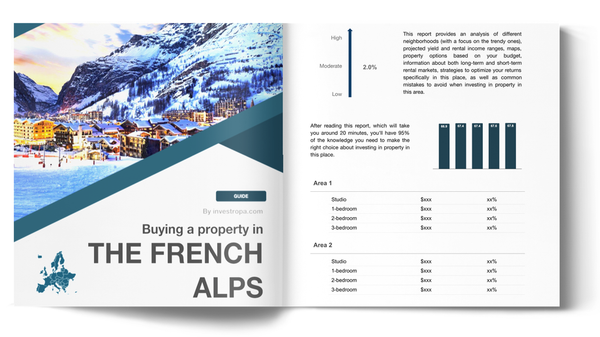
Thinking about buying a property in the French Alps to rent it out?
Whether you want steady long-term tenants or lucrative short-term vacation rentals, this guide covers everything you need to know about yields, regulations, and where the best opportunities are in 2026.
We constantly update this blog post to reflect the latest rules, market data, and rental trends in the French Alps.
And if you’re planning to buy here, read what went wrong for other property buyers in the French Alps before you commit.
Insights
- Premium ski resorts like Chamonix show gross yields around 2% for long-term rentals, while Alpine cities like Grenoble can reach 5% to 6% because purchase prices are significantly lower.
- Short-term rental nightly rates in the French Alps vary dramatically, from around €60 in Grenoble to over €500 in Val d'Isère during peak ski season.
- Grenoble Alpes Métropole has had rent control in effect since January 2025, meaning landlords in that area cannot freely set prices like they can in most other Alpine communes.
- All short-term rental hosts in the French Alps now need a SIRET number, even non-professional ones, which is a recent change many foreign investors overlook.
- Energy performance ratings matter more in the Alps than elsewhere in France because poor insulation in cold mountain climates can legally block you from renting.
- Chamonix long-term rents look surprisingly low per square meter because the real money in resort towns gets captured through weekly peak-season vacation pricing instead.
- Short-term occupancy rates swing wildly in ski resorts, with Val d'Isère hitting 73% annually while shoulder seasons can see properties sit empty for weeks.
- Neighboring villages like Les Houches often deliver better yields than central Chamonix because entry prices drop significantly while guest demand stays strong.
Can I legally rent out a property in the French Alps as a foreigner right now?
Can a foreigner own-and-rent a residential property in the French Alps in 2026?
As of early 2026, France does not have any blanket rule preventing foreigners from owning and renting out residential property in the French Alps, so the legal path is open to you.
Most foreign investors hold Alpine rental properties either directly in their own name or through a French SCI (Société Civile Immobilière), which is a simple civil company structure that makes inheritance and shared ownership easier to manage.
The main restriction foreigners face in the French Alps is not about ownership but about how individual communes regulate short-term tourist rentals, with many mountain towns actively tightening rules to protect housing for locals and seasonal workers.
Do I need residency to rent out in the French Alps right now?
No, you do not need French residency to rent out a property in the French Alps, but you must remain compliant and reachable, which usually means working with a local property manager or appointed representative.
You will need a French tax identification number to legally collect and declare rental income, which you can obtain through the French tax authorities even as a non-resident.
A French bank account is not strictly required since SEPA transfers work across Europe, but many French agencies and service providers prefer a local account for smoother deposit handling and rent collection.
Managing a rental property in the French Alps entirely remotely is practical if you hire a letting agency for long-term rentals or a concierge service for short-term vacation rentals.
The traps foreign buyers keep discovering in France
Foreign buyers use different agents, documents and assumptions. See the problems that show up when you do not know the local shortcuts yet.
What rental strategy makes the most money in the French Alps in 2026?
Is long-term renting more profitable than short-term in the French Alps in 2026?
As of early 2026, short-term vacation rentals generally produce higher gross revenue per year in prime French Alps ski and lake destinations, but long-term rentals win on simplicity, stability, and lower regulatory risk.
A well-managed short-term rental in a resort like Chamonix might generate €25,000 to €40,000 annually for a two-bedroom apartment, while a comparable long-term rental would bring in around €10,000 to €12,000 (roughly $27,000 to $43,000 versus $11,000 to $13,000 USD).
Properties close to ski lifts, with mountain views, and in walkable resort centers tend to favor short-term renting because they command premium nightly rates during peak winter and summer seasons.
What's the average gross rental yield in the French Alps in 2026?
As of early 2026, the average gross rental yield for long-term residential properties in the French Alps ranges from about 2% in premium resorts to around 5% in larger Alpine cities like Grenoble.
The realistic range you will encounter spans from 1.8% gross in ultra-expensive resort towns like Chamonix to 6% gross in more affordable neighborhoods of Grenoble, with lake towns like Annecy falling in between at roughly 2.5% to 3.5%.
Smaller apartments and studios typically achieve the highest gross yields in the French Alps because they rent for proportionally more per square meter while costing less to purchase than larger properties.
Before relying on these numbers to buy, read what went wrong for other property buyers in the French Alps and what they wish they had checked earlier.
What's the realistic net rental yield after costs in the French Alps in 2026?
As of early 2026, the average net rental yield after all costs for long-term rentals in the French Alps sits between 1.5% and 3.5%, with short-term rentals potentially reaching 2.5% to 6% depending on location and management efficiency.
Most landlords in the French Alps actually experience net yields of 1.5% to 2.5% in resort towns and 3% to 4.5% in Alpine cities, once all recurring expenses are deducted from gross income.
The three main cost categories that reduce your yield in the French Alps are copropriété charges with heating (which run high in older mountain buildings), property management fees (6% to 10% for long-term, 15% to 25% for short-term), and energy compliance upgrades required for poor-performing DPE ratings in cold Alpine climates.
What monthly rent can I get in the French Alps in 2026?
As of early 2026, typical monthly long-term rents in the French Alps range from around €375 (about $400 or €375) for a studio in Chamonix to €1,650 (about $1,800 or €1,650) for a two-bedroom in central Annecy.
A decent studio in the French Alps rents for €350 to €550 per month ($380 to $600, or €350 to €550), with the lower end found in Grenoble and the higher end in Annecy or resort-adjacent areas.
A typical one-bedroom apartment in the French Alps commands €550 to €1,150 per month ($600 to $1,250, or €550 to €1,150), depending on whether you are in an Alpine city or a lakeside town.
A two-bedroom apartment in the French Alps typically rents for €800 to €1,650 per month ($870 to $1,800, or €800 to €1,650), with the premium end found in desirable Annecy neighborhoods near the lake.

We did some research and made this infographic to help you quickly compare rental yields of the major cities in France versus those in neighboring countries. It provides a clear view of how this country positions itself as a real estate investment destination, which might interest you if you’re planning to invest there.
What are the real numbers I should budget for renting out in the French Alps in 2026?
What's the total "all-in" monthly cost to hold a rental in the French Alps in 2026?
As of early 2026, the total all-in monthly cost to hold a rental property in the French Alps averages around €600 ($650, or €600) for long-term rentals and €1,150 ($1,250, or €1,150) for short-term rentals on a €400,000 property.
A realistic range for most standard French Alps rentals is €400 to €900 per month ($435 to $980, or €400 to €900) for long-term and €800 to €1,500 per month ($870 to $1,630, or €800 to €1,500) for short-term due to higher turnover costs.
The single largest cost contributor for French Alps rentals is typically the copropriété charges combined with heating expenses, which run significantly higher in older mountain buildings because of snow maintenance, roof repairs, and cold-climate heating systems.
What's the typical vacancy rate in the French Alps in 2026?
As of early 2026, the typical vacancy rate for long-term rentals in the French Alps ranges from 2% to 7%, which translates to roughly two to four weeks of vacancy per year depending on location.
Landlords in tight markets like Annecy or Chamonix should budget for about one to two weeks of vacancy per year because tenant demand consistently outstrips supply, while Grenoble landlords should expect three to four weeks due to more moderate competition.
The main factor affecting vacancy rates across French Alps neighborhoods is proximity to employment centers or transit hubs, with properties near train stations, ski lifts, or major employers filling much faster than those in isolated areas.
Tenant turnover in the French Alps peaks in late summer (August and September) because that is when students relocate, seasonal workers transition, and families move before the school year begins.
You can also read the mistakes and real buyer experiences we collected for the French Alps.
The expensive mistakes property buyers keep repeating
Deposits lost, defects missed, documents misunderstood and costs discovered too late. See the real cases before your savings are on the line.
Where do rentals perform best in the French Alps in 2026?
Which neighborhoods have the highest long-term demand in the French Alps in 2026?
As of early 2026, the top three areas with the highest overall long-term rental demand in the French Alps are central Annecy (especially Vieille Ville and Courier), Grenoble's Hyper-Centre and Championnet neighborhoods, and the Chamonix valley corridor including Les Praz.
Families looking for long-term rentals in the French Alps gravitate toward Annecy-le-Vieux, Cran-Gevrier near Annecy, and Meylan in the Grenoble metro because these areas offer good schools, calm streets, and parking.
Students in the French Alps concentrate their rental searches in Saint-Martin-d'Hères near the Grenoble campus, Berriat and Saint-Bruno along tram lines, and Jacob-Bellecombette near Chambéry's university facilities.
Expats and international professionals seeking long-term rentals in the French Alps prefer Annecy's lakeside neighborhoods, Chamonix Centre with its international community, and Grenoble's Europole business district for its corporate proximity.
Which neighborhoods have the best yield in the French Alps in 2026?
As of early 2026, the top three neighborhoods with the best rental yield in the French Alps are Grenoble's Berriat and Saint-Bruno district, Saint-Martin-d'Hères near the university campus, and Les Houches just outside Chamonix.
These top-yielding French Alps neighborhoods typically deliver gross rental yields of 4.5% to 6%, significantly higher than the 2% to 3% you would see in premium lakefront or resort-center locations.
The main characteristic that allows these neighborhoods to outperform is the combination of moderately lower purchase prices with rents that do not drop proportionally, often because they serve practical tenant needs (students, workers, budget-conscious families) rather than premium lifestyle demand.
If you are getting close to a purchase, see what buyers in the French Alps say they missed before signing.
Where do tenants pay the highest rents in the French Alps in 2026?
As of early 2026, the top three neighborhoods where tenants pay the highest rents in the French Alps are central Annecy near the lake (Vieille Ville, Albigny), central Chamonix, and premium lakeside spots in Annecy-le-Vieux.
A standard apartment in these premium French Alps neighborhoods typically rents for €1,200 to €2,000 per month ($1,300 to $2,175, or €1,200 to €2,000), with larger properties and exceptional views pushing even higher.
What makes these neighborhoods command the highest rents is their combination of scenic exclusivity (direct lake access, Mont Blanc views), walkability to high-end amenities, and limited housing stock that cannot easily expand due to geographic and regulatory constraints.
The typical tenant profile in these highest-rent French Alps neighborhoods includes senior executives relocating for work, international professionals on corporate packages, and affluent retirees or semi-retired individuals seeking Alpine lifestyle without compromising on comfort.

We created this infographic to give you a simple idea of how much it costs to buy property in different parts of France. As you can see, it breaks down price ranges and property types for popular cities in the country. We hope this makes it easier to explore your options and understand the market.
What do tenants actually want in the French Alps in 2026?
What features increase rent the most in the French Alps in 2026?
As of early 2026, the top three property features that increase monthly rent the most in the French Alps are reliable heating with good energy performance (DPE rating A to D), dedicated parking or ski storage space, and a balcony or terrace with mountain or lake views.
A good DPE energy rating can add a 10% to 15% rent premium in the French Alps because tenants actively avoid poorly insulated units that come with high heating bills and potential legal rental restrictions.
One commonly overrated feature in the French Alps is luxury kitchen appliances, which landlords often invest in but tenants rarely pay significantly more for compared to a functional, clean kitchen without premium brands.
An affordable upgrade that delivers strong returns for French Alps landlords is installing fiber internet and creating a small dedicated workspace nook, since remote work demand in mountain towns is very real and tenants will pay more for reliable connectivity.
Do furnished rentals rent faster in the French Alps in 2026?
As of early 2026, furnished apartments in the French Alps typically rent about two to four weeks faster than unfurnished ones because they attract seasonal workers, expats, and students who need move-in-ready housing without furniture logistics.
Furnished rentals in the French Alps command a rent premium of roughly 10% to 20% over unfurnished units, though this comes with higher setup costs, more wear and tear, and a different tax and compliance path if you later consider short-term rentals.
Don't take our word for it. Read what buyers actually said
Every trap comes from a real buyer experience, dispute, review, forum post or local report. Open the original source and judge it for yourself.
How regulated is long-term renting in the French Alps right now?
Can I freely set rent prices in the French Alps right now?
In most French Alps communes, landlords can freely set initial rent prices when signing a new lease, but Grenoble Alpes Métropole has had rent control in effect since January 2025, meaning landlords there must comply with reference rent ceilings.
Once a tenant is in place anywhere in the French Alps, rent increases are regulated by the IRL index (Indice de Référence des Loyers), which caps annual increases to roughly the rate of inflation and must be written into the lease to apply.
What's the standard lease length in the French Alps right now?
The standard lease length for long-term rentals in the French Alps is one year for furnished apartments (renewable) and three years for unfurnished apartments when the landlord is an individual, matching national French housing law.
The maximum security deposit a landlord can legally require in the French Alps is one month's rent (excluding charges) for unfurnished rentals and two months' rent for furnished rentals, which would be around €600 to €1,200 ($650 to $1,300, or €600 to €1,200) for a typical one-bedroom.
At the end of a tenancy in the French Alps, landlords must return the security deposit within one month if the exit inspection shows no damage, or within two months if deductions are needed, with documented justification for any amounts withheld.

We made this infographic to show you how property prices in France compare to other big cities across the region. It breaks down the average price per square meter in city centers, so you can see how cities stack up. It’s an easy way to spot where you might get the best value for your money. We hope you like it.
How does short-term renting really work in the French Alps in 2026?
Is Airbnb legal in the French Alps right now?
Airbnb-style short-term rentals are legal in the French Alps, but you must comply with local commune rules, which vary significantly and are becoming stricter in popular tourist destinations.
Most French Alps communes now require you to register your short-term rental and obtain a registration number that must be displayed on all listings, with some communes also requiring a change-of-use authorization for non-primary residences.
Night limits for short-term rentals in the French Alps typically apply only to primary residences (often capped at 120 days per year in regulated communes), but since rules differ by commune, you should always check with the local mairie before assuming you can rent freely.
Operating an unlicensed or non-compliant short-term rental in the French Alps can result in fines of up to €50,000 per listing, plus orders to cease activity, and platforms like Airbnb may delist properties that lack required registration numbers.
What's the average short-term occupancy in the French Alps in 2026?
As of early 2026, the average annual occupancy rate for short-term rentals in the French Alps ranges from about 50% to 73%, depending heavily on whether you are in a premium ski resort or a more city-oriented market.
The realistic occupancy range most French Alps short-term rentals experience is 45% to 75%, with top-performing properties in Val d'Isère hitting the high end and average listings in lower-profile areas sitting closer to 50%.
The highest occupancy months for short-term rentals in the French Alps are December through March (ski season) and July through August (summer hiking and lake tourism), when well-located properties can be fully booked for weeks straight.
The lowest occupancy months in the French Alps fall during the shoulder seasons of April to May and October to November, when ski lifts are closed, summer crowds have not arrived, and many properties sit empty.
Before relying on these numbers to buy, read what went wrong for other property buyers in the French Alps and what they wish they had checked earlier.
What's the average nightly rate in the French Alps in 2026?
As of early 2026, the average nightly rate for short-term rentals in the French Alps varies dramatically from around €60 ($65, or €60) in Grenoble to €350 ($380, or €350) in Chamonix and over €550 ($600, or €550) in Val d'Isère.
The realistic nightly rate range covering most French Alps short-term listings spans €50 to €600 per night ($55 to $650, or €50 to €600), with budget city apartments at the low end and premium ski-in/ski-out chalets at the top.
Peak season rates in the French Alps (Christmas/New Year, February school holidays) can be two to three times higher than off-season rates, meaning a property that fetches €150 per night in October might command €400 to €500 during peak ski weeks.
Is short-term rental supply saturated in the French Alps in 2026?
As of early 2026, the short-term rental market in the French Alps is competitive and crowded in popular destinations, but not uniformly saturated, with newer regulatory pressure actually reducing active listings in some hotspots.
The trend in active short-term rental listings across the French Alps is mixed, with some resort towns seeing slight declines as regulations tighten and hosts exit, while less-regulated areas continue to see modest growth.
The most oversaturated neighborhoods for short-term rentals in the French Alps are central Chamonix, central Annecy near the lake, and the main village cores of Megève and Courchevel, where competition for guests is intense and differentiation is hard.
Neighborhoods in the French Alps that still have room for new short-term rental supply include outlying villages like Les Houches, Saint-Gervais, and parts of the Aravis range, where entry prices are lower and regulations are often less restrictive than in the flagship resorts.
One evening of reading can save years of expensive mistakes
Before you commit a large part of your savings, spend one evening learning what went wrong for buyers who were in your position before you.
What sources have we used to write this blog article?
Whether it’s in our blog articles or our buyer-mistake research for the French Alps, we rely on the strongest methodology we can and don’t throw out numbers at random.
We also aim to be fully transparent, so below we've listed the authoritative sources we used, and explained how we used them and the methods behind our estimates.
| Source | Why it's authoritative | How we used it |
|---|---|---|
| French Ministry of Finance (Bercy) | Official government guidance on short-term rental rules. | We used it to explain registration requirements and compliance steps. We also used it to keep the Airbnb section legally grounded. |
| INSEE IRL Index | France's official statistics office for rent indexation. | We used it as the ground truth for rent increase mechanics. We cross-checked legal explanations with the official series. |
| ANIL | National housing information network used by public agencies. | We used it to describe standard lease norms and furnished rental rules. We also used it to define owner-paid versus tenant-paid charges. |
| Ministry of Ecological Transition | The ministry page for energy rules affecting rentals. | We used it to explain energy performance constraints in the Alps. We flagged risks unique to cold climates and older buildings. |
| SeLoger | Major national property portal with updated rent indices. | We used it to anchor realistic long-term rent levels across Alpine markets. We cross-checked yields using matching price sources. |
| MeilleursAgents | Widely used national index with transparent methodology. | We used it to anchor purchase prices in core Alpine demand centers. We combined it with rent data to estimate gross yields. |
| AirDNA | Leading STR analytics provider used by professional operators. | We used it to estimate occupancy and nightly rates for resort markets. We triangulated against other STR datasets. |
| Airbtics | Specialized STR data vendor with clearly stated metrics. | We used it to represent lake and city STR markets. We triangulated against AirDNA metrics for consistency. |
| Grenoble Alpes Métropole | The intercommunal authority implementing rent control locally. | We used it to highlight that rent caps are real in Grenoble. We explained where landlords cannot freely set rent. |
| Direction générale des Entreprises | Official government portal for business formalities. | We used it to explain the SIRET requirement for furnished tourism hosts. We clarified what non-residents need to do remotely. |

We have made this infographic to give you a quick and clear snapshot of the property market in France. It highlights key facts like rental prices, yields, and property costs both in city centers and outside, so you can easily compare opportunities. We’ve done some research and also included useful insights about the country’s economy, like GDP, population, and interest rates, to help you understand the bigger picture.


