
Reviewed by the researcher who helped assess buyer mistakes and real-world purchase problems in France.
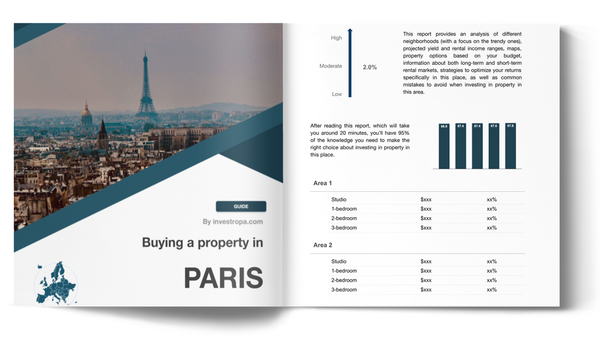
Paris remains one of Europe's most attractive cities for expats in 2026, offering an unmatched combination of career opportunities, cultural richness, and high quality of life.
This guide breaks down everything you need to know about moving to Paris, from housing costs and visa requirements to neighborhoods and job markets, all based on official sources and real data.
We constantly update this blog post to reflect the latest changes in Paris' cost of living, immigration rules, and housing market conditions.
And if you’re planning to buy here, read what went wrong for other property buyers in Paris before you commit.
Is Paris a good place to live in 2026?
Is quality of life getting better or worse in Paris in 2026?
As of early 2026, the quality of life in Paris is best described as mixed, with infrastructure improvements offset by persistent housing pressure and cost-of-living challenges.
What has improved most noticeably for expats in Paris over the past two to three years is public transport, with the expansion of metro lines, updated 2026 fare structures from Île-de-France Mobilités, and better integration of cycling infrastructure across the city.
On the other hand, what has worsened or remained a persistent challenge in Paris recently is the housing squeeze, where finding an apartment with reasonable space at an affordable price continues to be the single biggest frustration for newcomers and long-term residents alike.
These trends combine to create a city that rewards those with solid incomes and good local knowledge, while newcomers without either may find their first months more stressful than expected.
Are hospitals good in Paris in 2026?
As of early 2026, the overall quality of hospitals in Paris is excellent by Western European standards, with a deep network of public university hospitals (AP-HP) and well-regarded private clinics offering world-class medical care.
Among expats in Paris, the most commonly recommended hospitals include the American Hospital of Paris in Neuilly-sur-Seine for its expat-friendly services, Hôpital Européen Georges-Pompidou (15th arrondissement) for major care, and Hôpital Saint-Joseph (14th arrondissement) as a well-regarded private non-profit option.
A standard GP consultation in Paris in 2026 costs around 30 euros at the regulated tariff, which is approximately 32 USD or 30 EUR, though you will pay more if the doctor operates under Sector 2 pricing or if you visit outside the coordinated care pathway.
While the French public healthcare system (Sécurité Sociale) provides strong coverage once you qualify, most expats in Paris still add a private top-up insurance called a "mutuelle" to reduce out-of-pocket costs for dentistry, optical care, and faster specialist access.
Are there any good international schools in Paris in 2026?
As of early 2026, Paris and its surrounding suburbs offer a solid selection of international schools, with approximately 15 to 20 well-established options following English-language or bilingual curricula such as the IB, American, or British systems.
Among the most reputable international schools for expat families in Paris are the International School of Paris (ISP) in the 16th arrondissement, the American School of Paris (ASP) in Saint-Cloud, and École Jeannine Manuel for its highly regarded bilingual program.
Annual tuition fees at international schools in Paris in 2026 typically range from 15,000 to 38,000 euros per child per year, which is approximately 16,000 to 41,000 USD or 15,000 to 38,000 EUR, depending on the grade level and school prestige.
Waitlists at the most in-demand international schools in Paris can be long, often requiring 6 to 18 months of advance planning for sought-after entry points, though French public schools can be a viable free alternative for families settling in stable catchment areas with good local reputations.
Is Paris a dangerous place in 2026?
As of early 2026, Paris is generally safe by major city standards, with most expats and residents experiencing few serious safety issues in their daily lives.
The most common safety concerns for expats in Paris are pickpocketing in tourist zones and metro stations, phone snatching near metro doors, and occasional nuisance behavior around major transport hubs like Gare du Nord and Châtelet-Les Halles.
Neighborhoods generally considered safest for expats to live in Paris include the 7th (Invalides, Gros-Caillou), 6th (Saint-Germain-des-Prés), 16th (Passy, Auteuil), 15th (Commerce), and 17th (Batignolles), as well as nearby suburbs like Neuilly-sur-Seine and Boulogne-Billancourt.
Women can generally live alone safely in Paris and many do, though standard big-city precautions are recommended, such as avoiding isolated parks at night, planning late-night routes carefully, and using taxis or ride-hailing apps after social events in unfamiliar areas.
The traps foreign buyers keep discovering in France
Foreign buyers use different agents, documents and assumptions. See the problems that show up when you do not know the local shortcuts yet.
How much does everyday life cost in Paris in 2026?
What monthly budget do I need to live well in Paris in 2026?
As of early 2026, a single person in Paris needs approximately 3,200 to 4,800 euros per month, or roughly 3,500 to 5,200 USD, to live comfortably while renting a one-bedroom apartment in a good neighborhood.
For a more modest but decent lifestyle in Paris in 2026, a single person can get by on around 2,300 to 3,000 euros per month, or approximately 2,500 to 3,300 USD, though this typically means a smaller apartment in a less central area and fewer dining-out occasions.
A more comfortable or upscale lifestyle in Paris in 2026 requires a monthly budget of 5,000 to 7,000 euros per month for a single person, or 5,400 to 7,600 USD, allowing for a spacious apartment in a prestigious arrondissement, regular restaurant meals, and leisure activities.
Housing in Paris is by far the largest expense category, often consuming 40 to 60 percent of a monthly budget, which is why the rent you pay largely determines your overall cost of living in the city.
What is the average income tax rate in Paris in 2026?
As of early 2026, a typical middle-income earner in Paris earning around 45,000 to 70,000 euros gross per year can expect an effective income tax rate of approximately 6 to 18 percent, though the total tax burden is higher when including mandatory social contributions.
France uses a progressive income tax system with marginal rates ranging from 0 percent for the lowest bracket up to 45 percent for income above 177,000 euros, though most expats in Paris fall into the middle brackets and pay an average effective rate well below the top marginal rate.

We did some research and made this infographic to help you quickly compare rental yields of the major cities in France versus those in neighboring countries. It provides a clear view of how this country positions itself as a real estate investment destination, which might interest you if you’re planning to invest there.
What kind of foreigners actually live in Paris in 2026?
Where do most expats come from in Paris in 2026?
As of early 2026, the largest groups of expats in Paris come from EU countries (especially Italy, Spain, Germany, and Portugal), the United Kingdom, the United States, and countries with historical ties to France such as Algeria, Morocco, Tunisia, and Senegal.
Foreign residents make up approximately 15 to 20 percent of the population in central Paris, with higher concentrations in certain arrondissements popular with international workers and students.
Expats from EU countries and North America are primarily drawn to Paris by career opportunities in tech, finance, consulting, and luxury sectors, while those from North and West Africa often have family ties or study-related reasons for relocating.
The expat population in Paris is predominantly working professionals and students rather than retirees, reflecting the city's role as a major European business and academic hub rather than a retirement destination.
Where do most expats live in Paris in 2026?
As of early 2026, expats in Paris tend to concentrate in the 7th (Invalides, Gros-Caillou), 6th (Saint-Germain-des-Prés), 16th (Passy, Auteuil), 8th (Parc Monceau area), 17th (Ternes, Batignolles), and 15th (Commerce) arrondissements, as well as western suburbs like Neuilly-sur-Seine, Boulogne-Billancourt, and Saint-Cloud.
These Paris neighborhoods attract expats because they offer a combination of family-friendly environments with good schools, safe and quiet streets, easy access to major employers, and established international communities where English is more commonly spoken.
Emerging or up-and-coming neighborhoods in Paris that are starting to attract more expats include the 10th (Canal Saint-Martin area), 11th (Oberkampf, Bastille), and 20th (Belleville) arrondissements, where younger professionals and creatives are drawn by lower rents, vibrant nightlife, and a more diverse local culture.
Are expats moving in or leaving Paris in 2026?
As of early 2026, expats continue to move into Paris at a steady pace, though the city also sees significant churn as many leave after two to five years for more space in the suburbs or other European cities once family needs grow.
The main factor driving expats to move to Paris right now is career opportunity, with the city's concentration of multinational headquarters, tech startups, finance jobs, and luxury brand offices creating a strong pull for ambitious professionals.
The main factor causing some expats to leave Paris recently is the housing squeeze, where the high cost and small size of apartments becomes increasingly frustrating for families or those seeking a better quality of life outside the city center.
Compared to similar destinations in Western Europe like London or Amsterdam, Paris continues to attract a comparable volume of international talent, though it competes more on cultural appeal and career prestige than on cost-of-living advantages.
The expensive mistakes property buyers keep repeating
Deposits lost, defects missed, documents misunderstood and costs discovered too late. See the real cases before your savings are on the line.
What paperwork do I need to move to Paris in 2026?
What visa options are popular in Paris in 2026?
As of early 2026, the three most popular visa types for expats moving to Paris are the Long-Stay Visa serving as a residence permit (VLS-TS) for general purposes, the Passeport Talent for qualified professionals and entrepreneurs, and employer-sponsored work permits for salaried employees.
For the most commonly used expat visa in Paris, the VLS-TS visitor or salaried categories, main eligibility requirements include proof of sufficient financial resources (at least 1,400 to 1,800 euros per month for an individual), comprehensive health insurance valid for the entire stay, and proof of accommodation in France.
France does not currently offer a dedicated digital nomad visa, though remote workers can apply for the Long-Stay Visitor Visa (VLS-TS visiteur) if they can prove passive or foreign-source income and commit not to work for French employers during their stay.
Most long-stay visas in Paris are initially valid for one year and can be renewed annually, with the renewal process typically requiring proof of continued eligibility, and from 2026, applicants for multi-year residence cards must demonstrate A2-level French proficiency.
How long does it take to get residency in Paris in 2026?
As of early 2026, the typical processing time for a long-stay visa decision (made abroad at a French consulate) is 2 to 8 weeks, followed by 1 to 4 weeks for arrival validation, and then 2 to 5 months for the full residence permit card process in Paris.
Common factors that can delay the residency application process in Paris include incomplete documentation, missing translations, high seasonal demand at the Préfecture, or complex employment situations, while having a complete file and employer support can significantly speed things up.
To become eligible for permanent residency (10-year resident card) in Paris, an expat must typically live continuously in France for five years, demonstrate stable income and integration, and from 2026, prove B1-level French language proficiency.

We created this infographic to give you a simple idea of how much it costs to buy property in different parts of France. As you can see, it breaks down price ranges and property types for popular cities in the country. We hope this makes it easier to explore your options and understand the market.
How hard is it to find a job in Paris in 2026?
Which industries are hiring the most in Paris in 2026?
As of early 2026, the top three industries hiring the most in Paris are technology and digital (software, AI, cybersecurity), finance and consulting (banking, asset management, professional services), and healthcare and life sciences, all of which face persistent labor shortages.
It is realistic for expats to get hired in Paris without speaking French, but only in certain pockets, primarily at multinational companies, tech startups with English as the working language, or roles with an international scope, while most local employers expect at least basic French.
The types of roles most accessible to foreign job seekers in Paris include software engineering, data science, product management, international marketing, finance analyst positions at global firms, and teaching roles at international schools or language centers.
What salary ranges are common for expats in Paris in 2026?
As of early 2026, the typical gross annual salary range for expats working in Paris is 45,000 to 100,000 euros, or approximately 49,000 to 109,000 USD, depending on the industry, seniority, and whether the role is at a multinational or local company.
For entry-level or mid-level expat positions in Paris in 2026, salary ranges typically fall between 35,000 and 60,000 euros gross per year, or approximately 38,000 to 65,000 USD, with tech, finance, and consulting roles at the higher end.
For senior or specialized expat roles in Paris in 2026, salaries can range from 70,000 to 120,000 euros gross per year or more, which is approximately 76,000 to 130,000 USD, particularly in leadership positions at multinational companies or in high-demand technical fields.
Employers in Paris do sponsor work visas for foreign hires, but primarily for roles with scarce skills, senior positions, or internal company transfers, making it materially easier to secure sponsorship through global companies already experienced with the process.
Don't take our word for it. Read what buyers actually said
Every trap comes from a real buyer experience, dispute, review, forum post or local report. Open the original source and judge it for yourself.
What's daily life really like for expats in Paris right now?
What do expats love most about living in Paris right now?
Expats in Paris most commonly praise the walkability and distinct neighborhood character, the unmatched cultural density of museums, restaurants, and events, and the strong public transport network that makes car-free living easy.
The lifestyle benefit most frequently praised by expats in Paris is the work-life balance, with a 35-hour workweek norm, generous vacation time, and a culture that prioritizes long lunches, evening apéritifs, and weekend leisure over constant hustle.
The practical advantage expats appreciate most in Paris is the excellent public transit system, with the metro, RER, and bus network offering affordable and reliable transport throughout the city and suburbs for a monthly Navigo pass of around 90 euros in 2026.
The social and cultural aspect that makes Paris particularly enjoyable for expats is the vibrant neighborhood life, where each quartier feels like a small village with its own markets, cafés, and community atmosphere, making it easy to feel rooted even in a large city.
What do expats dislike most about life in Paris right now?
The top complaints expats have about living in Paris are the small apartment sizes relative to rent prices, the heavy administrative burden for routine tasks, and the crowding and tourist pressure in central areas during peak seasons.
The daily inconvenience that frustrates expats the most in Paris is the infamous "dossier" system for renting apartments, which requires extensive paperwork including pay stubs, tax returns, bank statements, and often a French guarantor, creating a major barrier for newcomers.
The bureaucratic issue that causes the most headaches for expats in Paris is dealing with the Préfecture for residence permits, where long waits for appointments, confusing online systems, and inconsistent requirements from different officials can extend simple processes by months.
For most expats in Paris, these frustrations are manageable rather than deal-breakers, especially once they build local knowledge, establish a network, and learn to navigate the system, though the first year is often described as the most challenging.
What are the biggest culture shocks in Paris right now?
The biggest culture shocks expats experience when moving to Paris are the small apartment sizes considered normal even at high prices, the formal communication style that can feel blunt or cold, and the rigid hours of shops and services that close for lunch or on Sundays.
The social norm that surprises newcomers the most in Paris is the importance of greetings and politeness protocols, where failing to say "Bonjour" before any interaction, even asking a question in a shop, is considered genuinely rude and can result in noticeably colder treatment.
The aspect of daily routines that takes the longest for expats to adjust to in Paris is the "médecin traitant" healthcare system, where you must register with a primary care doctor who becomes your gateway to specialists, and getting initial appointments with popular doctors can take weeks.

We made this infographic to show you how property prices in France compare to other big cities across the region. It breaks down the average price per square meter in city centers, so you can see how cities stack up. It’s an easy way to spot where you might get the best value for your money. We hope you like it.
Can I buy a home as a foreigner in Paris in 2026?
Can foreigners legally own property in Paris in 2026?
As of early 2026, foreign property ownership in Paris is fully allowed, with no legal restrictions preventing non-residents or non-EU citizens from purchasing residential real estate in France.
There are no specific restrictions or conditions that apply to foreigners buying property in Paris based on nationality, though the practical challenges lie in financing, documentation requirements, and understanding the French notarial system rather than legal barriers.
Foreigners can own all property types in Paris including apartments, houses, and land, with no limitations on location within the city, making Paris one of the more open real estate markets in Europe for international buyers.
What is the average price per m² in Paris in 2026?
As of early 2026, the average price per square meter for residential property in Paris is approximately 9,500 to 10,500 euros, which is roughly 10,300 to 11,400 USD or 9,500 to 10,500 EUR, with significant variation by arrondissement.
Property prices in Paris have been relatively stable to slightly declining over the past two to three years after the post-pandemic peak, though prime central arrondissements have held their value better than outer areas.
Do banks give mortgages to foreigners in Paris in 2026?
As of early 2026, mortgages for foreigners in Paris are available but selective, with banks most open to applicants who have French or EU income, a stable employment contract, strong documentation, and a meaningful down payment.
Among banks in Paris known to work with foreign buyers are BNP Paribas, Crédit Agricole, and Société Générale, though each has different policies and some are more accommodating to non-residents than others.
Typical mortgage conditions for foreigners in Paris in 2026 include a down payment of at least 20 to 30 percent, interest rates in the 3 to 4 percent range depending on the rate environment, and maximum loan terms of 20 to 25 years.
Documents and eligibility requirements foreigners typically need to qualify for a mortgage in Paris include proof of income (tax returns, pay stubs), bank statements showing savings history, a valid passport, proof of residence, and often a French bank account already established.
Don't discover after signing what other buyers learned too late
Some of the most expensive property mistakes look obvious only afterwards. Read the cases before the contract makes them your problem.
What sources have we used to write this blog article?
Whether it’s in our blog articles or our buyer-mistake research for Paris, we rely on the strongest methodology we can and don’t throw out numbers at random.
We also aim to be fully transparent, so below we've listed the authoritative sources we used, and explained how we used them and the methods behind our estimates.
| Source | Why it's authoritative | How we used it |
|---|---|---|
| INSEE | Official French statistics office for population and income data. | We used it to anchor typical Paris household incomes and demographic context. We then translated this into realistic comfort thresholds for expat budgets. |
| OLAP | Official rent observatory for Paris recognized by French authorities. | We used it to estimate realistic market rents by apartment size and area. We built monthly budget calculations around these rent medians. |
| Notaires de Paris | Notaries record actual completed property transactions. | We used it to determine the average price per square meter in Paris. We cross-checked arrondissement-level price ranges for accuracy. |
| Banque de France | Central bank publishing official household credit and rate data. | We used it to anchor mortgage rate expectations for foreign buyers. We translated this into practical lending environment guidance. |
| Assurance Maladie (Ameli) | Official health insurance portal with regulated medical tariffs. | We used it to confirm standard doctor consultation costs in Paris. We then explained when expats should expect to pay more. |
| France-Visas | Official French government portal for visa rules and procedures. | We used it to outline the main long-stay visa pathways for expats. We connected this to post-arrival validation and permit steps. |
| Île-de-France Mobilités | Official regional transport authority setting fare schedules. | We used it to budget transport costs with published 2026 fares. We included key ticket prices directly in monthly budget estimates. |
| impots.gouv.fr | Official French tax authority explaining income tax calculation. | We used it to show how the progressive tax scale produces effective rates. We provided realistic tax rate estimates for common expat salaries. |
| Ministry of Interior (SSMSI) | Official producer of crime and safety statistics for France. | We used it to ground safety discussions in recorded crime trends. We translated this into practical neighborhood-level guidance. |
| APEC | French executive employment association tracking cadre job market. | We used it to anchor hiring trends and salary ranges for professional roles. We connected this to practical job search advice for expats. |

We have made this infographic to give you a quick and clear snapshot of the property market in France. It highlights key facts like rental prices, yields, and property costs both in city centers and outside, so you can easily compare opportunities. We’ve done some research and also included useful insights about the country’s economy, like GDP, population, and interest rates, to help you understand the bigger picture.
