
Reviewed by the researcher who helped assess buyer mistakes and real-world purchase problems in France.
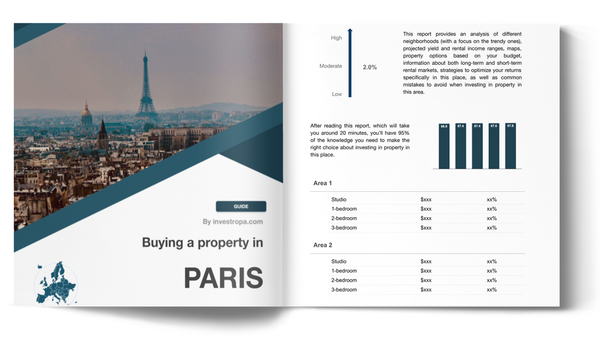
Airbnb in Paris in 2026 still looks attractive at first glance because nightly prices are high, tourism demand is deep, and Paris property remains one of Europe’s best-known real estate markets.
However, the real question is not only how much a Paris Airbnb can earn, but whether a normal residential apartment can be operated legally and profitably under the 90-night rule, change-of-use rules, tourist tax, and current housing prices in Paris.
We constantly update this blog post so readers can compare fresh Paris Airbnb data, current Paris housing prices, and the latest short-term rental rules before making a property decision.
And if you’re planning to buy here, read what went wrong for other property buyers in Paris before you commit.
Insights
- A normal primary-residence Airbnb in Paris in 2026 is capped at 90 nights, so the legal ceiling matters more than the demand ceiling for most individual owners.
- The average Airbnb nightly price in Paris in 2026 is around €170 to €180, but the useful number for a small owner is closer to the median, near €150.
- A legal whole-home primary-residence Airbnb in Paris can often gross about €16,000 per year before expenses, even when the apartment could earn more on paper.
- Paris Airbnb occupancy looks strong at roughly 50% to 58% for active listings, but a primary-residence host cannot use a full-year occupancy model.
- The classic “buy a small Paris apartment and Airbnb it full-time” strategy is legally weak because secondary homes need change-of-use authorization and compensation.
- Studios and one-bedroom Paris Airbnbs are easy to understand, but they compete in the most crowded price band, around €120 to €220 per night.
- Two-bedroom Paris apartments often offer the best guest-demand gap because families and two couples want comfort, but this segment is harder and more expensive to create.
- High Paris purchase prices, near €9,600 per square meter in early 2026, make Airbnb yield pressure very real even when the nightly rate looks high.
- Air conditioning, elevator access, quiet bedrooms, and family-ready layouts are unusually valuable in Paris because many old apartments still miss these comfort features.
- Paris Airbnb demand is less seasonal than beach markets, but May, June, September, Fashion Week, Roland-Garros, and VivaTech can still create sharp price spikes.
Can I legally run an Airbnb in Paris in 2026?
Is short-term renting allowed in Paris in 2026?
As of early 2026, short-term renting in Paris is allowed, but it is mainly simple for a host who occasionally rents out a primary residence with a valid Paris registration number.
The main Paris Airbnb legal framework comes from the French Code du tourisme, the national furnished-tourism rules, and the City of Paris rules on tourist furnished rentals and change of use.
The most important Paris Airbnb restriction is that an entire primary residence can only be rented for up to 90 nights per calendar year.
For a secondary home or an investment apartment in Paris, the host usually needs prior change-of-use authorization, and Paris often requires compensation by turning another non-residential space into housing.
An illegal short-term rental in Paris can lead to fines, delisting risk, tax checks, and claims from the city, so the legal risk is not theoretical for a normal residential apartment.
Rental rules keep changing in France. Ask us about your case.
Are there minimum-stay rules and maximum nights-per-year caps for Airbnbs in Paris as of 2026?
As of early 2026, Paris does not have a simple citywide minimum-stay rule for ordinary Airbnb stays, but an entire primary residence is capped at 90 nights per year.
This Paris Airbnb cap depends mainly on whether the property is the host’s primary residence, because secondary homes and investment flats fall into a much stricter authorization regime.
Hosts in Paris typically track nights through platform dashboards, the Paris registration number, booking records, and tax records, while platforms may also block listings once the cap is reached.
If a Paris host exceeds the 90-night cap, the host can face fines and enforcement action because the excess nights suggest unauthorized tourist use of residential housing.


Got a question about renting out in France?
Rules, yields, managers: tell us your plan and we'll reply within 12 hours, for free.
Ask us your question →
Do I have to live there, or can I Airbnb a secondary home in Paris right now?
For the cleanest legal route, a non-professional Paris Airbnb host should live in the property and rent it only as a primary residence for limited periods.
A secondary home or investment apartment in Paris is not freely rentable as a short-term tourist rental, even if the owner has bought the property legally.
For non-primary residence short-term rentals in Paris, the usual hurdle is change-of-use authorization, often with compensation that can be expensive and hard to arrange.
The main difference is simple: a primary residence can be rented occasionally under the 90-night cap, while a secondary residential home is treated as a housing-loss issue unless it is properly authorized.
Not sure it'll pay off as a rental? Send us the numbers.
Can I run multiple Airbnbs under one name in Paris right now?
A normal individual cannot simply run multiple whole-home residential Airbnbs under one name in Paris because one person can only have one primary residence.
Paris does not rely on a simple “maximum number of listings” rule for individuals, because the real limit comes from primary-residence status and change-of-use compliance.
Hosts with multiple Paris Airbnb listings usually need a much more formal setup, valid registration numbers, clean tax records, and proper authorization for any unit that is not a primary residence.
The main regulatory reason is that Paris wants to protect residential housing from being converted into tourist accommodation, especially in central and high-demand neighborhoods.
Do I need a short-term rental license or a business registration to host in Paris as of 2026?
As of early 2026, a Paris Airbnb host needs a registration number for a tourist furnished rental, while a separate business structure is not always needed for a small primary-residence host.
The typical process is to register the furnished tourist rental with the relevant online service, then display the registration number on the Airbnb listing before accepting guests.
The usual documents and checks relate to identity, property address, primary-residence status, tax declaration, and, for non-primary residences, change-of-use authorization.
The registration itself is usually not the main cost, because the expensive part in Paris is the legal and property cost of making a secondary residential unit compliant.
Ask us about France
Buying property there and stuck on something? Tell us, and we'll reply within 12 hours. Free.
Ask us your question →
Are there neighborhood bans or restricted zones for Airbnb in Paris as of 2026?
As of early 2026, Paris does not have a simple tourist map where Airbnb is banned in one neighborhood and allowed in another for primary residences.
The strictest practical pressure is in tourist-heavy areas such as Le Marais, Saint-Germain-des-Prés, the Latin Quarter, Louvre-Palais-Royal, Montmartre, Opéra-Grands Boulevards, Champs-Élysées, and Eiffel Tower-Grenelle.
These areas are sensitive because they combine high tourist demand, high housing pressure, many small apartments, and strong incentives for owners to shift homes from long-term housing to short stays.
Thinking of renting it out? Tell us where and we'll tell you what to watch for.
How much can an Airbnb earn in Paris in 2026?
What's the average and median nightly price on Airbnb in Paris in 2026?
As of early 2026, the average nightly price for an Airbnb listing in Paris in 2026 is about €180, about $210, or €180, while the median is closer to €150, about $175, or €150.
A realistic nightly price range covering many normal Paris Airbnb listings is about €110 to €350, about $130 to $405, or €110 to €350, depending on size and location.
The single biggest pricing factor in Paris is not just the arrondissement, but the combination of central location, bedroom count, elevator or low-floor access, air conditioning, and review quality.
How much do nightly prices vary by neighborhood in Paris in 2026?
As of early 2026, Airbnb nightly prices in Paris can range from roughly €120 to €180 in more affordable areas like Belleville, Ménilmontant, and parts of the 13th, to about €220 to €400 in premium areas like Saint-Germain-des-Prés, Louvre-Palais-Royal, and Le Marais, which is about $140 to $465 or €120 to €400.
The three highest-price Paris Airbnb neighborhoods are usually Saint-Germain-des-Prés, Louvre-Palais-Royal, and Le Marais, where many common apartments can sit around €220 to €350, about $255 to $405, or €220 to €350 per night.
The three lower-price Paris Airbnb areas are often Belleville, Ménilmontant, and parts of the 13th around Butte-aux-Cailles, and guests still choose them when the listing is comfortable, well connected, and cheaper than the postcard districts.
Got a question about the market in France?
Prices, areas, rentals: ask us what you'd ask a friend who knows. Free reply within 12 hours.
Ask us your question →What's the typical occupancy rate in Paris in 2026?
As of early 2026, a realistic typical occupancy rate for active Airbnb listings in Paris in 2026 is about 50% to 58% across the year.
Most normal Paris Airbnb listings sit somewhere around 45% to 65% occupancy, while top listings in strong locations can go higher during peak periods.
Paris occupancy is stronger than many smaller French markets because Paris has tourism, business travel, fashion, trade fairs, culture, and train-based weekend demand all year.
The biggest factor behind above-average Paris Airbnb occupancy is a listing that feels easy for guests, with strong location, clear access, good photos, reliable check-in, and comfort that old Paris apartments often lack.
What's the average monthly revenue per listing in Paris in 2026?
As of early 2026, the average monthly revenue for an active Airbnb listing in Paris in 2026 is roughly €2,400 to €3,100, about $2,800 to $3,600, or €2,400 to €3,100 before expenses.
A realistic monthly revenue range covering many Paris Airbnb listings is about €1,300 to €5,000, about $1,500 to $5,800, or €1,300 to €5,000, with size and season making a large difference.
Top Paris Airbnb listings can reach about €6,000 to €10,000 per month, about $7,000 to $11,600, or €6,000 to €10,000, and a simple example is 24 booked nights at €300 per night, which gives €7,200 before costs.
What's the typical low-season vs high-season monthly revenue in Paris in 2026?
As of early 2026, a normal active Paris Airbnb can make about €1,300 to €2,100 in low season, about $1,500 to $2,400, or €1,300 to €2,100, and about €3,200 to €5,000 in high season, about $3,700 to $5,800, or €3,200 to €5,000.
Low season in Paris is usually January, February, and parts of November, while high season is often May, June, September, early October, and major event periods.
Got a question about property in France?
Buying, owning or renting out: ask us and get a real answer within 12 hours. Free.
Ask us your question →What's a realistic Airbnb monthly expense range in Paris in 2026?
As of early 2026, a realistic monthly expense range for operating an Airbnb in Paris in 2026 is about €700 to €1,600, about $800 to $1,850, or €700 to €1,600 if self-managed, and higher with a professional manager.
The largest cost category for many Paris Airbnb hosts is usually cleaning, linen, maintenance, utilities, and management combined, with professional management alone often taking 15% to 25% of gross revenue.
Hosts in Paris should often expect operating expenses to take about 35% to 55% of gross Airbnb revenue before mortgage payments and income tax.
What's realistic monthly net profit and profit per available night for Airbnb in Paris in 2026?
As of early 2026, a realistic monthly net operating profit for an active Paris Airbnb in 2026 is about €800 to €1,700, about $930 to $2,000, or €800 to €1,700, which is roughly €35 to €75 per available night.
Most normal Paris Airbnb listings are more likely to net around €500 to €2,200 per month, about $580 to $2,550, or €500 to €2,200 before mortgage and income tax.
A typical net operating margin for a Paris Airbnb is often around 30% to 45% before financing, but the margin can fall quickly if management, repairs, and vacancy are higher than expected.
The break-even occupancy rate for a typical Paris Airbnb often sits around 35% to 45% before mortgage, but it can be much higher after financing because Paris acquisition prices are expensive.
How competitive is Airbnb in Paris as of 2026?
How many active Airbnb listings are in Paris as of 2026?
As of early 2026, a strong working estimate is about 35,000 to 45,000 Airbnb-style listings in Paris, with around 14,000 to 15,000 appearing as consistently active in some June 2026 scraped samples.
Compared with the Olympic spike in 2024, Paris Airbnb supply looks lower and more regulated, while the long trend is toward tighter enforcement and fewer casual full-time residential listings.
Got a question about your France purchase?
Taxes, contracts, banks, permits: tell us where you're stuck. We reply within 12 hours, for free.
Ask us your question →Which neighborhoods are most saturated in Paris as of 2026?
As of early 2026, the most saturated Paris Airbnb neighborhoods are Le Marais, Montmartre, Saint-Germain-des-Prés, the Latin Quarter, Louvre-Palais-Royal, Opéra-Grands Boulevards, Champs-Élysées, Eiffel Tower-Grenelle, and Canal Saint-Martin.
These Paris neighborhoods are saturated because they combine tourist recognition, small apartment supply, easy metro access, restaurant density, and many similar studios or one-bedrooms competing on the same promise.
Relatively less saturated Paris opportunities can appear in Batignolles, Aligre, Bastille-Charonne, Butte-aux-Cailles, Belleville, Ménilmontant, and parts of the 13th, especially when the apartment feels comfortable and local rather than cheap.
Torn between areas? Tell us what you're after and we'll help you narrow it down.
What local events spike demand in Paris in 2026?
As of early 2026, the main Paris events that spike Airbnb demand are Roland-Garros, Paris Fashion Week, Maison&Objet, Paris Design Week, VivaTech, Bastille Day, Fête de la Musique, major art fairs, concerts, and large trade shows at Porte de Versailles and Villepinte.
During strong Paris event periods, bookings and nightly rates can rise by roughly 15% to 40%, while very central and larger apartments can sometimes see higher price jumps.
Paris Airbnb hosts should usually adjust pricing and availability 2 to 6 months ahead for major international events, and earlier for Fashion Week, Roland-Garros, and large trade fairs.
What occupancy differences exist between top and average hosts in Paris in 2026?
As of early 2026, top-performing Paris Airbnb hosts can often reach about 65% to 75% occupancy on active calendars when the listing is legal, well located, and professionally run.
An average active Paris Airbnb host is more likely to sit around 50% to 58% occupancy, so the top-host gap is meaningful but not automatic.
A new Paris Airbnb host often needs 6 to 18 months to reach top-performer occupancy because reviews, photos, pricing discipline, and operational reliability take time to build.
Still have a question about France?
If this article didn't answer it, ask us. A real person replies within 12 hours, for free.
Ask us your question →Which price points are most crowded, and where's the "white space" for new hosts in Paris right now?
The most crowded Paris Airbnb price range is roughly €120 to €220 per night, about $140 to $255, or €120 to €220, because studios and one-bedroom apartments cluster there.
The better white-space opportunity in Paris is often around €260 to €450 per night, about $300 to $520, or €260 to €450, where good two-bedroom and three-bedroom apartments can serve families and two couples.
A new Paris Airbnb host can compete in that underserved segment with two real bedrooms, strong bedding, air conditioning, quiet rooms, elevator or easy stairs, a good kitchen, and a location close to a useful metro line.
Wondering if now's the time to buy in France? Tell us your plan.

We made this infographic to show you how property prices in France compare to other big cities across the region. It breaks down the average price per square meter in city centers, so you can see how cities stack up. It’s an easy way to spot where you might get the best value for your money. We hope you like it.
What property works best for Airbnb demand in Paris right now?
What bedroom count gets the most bookings in Paris as of 2026?
As of early 2026, one-bedroom apartments probably get the broadest booking pool in Paris because they suit couples, solo travelers, and business visitors.
A practical Paris Airbnb booking breakdown is roughly 20% to 25% studios, 35% to 40% one-bedrooms, 25% to 30% two-bedrooms, and 10% to 15% three-bedrooms or larger, depending on the dataset and season.
One-bedrooms perform well in Paris because they match the city’s couple-heavy tourism base, but two-bedrooms can be more attractive for owners who want less direct studio competition and higher nightly prices.
What property type performs best in Paris in 2026?
As of early 2026, the best-performing common Airbnb property type in Paris is a well-renovated apartment, especially a one-bedroom or two-bedroom flat in a classic building with modern comfort.
Apartments dominate Paris Airbnb occupancy because houses, villas, and standalone homes are too rare inside Paris to form a normal residential investment strategy.
A well-renovated Paris apartment outperforms because it matches the actual housing stock, the guest search pattern, and the city experience guests expect, while still offering comfort that many older flats lack.
What sources have we used to write this blog article?
Whether it’s in our blog articles or our buyer-mistake research for Paris, we rely on the strongest methodology we can and don’t throw out numbers at random.
We also aim to be fully transparent, so below we’ve listed the authoritative sources we used, and explained how we used them and the methods behind our estimates.
| Source used | Why this source is reliable | How we used it |
|---|---|---|
| Ville de Paris, tourist furnished rental rules | This is the official city page for tourist furnished rentals in Paris. | We used it to define what is legally allowed for Paris Airbnb hosting in 2026. We also used it to separate primary-residence hosting from secondary-home hosting. |
| Ville de Paris, 90-day cap announcement | This is the city’s own explanation of the Paris-specific annual cap. | We used it to confirm the 90-night limit from 2025 onward. We treated it as the key Paris difference versus the national 120-day reference. |
| Service-Public, primary residence holiday rental | Service-Public is the official French public-administration information site. | We used it to check the national obligations for renting a main home. We then cross-checked it against the stricter Paris framework. |
| Service-Public, 2025 furnished-tourism reform | This official page summarizes the new French rules for furnished tourist rentals. | We used it to understand the national tightening of registration and municipal powers. We also used it to explain why compliance is getting harder, not easier. |
| Légifrance, Code du tourisme L324-1-1 | Légifrance is the official French legal database. | We used it as the legal base for registration and furnished-tourism obligations. We then relied on Paris sources for local application. |
| Ville de Paris, change-of-use regulation | This is the city’s municipal regulation on changes of residential use. | We used it to assess whether secondary homes and investment flats can be used for Airbnb in Paris. We treated it as decisive for residential property outside the host’s main home. |
| Paris open-data register of change-of-use authorizations | This is the city’s own register of authorizations. | We used it as a reality check on how exceptional legal full-time residential tourist rentals are. We did not confuse authorization records with ordinary Airbnb listing counts. |
| APUR, furnished tourist rentals in Greater Paris | APUR is Paris’s official urban-planning agency. | We used it to understand the structure and geography of furnished tourist rentals. We also used it to separate the Olympic supply spike from the more normal market. |
| APUR, Paris tourist furnished rental note | This research note gives detailed evidence on concentration and market pressure. | We used it for saturation, concentration, and professionalization signals. We did not use it as a direct 2026 revenue source. |
| AirROI, Paris Airbnb market data 2026 | AirROI publishes structured short-term-rental market data for Paris. | We used it as one private-sector benchmark for listings, pricing, occupancy, and revenue. We cross-checked it against other datasets before choosing conservative estimates. |
| AirConcierge, Paris June 2026 Airbnb market | This source gives a current June 2026 Paris market snapshot. | We used it to anchor average price, active listings, and occupancy. We treated its active-listing count as one sample, not the whole universe. |
| Airbtics, Paris Airbnb revenue 2026 | Airbtics is an established short-term-rental analytics provider. | We used it as an upper-bound performance benchmark. We discounted the most aggressive occupancy assumptions for ordinary individual owners. |
| Paris je t’aime, tourism barometer | Paris je t’aime is the official Paris tourism office. | We used it to understand tourism momentum and seasonality. We also used it to link Airbnb demand with visitor, hotel, and event patterns. |
| Paris je t’aime, tourist tax guidance | This official tourism source explains the tourist tax for accommodation. | We used it to confirm that furnished rentals are covered by tourist tax. We did not treat tourist tax as host income. |
| Paris tourist tax portal | This is Paris’s official portal for tourist-tax declaration and remittance. | We used it to include 2026 tourist-tax treatment in the operating model. We also used it to confirm that declaration and payment are handled digitally. |
| Notaires du Grand Paris, January 2026 property prices | Notaires are the reference source for actual French property transactions. | We used the Paris apartment price near €9,570 per square meter as the purchase-cost anchor. We used it to explain why Airbnb yields are pressured in Paris. |
| Airbnb, service-fee update | This is Airbnb’s own explanation of platform fee changes. | We used it to model host-side platform fees. We treated the single-fee model as especially relevant for professional or software-connected hosts. |
| VivaTech, 2026 Paris event dates | This is the official website for one of Paris’s major business events. | We used it to identify event-driven demand in June 2026. We included it because large trade and business events can move short-term rental pricing. |
| Maison&Objet, Paris Design Week 2026 | This is the official event source for Paris Design Week and Maison&Objet-related demand. | We used it to identify September event demand. We included it because design and trade events can support higher Airbnb prices in Paris. |
| ExchangeRates.org.uk, EUR/USD 2026 history | This source gives a public exchange-rate history for euro and dollar conversion. | We used it to make simple USD conversions from euro amounts. We rounded all dollar amounts so the numbers stay easy to read. |


