
Reviewed by the researcher who helped assess buyer mistakes and real-world purchase problems in France.
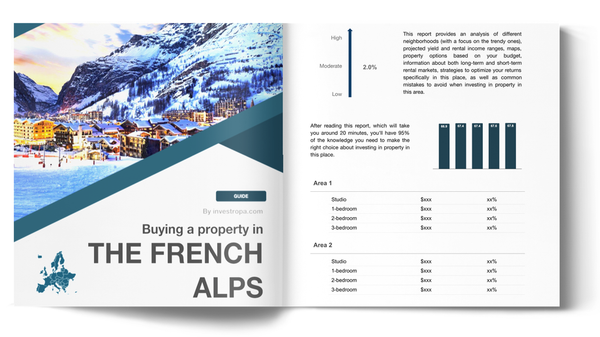
The French Alps offer a unique lifestyle where world-class skiing, stunning lakes, and year-round outdoor adventures meet charming alpine towns and a relaxed European pace of life.
But the French Alps are not one single market: you will find everything from high-pressure Geneva commuter zones in Haute-Savoie to quieter year-round cities like Grenoble and Chambery, plus seasonal resort towns that feel like different places depending on the month.
We constantly update this blog post to reflect the latest data, so you always get fresh and accurate information about living in the French Alps in 2026.
And if you’re planning to buy here, read what went wrong for other property buyers in the French Alps before you commit.
Is the French Alps a good place to live in 2026?
Is quality of life getting better or worse in the French Alps in 2026?
As of early 2026, quality of life in the French Alps is improving in terms of services and outdoor access, but the housing situation is putting real pressure on many residents and newcomers.
The biggest improvement over the past two to three years in the French Alps has been the successful transformation of many ski resorts into genuine year-round destinations, meaning towns like Annecy, Chamonix, and Morzine now offer vibrant summer activities, wellness tourism, and remote work appeal rather than shutting down after winter.
The most persistent challenge in the French Alps remains the severe housing shortage in Haute-Savoie and popular resort basins, where demand from cross-border workers, second-home buyers, and tourists keeps rents and property prices climbing faster than local wages.
In fact, some Alpine areas are now actively regulating this pressure: Grenoble Alpes Metropole launched rent control in 2025 to protect tenants from unsustainable rent increases.
Are hospitals good in the French Alps in 2026?
As of early 2026, hospitals in the French Alps generally meet or exceed Western European standards, especially around major hubs like Grenoble, Annecy, Chambery, and Nice, which all have well-equipped university or regional hospitals.
The hospitals expats most commonly recommend include CHU Grenoble Alpes (a major university hospital certified "Haute Qualite des Soins" by the Haute Autorite de Sante), Centre Hospitalier Annecy Genevois (CHANGE) for Haute-Savoie residents, and CHU de Nice for those living in the southern Alps gateway.
A standard doctor consultation in the French Alps typically costs around 25 to 30 euros (about 27 to 32 USD) at the regulated Sector 1 tariff, though specialists charging extra fees (Sector 2) can cost more, and your final out-of-pocket depends on your public health coverage plus any complementary insurance.
For most employees in the French Alps, private health insurance is not strictly necessary because you will be covered by public health insurance (Assurance Maladie) plus a mandatory employer-provided complementary plan called a "mutuelle," though you might consider additional coverage if you want better dental, optical, or private-room options.
Are there any good international schools in the French Alps in 2026?
As of early 2026, the French Alps offer a solid but geographically uneven selection of international and bilingual schools, with the strongest options clustering around Grenoble, Annecy, and the Geneva cross-border zone rather than in remote resort villages.
The most reputable international schools for expat families in the French Alps include Cite Scolaire Internationale Grenoble (offering bilingual French-English and International Baccalaureate programs), Ecole Bilingue Internationale de Haute-Savoie (EBIHS) near Annecy for younger children, and for those near the Swiss border, Ecolint (International School of Geneva) remains a highly regarded option within commuting distance.
Tuition fees at international schools in the French Alps typically range from 8,000 to 20,000 euros per year (roughly 8,500 to 21,500 USD), with the higher end more common around the Geneva orbit and for British or IB curriculum programs at secondary level.
Waitlists for popular international schools in the French Alps can be long, especially in Haute-Savoie and for key entry years like kindergarten and secondary transitions, so you should apply 6 to 12 months ahead; public French schools are generally good but require strong French language support for non-native speakers.
Is the French Alps a dangerous place in 2026?
As of early 2026, the French Alps are generally safer than many large European metro areas, with low violent crime rates in most towns and a calm atmosphere in residential neighborhoods.
The most common safety concerns for expats in the French Alps are petty theft in tourist hotspots, vehicle break-ins at trailheads and ski parking lots, and occasional incidents linked to nightlife in busy resort centers during peak ski season.
The safest neighborhoods for expats in the French Alps tend to be residential family areas like Annecy-le-Vieux, Cran-Gevrier, and Seynod around Annecy, Meylan and La Tronche near Grenoble, and smaller villages like Les Praz or Les Bois in the Chamonix valley.
Women can generally live alone safely in most French Alps towns and cities, especially in the calm residential neighborhoods families choose, though standard precautions like prioritizing well-lit areas and avoiding isolated shortcuts at night are always wise.
The traps foreign buyers keep discovering in France
Foreign buyers use different agents, documents and assumptions. See the problems that show up when you do not know the local shortcuts yet.
How much does everyday life cost in the French Alps in 2026?
What monthly budget do I need to live well in the French Alps in 2026?
As of early 2026, a single person needs roughly 2,400 to 3,200 euros per month (about 2,600 to 3,400 USD) to live comfortably in mid-range French Alps locations like Annecy, while Grenoble is slightly more affordable at around 1,900 to 2,500 euros per month.
For a modest but decent lifestyle in the French Alps, expect to budget around 1,600 to 2,200 euros per month (about 1,700 to 2,400 USD) in cities like Grenoble or Chambery, which offer lower rents than the lakeside and resort zones.
For a more comfortable or upscale lifestyle in the French Alps, especially in high-demand areas like the Annecy basin or resort valleys like Trois Vallees, you should plan for 3,500 to 5,000 euros per month (roughly 3,700 to 5,300 USD) to cover quality housing, dining, and activities.
Housing is by far the largest expense in the French Alps in 2026, easily consuming 40 to 50 percent of your budget in popular zones like Haute-Savoie, where official rent medians reach about 14.3 euros per square meter in Annecy compared to 11.4 euros per square meter in Grenoble.
What is the average income tax rate in the French Alps in 2026?
As of early 2026, a typical middle-income earner in the French Alps pays an effective income tax rate of around 8 to 15 percent of taxable income after standard allowances, though this varies significantly based on family status and deductions.
The French income tax system uses progressive brackets ranging from 0 percent (on income up to about 11,500 euros) to 45 percent (on income above 177,000 euros), but the bracket rate is not the same as what you actually pay because France calculates tax on "parts" based on household composition.

We did some research and made this infographic to help you quickly compare rental yields of the major cities in France versus those in neighboring countries. It provides a clear view of how this country positions itself as a real estate investment destination, which might interest you if you’re planning to invest there.
What kind of foreigners actually live in the French Alps in 2026?
Where do most expats come from in the French Alps in 2026?
As of early 2026, the largest groups of expats in the French Alps come from Switzerland-linked households, other EU countries (especially the UK before Brexit reshaped flows), and a growing number of North Americans drawn to resort towns and international-school corridors.
Foreign residents make up a significant share of the population in certain French Alps zones, particularly in Haute-Savoie where cross-border workers commuting to Geneva create entire communities where 10 to 20 percent or more of residents have non-French origins.
The main reason expats from top origin countries are drawn to the French Alps is the combination of Swiss-level salaries (for cross-border workers) with French cost of living, plus world-class outdoor lifestyle and proximity to Geneva's international ecosystem.
The expat population in the French Alps is predominantly a mix of working professionals (especially cross-border commuters and tech workers), seasonal hospitality staff, and a smaller but visible group of retirees and digital nomads seeking mountain lifestyle.
Where do most expats live in the French Alps in 2026?
As of early 2026, the top neighborhoods and areas where expats concentrate in the French Alps include the Geneva cross-border belt (Annemasse, Saint-Julien-en-Genevois, Gaillard), the Annecy basin (Annecy-le-Vieux, Cran-Gevrier, Seynod), the Grenoble metro (Meylan, La Tronche, Ile Verte), and resort towns like Chamonix, Morzine, and Meribel.
What makes these neighborhoods attractive to expats in the French Alps is the combination of international job access (especially Geneva commuting), bilingual school options, active expat communities, and the balance between mountain lifestyle and practical urban amenities.
Emerging or up-and-coming neighborhoods in the French Alps that are starting to attract more expats include Samoens (a charming year-round village an hour from Geneva), Bozel near the Trois Vallees, and some quieter parts of the Chartreuse massif near Grenoble for those seeking tranquility over resort buzz.
Are expats moving in or leaving the French Alps in 2026?
As of early 2026, net expat migration to the French Alps is still positive, meaning more foreigners are moving in than leaving, driven by strong demand for quality of life and cross-border work opportunities.
The main factor driving expats to move to the French Alps right now is the combination of outdoor lifestyle appeal, year-round activity options, and competitive salaries for those who can commute to Geneva or work remotely.
The main factor causing some expats to leave the French Alps recently is housing scarcity and high costs, especially in Haute-Savoie and resort basins, plus the administrative burden of French paperwork and winter mobility challenges.
Compared to similar Alpine destinations like the Swiss Alps or Austrian Tirol, the French Alps offer a more affordable entry point with strong lifestyle appeal, though housing pressure in the hottest zones is approaching Swiss levels.
Don't discover after signing what other buyers learned too late
Some of the most expensive property mistakes look obvious only afterwards. Read the cases before the contract makes them your problem.
What paperwork do I need to move to the French Alps in 2026?
What visa options are popular in the French Alps in 2026?
As of early 2026, the three most popular visa types for expats moving to the French Alps are the work visa (visa salarie) for those employed by a French company, the Talent Residence Permit (formerly Talent Passport) for skilled professionals and entrepreneurs, and the long-stay visitor visa for financially independent individuals.
The most commonly used expat visa in the French Alps, the work visa (salarie), requires a job offer or employment contract from a French employer, a work permit obtained by your employer through French labor authorities, and standard documents like a valid passport, proof of accommodation, and health insurance.
France does not currently offer a dedicated digital nomad visa, but remote workers often use the long-stay visitor visa or the self-employed (profession liberale) visa; however, as of June 2025, remote work on a visitor visa is officially prohibited, so digital nomads should consider the entrepreneur or Talent Residence Permit routes instead.
The most popular expat visas in the French Alps are typically valid for one year initially (as a VLS-TS long-stay visa), then renewable for multi-year residence permits, with the Talent Residence Permit offering up to four years and streamlined renewals for qualifying professionals.
How long does it take to get residency in the French Alps in 2026?
As of early 2026, the typical processing time to obtain temporary residency in the French Alps is one to three months after arrival for most long-stay visa holders, though this can vary based on prefecture workload and your specific visa route.
Common factors that can delay or speed up the residency application process in the French Alps include the completeness of your document file (incomplete dossiers cause major delays), the specific prefecture's current backlog (Haute-Savoie can be slower due to high demand), and whether you have an employer handling paperwork versus navigating it alone.
To become eligible for permanent residency (carte de resident) in the French Alps, you typically must live in France continuously for five years, demonstrate French language proficiency at the required level, and show stable income and integration into French society; citizenship eligibility generally follows the same five-year timeline.

We created this infographic to give you a simple idea of how much it costs to buy property in different parts of France. As you can see, it breaks down price ranges and property types for popular cities in the country. We hope this makes it easier to explore your options and understand the market.
How hard is it to find a job in the French Alps in 2026?
Which industries are hiring the most in the French Alps in 2026?
As of early 2026, the top three industries hiring the most in the French Alps are tourism and hospitality (especially seasonal ski and summer activity roles), healthcare and social services (year-round demand in hospitals and clinics), and technology and engineering (particularly around Grenoble's strong tech and research ecosystem).
Getting hired in the French Alps without speaking French is realistic in resort towns with international clientele, multinational tech companies around Grenoble, and cross-border roles connected to Geneva, but French language skills dramatically expand your options for administrative, healthcare, and public-sector roles.
The types of roles most accessible to foreign job seekers in the French Alps include seasonal hospitality and ski instruction, English-teaching and bilingual education positions, tech and engineering roles in Grenoble's semiconductor and software clusters, and healthcare positions for those with recognized qualifications.
What salary ranges are common for expats in the French Alps in 2026?
As of early 2026, typical gross salary ranges for expats working in the French Alps span from about 30,000 to 60,000 euros per year (roughly 32,000 to 64,000 USD) for mid-level professional roles, with significant variation based on industry, location, and whether you have cross-border arrangements.
Entry-level or mid-level expat positions in the French Alps typically pay between 25,000 and 40,000 euros gross per year (about 27,000 to 43,000 USD), with seasonal hospitality roles often at the lower end and tech or engineering positions trending higher.
Senior or specialized expat roles in the French Alps, particularly in Grenoble's tech sector, healthcare leadership, or cross-border management positions, can command 60,000 to 90,000 euros gross per year (roughly 64,000 to 96,000 USD) or more.
Employers in the French Alps do sponsor work visas, but it is more common for hard-to-fill skilled roles like engineering, specialized healthcare, and senior tech positions than for typical seasonal hospitality work where labor supply is more available.
The expensive mistakes property buyers keep repeating
Deposits lost, defects missed, documents misunderstood and costs discovered too late. See the real cases before your savings are on the line.
What's daily life really like for expats in the French Alps right now?
What do expats love most about living in the French Alps right now?
The top things expats love most about living in the French Alps are the immediate access to world-class outdoor activities (skiing, hiking, lake swimming), the stunning natural beauty as a daily backdrop, and the relaxed yet active lifestyle that combines European culture with mountain adventure.
The lifestyle benefit most frequently praised by expats in the French Alps is the ability to integrate nature into everyday routines, whether that means a morning hike before work, skiing after office hours, or weekend lake trips to places like Annecy that would be vacation destinations anywhere else.
The practical advantage expats appreciate most in the French Alps is the excellent public infrastructure, including reliable healthcare, good public transport in cities like Grenoble, and strong international connectivity through nearby Geneva airport.
The social and cultural aspect that makes the French Alps particularly enjoyable for expats is the welcoming mountain community vibe in many towns, where both locals and fellow expats share a passion for outdoor life, creating natural opportunities for connection.
What do expats dislike most about life in the French Alps right now?
The top complaints expats have about living in the French Alps are the severe housing scarcity and high costs (especially in Haute-Savoie and resort zones), the challenging winter mobility logistics (snow tires, road closures, parking), and the complexity of French administrative paperwork.
The daily inconvenience that frustrates expats the most in the French Alps is the winter driving situation, where mandatory snow tires or chains, frequent road closures during storms, and limited parking in resort towns can make even simple errands stressful during peak season.
The bureaucratic issue that causes the most headaches for expats in the French Alps is dealing with prefecture appointments and residence permit renewals, where high demand in popular departments like Haute-Savoie means long wait times, extensive document requirements, and unpredictable processing.
For most expats, these frustrations are manageable rather than deal-breakers, especially once you adapt to the rhythm of Alpine life and learn to plan ahead for housing, paperwork, and winter logistics.
What are the biggest culture shocks in the French Alps right now?
The biggest culture shocks expats experience when moving to the French Alps are the dramatic seasonality of some towns (a bustling resort in February can feel deserted in May), the slower French bureaucratic tempo, and the expectation that you will integrate into local life rather than remain in an expat bubble.
The social norm that surprises newcomers the most in the French Alps is the importance of the two-hour lunch break and the general French approach to work-life balance, where shops close midday, Sunday is genuinely a rest day, and rushing through meals is considered almost rude.
The aspect of daily routines that takes the longest for expats to adjust to in the French Alps is the seasonal rhythm of mountain life, where everything from school schedules to restaurant openings revolves around ski season, summer tourism, and the quiet "shoulder" periods in between.

We made this infographic to show you how property prices in France compare to other big cities across the region. It breaks down the average price per square meter in city centers, so you can see how cities stack up. It’s an easy way to spot where you might get the best value for your money. We hope you like it.
Can I buy a home as a foreigner in the French Alps in 2026?
Can foreigners legally own property in the French Alps in 2026?
As of early 2026, foreign property ownership in the French Alps is fully allowed, with no nationality-based restrictions preventing non-French buyers from purchasing residential real estate.
The specific conditions that apply to foreigners buying property in the French Alps are mainly standard legal and anti-money-laundering checks, plus potential financing constraints if you need a French mortgage without French income or residency history.
Foreigners can own all property types in the French Alps, including apartments, chalets, houses, and land, with no restrictions on the type of real estate available to non-French buyers.
What is the average price per m² in the French Alps in 2026?
As of early 2026, average residential property prices in the French Alps vary dramatically by location, from about 3,800 euros per square meter (roughly 4,100 USD or 3,500 GBP) in Savoie overall to 5,100 euros per square meter in Annecy and up to 9,700 euros per square meter in the ultra-premium Trois Vallees resort zone.
Property prices in the French Alps have trended upward over the past two to three years, driven by strong demand from cross-border workers, second-home buyers, and international investors, though growth has moderated to around 2 to 3 percent annually as the market stabilizes.
Do banks give mortgages to foreigners in the French Alps in 2026?
As of early 2026, mortgages are available to foreigners in the French Alps but with stricter conditions than for French residents, including higher down payment requirements and more extensive documentation.
Banks known to offer mortgages to foreigners in the French Alps include BNP Paribas, Credit Agricole, and Societe Generale, though international mortgage brokers can often help navigate the best options for non-resident buyers.
Typical mortgage conditions for foreigners in the French Alps include down payments of 20 to 40 percent (higher than the 10 to 20 percent often available to French residents), interest rates constrained by the Banque de France usury rate ceiling, and maximum loan terms of 20 to 25 years.
Documents foreigners typically need to qualify for a mortgage in the French Alps include proof of stable income (employment contracts, tax returns, bank statements), valid identification, proof of existing assets, and for non-residents, evidence of the property's intended use and your connection to France.
Don't take our word for it. Read what buyers actually said
Every trap comes from a real buyer experience, dispute, review, forum post or local report. Open the original source and judge it for yourself.
What sources have we used to write this blog article?
Whether it’s in our blog articles or our buyer-mistake research for the French Alps, we rely on the strongest methodology we can and don’t throw out numbers at random.
We also aim to be fully transparent, so below we've listed the authoritative sources we used, and explained how we used them and the methods behind our estimates.
| Source | Why it's authoritative | How we used it |
|---|---|---|
| INSEE | France's official national statistics office for demographic and economic data. | We used INSEE to anchor "what's normal" for population, incomes, and unemployment in Alpine departments. We cross-checked private-sector cost estimates against these official baselines. |
| Observatoires des Loyers | Ministerially-approved network producing standardized, representative rent statistics. | We used it to get credible median rent figures per square meter for key Alpine cities like Annecy and Grenoble. We translated these into real monthly rent budgets for typical apartment sizes. |
| Notaires de France (Savoie/Haute-Savoie) | Transaction-based data from notaries, the most ground-truth housing dataset in France. | We used notary medians to report accurate price per square meter by Alpine micro-markets. We translated these into realistic expectations for property buyers. |
| Direction Generale des Finances Publiques (DGFiP) | France's official tax authority explaining how income tax is computed. | We used it to explain the progressive tax mechanism and produce practical effective-rate estimates. We then applied these to typical expat salary scenarios. |
| Haute Autorite de Sante (HAS) | Independent public authority certifying hospital and clinic quality in France. | We used HAS certification to define "good hospitals" structurally rather than relying on reviews. We cited examples of local hospitals with strong certification outcomes. |
| Ministere de l'Economie | Official government source for employer health coverage obligations. | We used it to answer whether expats need private insurance in the French context. We triangulated with labor guidance to clarify typical employee coverage expectations. |
| France Travail | Official public employment service portal for job listings in France. | We used it to ground "who's hiring" in the Alps, especially for tourism and hospitality roles. We combined this with unemployment stats to gauge job market tightness. |
| Banque de France | France's central bank setting key credit constraints like usury rates. | We used it to frame the borrowing environment in early 2026 for mortgage seekers. We triangulated this with property price levels from notaries. |
| France-Visas | Official government portal for visa and immigration information. | We used it to detail visa options, requirements, and processing expectations. We applied prefecture-specific adjustments for Alpine departments. |
| ANIL | Public-interest reference body for neutral, legal housing guidance in France. | We used it to frame tenant and landlord rules and rent-indexing basics. We cross-checked any housing "rule of thumb" against their neutral guidance. |

We have made this infographic to give you a quick and clear snapshot of the property market in France. It highlights key facts like rental prices, yields, and property costs both in city centers and outside, so you can easily compare opportunities. We’ve done some research and also included useful insights about the country’s economy, like GDP, population, and interest rates, to help you understand the bigger picture.


