
Authored by the expert who managed and guided the team behind the United Kingdom Property Pack
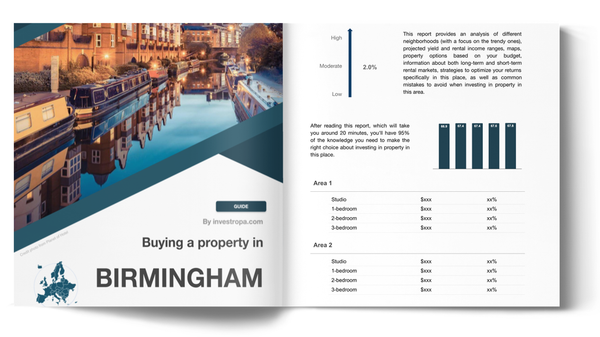
Yes, the analysis of Birmingham's property market is included in our pack
Early 2026 Birmingham feels more like a negotiation market with pockets of competition than a frenzied bidding war.
Official data puts the average Birmingham property price around £235,000, with the market broadly flat year-on-year while rents keep rising.
We constantly update this blog post to reflect the latest risks, scams, and insider knowledge for foreign buyers in Birmingham.
And if you're planning to buy a property in this place, you may want to download our pack covering the real estate market in Birmingham.
How risky is buying property in Birmingham as a foreigner in 2026?
Can foreigners legally own properties in Birmingham in 2026?
As of early 2026, foreigners can legally buy and own residential property in Birmingham without any nationality restrictions, whether it is a freehold house or a leasehold flat.
The main conditions that apply to foreign buyers in Birmingham are anti-money laundering checks, which require proof of identity and source of funds, plus a 2% Stamp Duty Land Tax surcharge for non-UK residents on top of standard rates.
Since there are no restrictions on direct ownership in Birmingham, foreigners typically buy property in their own name rather than through special legal structures, though some investors use UK limited companies for tax planning purposes.
Not sure what your passport allows in United Kingdom? Tell us and we'll check.
What buyer rights do foreigners actually have in Birmingham in 2026?
As of early 2026, foreign buyers in Birmingham have the same legal rights as UK nationals, including full contract-based rights, property-law rights tied to the title register, and statutory consumer protections against misleading practices.
If a seller breaches a contract in Birmingham, foreign buyers can pursue legal remedies through the English courts, including specific performance to force completion or damages for financial losses, though this requires exchange of contracts to have occurred first.
The most common right that foreigners mistakenly assume they have in Birmingham is that an accepted offer is legally binding, when in fact either party can walk away without penalty until contracts are formally exchanged, which opens the door to gazumping.


Got a question about the paperwork in United Kingdom?
Notary, tax number, bank, residence permit: ask us. We reply within 12 hours, for free.
Ask us your question →
How strong is contract enforcement in Birmingham right now?
Contract enforcement for real estate transactions in Birmingham is strong by global standards, with the UK ranking 14th out of 143 countries in the World Justice Project's Rule of Law Index 2025, which places it well ahead of countries like France, Spain, or Italy for civil justice reliability.
However, the main weakness foreigners should know about in Birmingham is that "strong" does not mean "fast," as UK civil courts handle large case volumes and pursuing a dispute can take many months and significant legal costs, which often means prevention is far more valuable than relying on your ability to sue later.
By the way, we detail all the documents you need and what they mean in our property pack covering Birmingham.
Something in the paperwork worrying you? Write to us.
Buying real estate in Birmingham can be risky
An increasing number of foreign investors are showing interest. However, 90% of them will make mistakes. Avoid the pitfalls with our comprehensive guide.

Which scams target foreign buyers in Birmingham right now?
Are scams against foreigners common in Birmingham right now?
Real estate scams targeting foreigners in Birmingham are not everyday occurrences, but UK Finance data shows that fraud in property transactions remains a significant risk nationally, with high-value payment interception scams causing the most financial damage when they do occur.
The type of property transaction most frequently targeted by scammers in Birmingham is the purchase of city-centre flats, especially off-plan or investment properties marketed with "guaranteed rental yields" to overseas buyers who cannot easily visit in person.
The profile of foreign buyer most commonly targeted in Birmingham is someone purchasing remotely, often attracted by investment seminars or online marketing, who relies heavily on email communication and feels pressure to move quickly to secure a deal.
The single biggest warning sign that a deal may be a scam in Birmingham is any last-minute request to change bank details for your deposit or completion payment, especially if it comes by email and creates urgency to transfer immediately.
What are the top three scams foreigners face in Birmingham right now?
The top three scams that foreigners most commonly face when buying property in Birmingham are payment diversion fraud where criminals hijack bank details before you transfer funds, leasehold cost ambushes where service charges and major works bills are hidden until after purchase, and fake or misleading "investment advisor" schemes from unregulated intermediaries promising guaranteed returns.
The most common scam, payment diversion, typically unfolds when criminals hack into email chains between you and your solicitor, then send a convincing message with "updated bank details" right before you are due to transfer your deposit or completion funds, resulting in your money going directly to the fraudsters' account.
To protect yourself from payment diversion, always verify bank details by calling your solicitor on a phone number you found independently; to avoid leasehold cost ambushes, request three years of service charge accounts and any planned major works before exchange; and to dodge fake advisors, check every financial firm on the FCA Warning List before trusting them with anything.

We did some research and made this infographic to help you quickly compare rental yields of the major cities in the UK versus those in neighboring countries. It provides a clear view of how this country positions itself as a real estate investment destination, which might interest you if you’re planning to invest there.
How do I verify the seller and ownership in Birmingham without getting fooled?
Got a question nobody's answered?
Buying in United Kingdom and can't find a clear answer anywhere? Ask us. Free reply within 12 hours.
Ask us your question →
How do I confirm the seller is the real owner in Birmingham?
The standard verification process in Birmingham is to obtain the official Title Register from HM Land Registry, which shows the registered owner's name, and then have your conveyancer confirm that the seller's identity matches this register before you proceed.
The official document foreigners should check is the Title Register, which you can request through GOV.UK's Land Registry search service for a small fee, and it will show the legal owner, tenure type, and any charges or restrictions on the property.
The most common trick fake sellers use in Birmingham is sending PDF copies of title documents by email rather than letting you obtain them directly from the registry, which is relatively rare but becomes more dangerous when combined with properties where the real owner lives abroad or the property is vacant.
Where do I check liens or mortgages on a property in Birmingham?
In Birmingham, you check liens and mortgages through HM Land Registry, where they appear on the Title Register as "charges" along with any restrictions or notices that affect the property.
When checking for liens in Birmingham, you should request both the Title Register and Title Plan, and specifically look for entries in the charges section that show outstanding mortgages, legal charges, or restrictions that could prevent a clean sale.
The type of encumbrance most commonly missed by foreign buyers in Birmingham is the "restriction" entry, which can limit how the property is sold or require third-party consent, and this is especially relevant for leasehold flats where freeholder consent or management company involvement may be required.
It's one of the aspects we cover in our pack about the real estate market in Birmingham.
Got a question about the market in United Kingdom?
Prices, areas, rentals: ask us what you'd ask a friend who knows. Free reply within 12 hours.
Ask us your question →How do I spot forged documents in Birmingham right now?
The most common type of forged document in Birmingham property scams is fake bank detail confirmation letters or emails, which is relatively rare in terms of sophisticated title forgery but more common in payment instruction manipulation, making it the most financially dangerous forgery vector.
Specific red flags that indicate a document may be forged in Birmingham include receiving title documents only as email attachments rather than directly from Land Registry, last-minute changes to payment instructions, slight misspellings in official letterheads, and email addresses that look similar to but are not exactly the same as your solicitor's.
The official verification method in Birmingham is to obtain title documents directly through HM Land Registry's official service rather than accepting emailed copies, and to verify any bank details by phoning your solicitor on a number you found independently, never from the email itself.
Get the full checklist for your due diligence in Birmingham
Don't repeat the same mistakes others have made before you. Make sure everything is in order before signing your sales contract.
What "grey-area" practices should I watch for in Birmingham?
What hidden costs surprise foreigners when buying a property in Birmingham?
The three most common hidden costs foreigners overlook in Birmingham are Stamp Duty Land Tax including the 2% non-resident surcharge (which can add £10,000 to £15,000 or $12,500 to $19,000 or €11,500 to €17,500 on a typical purchase), leasehold service charges that can run £1,500 to £4,000 (around $1,900 to $5,000 or €1,750 to €4,700) per year, and conveyancing searches and legal fees totalling £1,500 to £3,000 ($1,900 to $3,800 or €1,750 to €3,500).
The hidden cost most often deliberately concealed by sellers or agents in Birmingham is upcoming major works bills on leasehold flats, which sometimes happens and can amount to £5,000 to £30,000 (around $6,300 to $38,000 or €5,800 to €35,000) when building repairs, cladding remediation, or lift replacements are already planned but not disclosed upfront.
Residency rules change often. Ask us about your case.
Are "cash under the table" requests common in Birmingham right now?
"Cash under the table" requests are not a normal practice in mainstream Birmingham residential purchases, and encountering one should be treated as a serious red flag because it conflicts with the strict anti-money laundering checks that regulated solicitors must perform.
What you might encounter instead of outright cash requests in Birmingham is pressure to skip steps like surveys or searches to "beat other bidders," particularly in competitive neighbourhoods like Moseley, Kings Heath, Harborne, or Edgbaston, which is a softer form of the same corner-cutting impulse.
If a foreigner agrees to any undeclared cash payment in Birmingham, they face serious legal risks including potential mortgage fraud charges if a lender is involved, HMRC tax investigations, and the possibility that the entire transaction could be challenged or unwound, leaving them with neither the property nor their money.
Buying real estate in United Kingdom?
Ask us anything about your purchase: taxes, contracts, banks, permits. A real person replies within 12 hours, for free.
Ask us your question →Are side agreements used to bypass rules in Birmingham right now?
Side agreements to bypass official rules are not standard practice in Birmingham, but they do sometimes occur in the form of creative allocation of the purchase price, such as inflating the value attributed to "fixtures and fittings" to reduce Stamp Duty liability.
The most common type of side agreement in Birmingham involves splitting the purchase price between the property and items like furniture or appliances at inflated values, which can be used to lower the SDLT bill or to make mortgage applications appear more favourable.
If authorities discover a side agreement in Birmingham, foreigners face HMRC investigations with potential penalties and interest on underpaid Stamp Duty, possible mortgage fraud charges if a lender was misled, and the risk that their purchase becomes legally complicated or even voidable.

We made this infographic to show you how property prices in the UK compare to other big cities across the region. It breaks down the average price per square meter in city centers, so you can see how cities stack up. It’s an easy way to spot where you might get the best value for your money. We hope you like it.
Can I trust real estate agents in Birmingham in 2026?
Are real estate agents regulated in Birmingham in 2026?
As of early 2026, real estate agents in Birmingham are controlled but not licensed in the way many foreigners expect, meaning there is no exam or qualification gate to become an agent, but there are legal standards and enforcement mechanisms in place.
A legitimate estate agent in Birmingham should be a member of an approved redress scheme such as The Property Ombudsman or the Property Redress Scheme, which is a legal requirement, and many reputable agents also hold qualifications from bodies like Propertymark or the NAEA.
Foreigners can verify whether a Birmingham agent is properly registered by asking for their redress scheme membership details and checking directly with the scheme, and for any firm offering financial advice or investment services, you should also check the FCA Warning List to ensure they are not unauthorised or a clone firm.
Please note that we have a list of contacts for you in our property pack about Birmingham.
Got a question about buying in United Kingdom?
Ask our team. A real person replies within 12 hours, for free.
Ask us your question →What agent fee percentage is normal in Birmingham in 2026?
As of early 2026, the normal estate agent fee in Birmingham is around 1% to 2% of the sale price plus VAT, with many sources citing a national average of approximately 1.4% including VAT.
The typical range of agent fees in Birmingham covers most transactions between 0.9% and 3.6%, depending on whether you use a traditional high-street agent, an online-only service, or negotiate based on the property value and market conditions.
In Birmingham, as in the rest of England, it is the seller who typically pays the estate agent fee, not the buyer, but buyers should still understand this dynamic because it affects how much motivation an agent has to push for higher prices or faster completions.
Want us to check the numbers for your case? Write to us, it's free.
Get the full checklist for your due diligence in Birmingham
Don't repeat the same mistakes others have made before you. Make sure everything is in order before signing your sales contract.
What due diligence actually prevents disasters in Birmingham?
What structural inspection is standard in Birmingham right now?
The standard structural inspection in Birmingham is a RICS Home Survey conducted by an independent chartered surveyor, with Level 2 surveys being typical for conventional properties in reasonable condition and Level 3 surveys recommended for older or potentially problematic homes.
A qualified inspector in Birmingham should check the roof structure and coverings, walls for cracks and damp, floors and ceilings, windows and doors, electrics and plumbing condition, insulation and ventilation, and any signs of subsidence or structural movement.
The professional qualified to perform structural inspections in Birmingham is a RICS-registered chartered surveyor, and you can find one through the RICS website to ensure they follow recognised professional standards.
The most common structural issues that inspections reveal in Birmingham properties include damp and condensation problems in older terraces, roof issues in Victorian and Edwardian housing stock found in areas like Edgbaston, Moseley, and Kings Heath, and outdated electrical wiring that needs upgrading.
How do I confirm exact boundaries in Birmingham?
The standard process for confirming property boundaries in Birmingham is to obtain the Title Plan from HM Land Registry, which shows the registered extent of the property in mapped form, and then physically verify this against what you see on the ground.
The official document showing legal boundaries is the Title Plan, which you can request through HM Land Registry, though you should understand that these plans show general boundaries rather than precise fence-line positions to the centimetre.
The most common boundary dispute affecting foreign buyers in Birmingham involves shared driveways, rear access paths, and alleyways in terraced housing areas, where assumptions about rights of way or maintenance responsibilities turn out to be different from what was expected.
If boundaries are critical to your purchase in Birmingham, you should hire a chartered surveyor with boundary expertise who can provide an opinion on the physical extent and flag any discrepancies between the Title Plan and what exists on the ground.
Buying in United Kingdom? Get a free answer in 12 hours
Ask our team anything about buying property in United Kingdom. No sales pitch, no newsletter.
Ask us your question →What defects are commonly hidden in Birmingham right now?
The top three defects that sellers commonly conceal in Birmingham are damp problems disguised with fresh paint or dehumidifiers, which is common in older terraces; roof issues covered by recent cosmetic repairs, which sometimes happens; and service charge arrears or upcoming major works on leasehold flats, which is also common in city-centre buildings around Jewellery Quarter, Digbeth, and the City Core.
The inspection technique that helps uncover hidden defects in Birmingham is a combination of a Level 2 or Level 3 RICS survey for physical issues, requesting three years of service charge accounts and any Section 20 notices for leasehold properties, and using the Environment Agency flood risk checker for surface water risks that often go unchecked in urban areas.
Worried about what you can't see? Tell us about the place and we'll tell you what to check.

We have made this infographic to give you a quick and clear snapshot of the property market in the UK. It highlights key facts like rental prices, yields, and property costs both in city centers and outside, so you can easily compare opportunities. We’ve done some research and also included useful insights about the country’s economy, like GDP, population, and interest rates, to help you understand the bigger picture.
What insider lessons do foreigners share after buying in Birmingham?
What do foreigners say they did wrong in Birmingham right now?
The most common mistake foreigners say they made when buying in Birmingham is trusting the deal narrative and agent reassurances more than the actual documents, meaning they focused on the listing description and sales pitch rather than carefully reviewing the title register, lease terms, and service charge history.
The top three regrets foreigners most frequently mention after buying in Birmingham are not getting a proper survey on older properties, underestimating how much leasehold running costs would eat into rental yields, and moving money without properly verifying bank details first.
The single piece of advice experienced foreign buyers most often give to newcomers in Birmingham is to verify everything independently, especially bank details by phone, because the moment you transfer a large sum based on an email is exactly when scammers strike.
The mistake that cost foreigners the most money or stress in Birmingham is treating the money transfer like a normal bank payment instead of following the Law Society protocol of verifying payment details by calling the solicitor on a number found independently, which has resulted in some buyers losing their entire deposit to payment diversion fraud.
What do locals do differently when buying in Birmingham right now?
The key difference in how locals approach buying property in Birmingham is that they evaluate neighbourhoods at the micro-area level rather than by postcode, understanding that Jewellery Quarter, Digbeth, Edgbaston, Harborne, Moseley, Kings Heath, Stirchley, Selly Oak, and Erdington all behave very differently in terms of noise levels, parking, student density, and resale liquidity.
The verification step locals routinely take that foreigners often skip in Birmingham is checking service charge history and planned major works for leasehold flats before making an offer, rather than discovering these costs only during conveyancing when they feel committed to the purchase.
The local knowledge advantage that helps Birmingham residents get better deals is their understanding of which streets within a neighbourhood are significantly more or less desirable, such as knowing which terraces back onto noisy commercial premises, which blocks have problematic management companies, and which areas have better transport links to specific employment centres.
Don't buy the wrong property, in the wrong area of Birmingham
Buying real estate is a significant investment. Don't rely solely on your intuition. Gather the right information to make the best decision.

What sources have we used to write this blog article?
Whether it's in our blog articles or the market analyses included in our property pack about Birmingham, we always rely on the strongest methodology we can ... and we don't throw out numbers at random.
We also aim to be fully transparent, so below we've listed the authoritative sources we used, and explained how we used them and the methods behind our estimates.
| Source | Why it's authoritative | How we used it |
|---|---|---|
| Office for National Statistics (ONS) | ONS is the UK's official statistics body for prices and rents. | We used it to anchor Birmingham's average price around £235,000 and recent market direction. We also used rent figures to reality-check yield claims from agents. |
| GOV.UK Buying a Home | This is the government's plain-English guide to the buying process. | We used it to structure the step-by-step process and explain when buyers gain legal protection. We used it to ensure our advice matches official expectations. |
| HM Land Registry | It's the official route to verify ownership and title information. | We used it to explain how to confirm who owns a property. We used it to turn "do due diligence" into a concrete checklist. |
| The Law Society | The Law Society is the professional body for solicitors in England. | We used it to describe payment diversion fraud and prevention protocols. We used it to create the "how to pay safely" guidance. |
| UK Finance Annual Fraud Report 2025 | UK Finance aggregates banking-sector fraud data across the UK. | We used it to set expectations about fraud prevalence in property transactions. We used it to explain why payment interception remains a core risk. |
| GOV.UK Leasehold Guidance | It's the government's summary of leasehold costs and disputes. | We used it to explain service charge risks for flat buyers. We used it to build the leasehold due diligence checklist. |
| Leasehold Advisory Service (LEASE) | LEASE is the government-funded advisory body for leaseholders. | We used it for detailed guidance on service charge requests and disputes. We used it to shape the "what locals check" section for flats. |
| World Justice Project Rule of Law Index | WJP is a respected global benchmark for rule-of-law quality. | We used it to ground contract enforcement claims in external data. We used it to compare UK courts with other countries. |
| RICS Home Surveys | RICS sets the dominant UK surveying standards for buyers. | We used it to define what a proper survey means in Birmingham. We used it to justify when to upgrade to Level 3 inspections. |
| GOV.UK SDLT Rates | This is the definitive government page for Stamp Duty rules. | We used it to frame the biggest unavoidable transaction cost. We used it to warn against price-splitting tactics. |
| Environment Agency Flood Risk Checker | It's the official public tool for flood risk in England. | We used it to flag surface water risk often missed in urban Birmingham. We used it to provide a specific action buyers can complete in minutes. |

We created this infographic to give you a simple idea of how much it costs to buy property in different parts of the UK. As you can see, it breaks down price ranges and property types for popular cities in the country. We hope this makes it easier to explore your options and understand the market.
