

SUMMARY
Expats should know before moving to Prague that the city is still an excellent place to live, but it works far better when housing costs and residence status are sorted before arrival.
Prague's old reputation as a cheap Central European capital is increasingly misleading. Transport, restaurants and many everyday expenses remain reasonable, but private housing now absorbs a much larger share of a newcomer's budget.
Income changes the experience dramatically. A single professional earning CZK 90,000 or more can still enjoy a very comfortable Prague lifestyle, while someone on CZK 45,000-55,000 will probably need to compromise on location, apartment size or privacy.
The rental market also requires more cash upfront than the monthly rent suggests. Deposit, first rent and an agency commission can make moving into an otherwise affordable apartment surprisingly expensive.
Paying extra to live in Prague 1 rarely improves everyday life enough to justify the premium. The city's transport network makes Vinohrady, Vršovice, Dejvice, Žižkov, Nusle, Letná and Holešovice practical alternatives without creating a difficult commute.
A car is almost optional for inner-city residents. An annual Prague public-transport pass still costs only CZK 3,650, which is unusually cheap relative to both local wages and the cost of owning a vehicle.
Immigration status creates a much bigger divide than language does. EU citizens can move relatively easily, while many non-EU residents need to think carefully about Employee Card rules, job changes, residence deadlines and whether remote work actually gives them a legal route to live in Czechia.
Families face a second affordability divide around education. Czech public schools keep the cost structure manageable, while international schooling can add CZK 500,000-800,000 or more per child each year and easily become the household's largest discretionary expense.
English is enough to build a functional life in Prague, especially in international companies and central neighbourhoods. Czech becomes much more valuable later, when administration, doctors, landlords and deeper local friendships start mattering more than simply getting around.
The strongest part of Prague's expat case is what happens after the move is organised. Safety, cheap public transport, compact neighbourhoods, green space and easy Central European travel make ordinary life unusually convenient; rent and bureaucracy cause far more friction than the city itself.
The people most likely to be disappointed are not those expecting Prague to be difficult, but those arriving with an outdated idea that a modest foreign salary automatically buys a premium lifestyle. Solve the housing budget and legal status first, and Prague remains a very compelling expat city.
Is Prague still a good city for expats today?
Yes. Prague is still one of the easier European capitals to enjoy as an expat, provided your income can handle the city's much more expensive housing market.
The basic package remains unusually strong. Prague is safe, compact, easy to cross without a car and large enough to support international companies, English-speaking services and a sizeable foreign community. Public transport is a particular advantage: Prague Integrated Transport currently charges CZK 3,650 for an annual adult pass, or just over CZK 300 a month.
Recent wage data are encouraging too. Salaries in Prague are still rising faster than consumer prices, so local purchasing power has improved. Housing is the exception: it has followed a much steeper trajectory over the past several years, leaving newcomers with a city that often feels affordable after the rent has been paid and expensive while they are looking for a flat.
That helps explain why two expats can give completely different reviews of Prague. A software engineer earning CZK 100,000 a month, a dual-income couple and someone arriving on CZK 45,000 are living in the same city but dealing with very different economics.
For professionals with a decent salary, Prague still offers a lot for the money. Anyone arriving because Prague has a reputation for being "cheap" is much more likely to be disappointed.


Got a question about the market in Czech Republic?
Prices, areas, rentals: ask us what you'd ask a friend who knows. Free reply within 12 hours.
Ask us your question →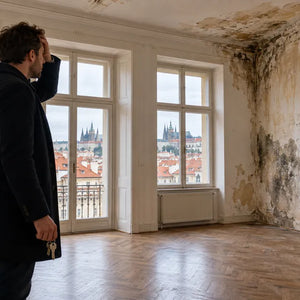
Is Prague still cheap, or has housing changed the equation?
Prague is no longer a cheap capital for renters, even though transport and several everyday expenses are still inexpensive by Western European standards.
A recent sample of 585 live Prague rental listings found a median asking rent of about CZK 19,000 for a 1+kk studio, CZK 25,000 for a 2+kk — roughly a one-bedroom — and CZK 39,000 for a three-room apartment. These are asking rents, and service charges or utilities can sit on top.
The mismatch becomes clearer when we compare housing with everything else. Prague's annual public-transport pass costs CZK 3,650. A normal restaurant meal commonly lands around CZK 200-250. Groceries for one person can still be kept to several thousand crowns a month without living especially frugally. Housing is in a different league.
Prague's old Central European bargain reputation has therefore become unreliable. Someone coming from London, Dublin or Zurich may still find the total budget attractive. Someone expecting the Prague of ten years ago will notice the change immediately.
The current cost structure is uneven: rent can look surprisingly Western European, while getting around the city remains exceptionally cheap.
| Prague expense | Current rough level | What it means for expats | Our read |
|---|---|---|---|
| 1+kk studio rent | CZK 19,000/month | Entry-level private housing is no longer cheap | Expensive versus local pay |
| 2+kk rent | CZK 25,000/month | Common choice for singles and couples | Main budget pressure |
| Three-room rent | CZK 39,000/month | Family housing gets expensive quickly | Significant cost |
| Annual public transport | CZK 3,650 | Barely CZK 300/month | Exceptionally cheap |
| Ordinary restaurant meal | Around CZK 200-250 | Eating out is still accessible | Moderate |
Wondering if now's the time to buy in Czech Republic? Tell us your plan.
How much should an expat earn to live comfortably in Prague?
A single expat will usually start feeling comfortable in Prague somewhere around CZK 70,000-80,000 gross a month, while CZK 100,000 or more gives much more room for central housing, travel and saving.
Prague's latest official wage data put the average gross monthly salary at CZK 67,945. The Czech Statistical Office also reported an 8.2% year-on-year increase, while real wages rose 6.5%. Pay is currently moving in the right direction.
Still, an average salary does not buy an average-looking expat lifestyle particularly easily. Put a CZK 25,000 one-bedroom beside CZK 67,945 of gross income and the rent alone takes about 37% of gross salary before utilities, tax, social insurance or health contributions have been deducted.
A studio, shared flat or outer neighbourhood makes CZK 50,000-60,000 workable. A couple with two decent salaries has a much easier equation because rent does not double when the second income arrives.
The expensive version of Prague usually comes from combining three choices: living alone, choosing a fashionable inner neighbourhood and going out regularly. Remove one and the city becomes much easier to afford.
| Gross monthly income | What Prague will probably feel like | Typical housing choice | Financial room |
|---|---|---|---|
| CZK 45k-55k | Manageable with compromises | Shared flat or cheaper studio | Limited |
| CZK 65k-80k | Comfortable for many singles | Modest private apartment | Reasonable |
| CZK 90k-110k | Very comfortable for one person | Good inner-city apartment | Strong |
| CZK 120k-160k combined | Comfortable for a couple | Larger private apartment | Strong |
| Family + international school | Requires much more | Family apartment | School becomes the big variable |
How hard is it to rent an apartment in Prague?
Renting in Prague is perfectly doable, but attractive flats at sensible prices can move fast and the amount of cash needed at the start catches many newcomers out.
The advertised rent is only part of the first payment. A tenant may have to cover the first month's rent, a security deposit and an estate-agent commission within a very short period. Deposits of one or two months are common, while an agency fee can be close to another month's rent plus VAT.
A fairly ordinary apartment can therefore require tens of thousands of crowns more than the headline monthly price before the tenant has bought furniture, paid utilities or even moved in.
There are ways around part of that cost. Direct-owner platforms such as Bezrealitky can remove the estate-agent commission. The trade-off is that well-priced listings attract attention quickly, and communication may be easier for someone who speaks Czech.
Foreign tenants are commonplace in Prague, so being an expat is hardly unusual. What helps more is having proof of income, being ready to sign, understanding exactly what the service charges include and checking whether electricity or gas must be transferred into the tenant's name.
This is one area where arriving with extra liquidity makes a real difference. Trying to move to Prague with enough money for only one month's rent is asking for trouble.
Got a question about renting out in Czech Republic?
Rules, yields, managers: tell us your plan and we'll reply within 12 hours, for free.
Ask us your question →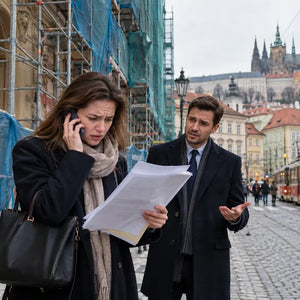
Where should expats actually live in Prague?
Most expats will get a better version of Prague by living just outside the tourist centre rather than paying extra to be in Prague 1.
Vinohrady is still the obvious all-rounder for newcomers who want cafés, restaurants, attractive streets, parks and quick transport. Karlín feels newer and more polished, with modern apartments and offices, although current rental listings place it among the pricier inner neighbourhoods.
Vršovice gives a similar café-and-neighbourhood lifestyle at a lower cost. Letná and Holešovice work well for people who want parks, bars, galleries and a more local atmosphere. Dejvice is calmer and particularly attractive for families, while Žižkov and Nusle often provide more apartment for the money without pushing residents far from the centre.
The map can also mislead newcomers. Prague's tram and metro network is dense enough that living five kilometres from Old Town does not necessarily create a difficult commute. Being two minutes from a useful tram line can matter more than having a Prague 1 postcode.
Tourism reinforces that point. According to the latest Czech Statistical Office figures, Prague received about 3.83 million accommodated visitors in the first half of the year. Around Charles Bridge, Old Town and the busiest parts of Prague 1, tourism clearly changes prices, crowds and the street atmosphere.
A resident in Vršovice, Dejvice or Nusle experiences a much more ordinary city. We would choose a good transport connection and a neighbourhood we actually like over walking distance to Charles Bridge almost every time.
| Prague area | What it feels like | Current price position | Best for |
|---|---|---|---|
| Vinohrady | Attractive, social, green | Premium | First-time expats |
| Karlín | Modern, polished, office-heavy | Expensive | Professionals |
| Vršovice | Lively, residential, less polished | Better value | Couples and younger residents |
| Letná/Holešovice | Creative, social, near parks | Mid-to-premium | Urban lifestyle |
| Dejvice | Calm, green, spacious | Mid-to-premium | Families |
| Žižkov/Nusle | Dense, local, convenient | Better value | Budget-conscious inner-city living |
Not sure what your passport allows in Czech Republic? Tell us and we'll check.
Do expats need a car in Prague?
Most expats living in Prague can comfortably skip the car.
Prague's metro, trams, buses and urban rail cover enough of the city that everyday car ownership often adds expense rather than convenience. The current annual transport pass costs CZK 3,650, and Prague kept that subscription price unchanged even when individual tickets became more expensive.
The tram network is particularly useful because it fills many of the gaps between metro stations. Late-night public transport also means residents are rarely forced into taxis simply because the metro has stopped running.
Parking, insurance, fuel and maintenance are harder to justify when unlimited public transport costs roughly CZK 10 a day.
A car starts making more sense for families in outer districts, people commuting somewhere poorly connected to transit or residents who regularly leave Prague for rural areas. For a normal inner-city professional, we would not make car access a priority when choosing where to live.
Ask us about Czech Republic
Buying property there and stuck on something? Tell us, and we'll reply within 12 hours. Free.
Ask us your question →Is Prague safe for expats?
Yes. Prague is currently a very safe capital by big-city standards, and the crime expats are most likely to encounter is theft rather than serious violence.
Prague Police recorded 1,609 violent crimes in 2025, representing only 4.6% of all registered crime in the capital. Police recorded 23 homicides, while ordinary theft and burglary together made up roughly 43% of criminal offences.
Pickpocketing and theft from people are much more relevant to everyday expat life. They accounted for 8.5% of recorded Prague crime, down from 9.9% a year earlier.
The geography matters. Tourist corridors around Old Town, public transport hubs and busy nightlife areas naturally create more opportunities for petty theft than normal residential streets.
Residents should still use normal urban precautions late at night and around crowded transport. Serious personal safety, however, is unlikely to be one of the main difficulties of living in Prague.
Residency rules change often. Ask us about your case.
Can expats live in Prague without speaking Czech?
Yes, an expat can live surprisingly comfortably in Prague with only English, but staying English-only for years makes integration much harder.
International offices, technology companies, restaurants, central shops, private clinics and younger Prague residents frequently operate in English. A newcomer can find housing, build an expat social circle and work for an international company without first becoming conversational in Czech.
The gaps appear in less curated parts of life. A landlord, tradesperson, doctor's receptionist or government employee may speak little English. The same becomes more obvious outside Prague.
Czech also changes the social experience. English makes it easy to meet other foreigners; Czech gives someone much better access to Czech friendship groups, local humour and life outside the international bubble.
We would not delay a move because of the language. For someone expecting to stay several years, though, learning Czech is one of the few things that can noticeably improve life after the obvious relocation problems have already been solved.
How difficult is Czech bureaucracy for expats?
Czech bureaucracy is fairly manageable for EU citizens and much more consequential for non-EU expats, especially when the right to stay depends on a job.
EU, EEA and Swiss citizens benefit from free movement, so they can live and work in Czechia without going through the same visa process as third-country nationals. They can also apply for a registration certificate after arriving, although the certificate itself is optional.
For many non-EU employees, the key document is the Employee Card. It combines residence and employment rights and can normally be issued for up to two years, subject to the underlying employment.
The rules become particularly important after losing a job. The Czech Ministry of the Interior currently gives Employee Card holders without free labour-market access 90 days from the end of employment to report a qualifying new job or apply for another long-term residence purpose. Miss that window and the Employee Card can expire.
Changing employer can also involve notification requirements and waiting periods. An expat whose residence depends on employment therefore has less freedom to treat a resignation like a purely private career decision.
Some third-country residents must also complete the official Adaptation and Integration Course after receiving qualifying residence status. The course lasts four hours and currently costs CZK 1,500.
The bureaucracy is easier when handled early. Deadlines, supporting documents and the exact legal basis for residence are areas where improvising after arrival tends to create unnecessary problems.
| Expats moving to Prague | Main legal situation | Main thing to watch |
|---|---|---|
| EU/EEA/Swiss citizens | Free movement | Registration formalities |
| Non-EU employees | Often Employee Card | Job and residence can be linked |
| Eligible digital nomads | Special programme may help | Nationality and profession restrictions |
| Entrepreneurs | Business-based residence route | Documentation and ongoing compliance |
| Some long-term third-country residents | Integration course required | Deadline after residence approval |
Got a question about property in Czech Republic?
Buying, owning or renting out: ask us and get a real answer within 12 hours. Free.
Ask us your question →Can a remote worker just move to Prague and keep a foreign job?
No. Working remotely for a foreign company does not automatically give a non-EU citizen the right to live in Prague, and longer stays can create Czech tax obligations even when the employer remains abroad.
The Czech Digital Nomad Programme is narrower than its name suggests. The government's current programme targets highly qualified IT and marketing professionals and is restricted to citizens of specified countries, including the United States, United Kingdom, Canada, Australia, Japan, South Korea, India, Brazil, Israel, Mexico, Singapore, New Zealand and Taiwan.
People outside those categories need another legal basis for living in Czechia, such as employment, business, study or family residence.
EU citizens have a much easier immigration position, but tax residence is a separate question. Czech rules can treat someone as tax resident when that person has a permanent home indicating an intention to stay or spends at least 183 days in Czechia during the calendar year, subject to the relevant tax treaty.
That can bring foreign salary, freelance income, investments or company arrangements into the Czech tax picture. Social-security rules can add another layer.
Someone planning to keep a foreign job should therefore solve immigration, tax residence and payroll separately. The fact that the employer sits in London, New York or Singapore does not make Czech rules disappear.
How much tax comes out of a Prague salary?
Most employees in Prague pay a 15% income-tax rate on ordinary earnings plus employee social-security and health-insurance contributions, so gross salary should never be read as take-home pay.
For 2026 employment income, the Czech Financial Administration applies a 15% monthly rate up to the relevant threshold and 23% above it. The higher monthly threshold is CZK 146,901. The standard taxpayer credit can reduce the final income-tax bill for eligible taxpayers.
Employees also contribute to social security and public health insurance. Those deductions mean an advertised CZK 70,000 salary leaves materially less than CZK 70,000 available for rent and everyday spending.
This is particularly important for expats comparing offers across countries. A Prague employer will normally quote gross monthly salary, while a candidate may instinctively compare that number with what reaches their bank account elsewhere.
Cross-border income is where the tax situation gets less straightforward. Foreign investments, stock compensation, self-employment or remote work can all require a closer look once Czech tax residence is established.
For a normal employee with a Czech contract, the system is relatively predictable. For someone bringing income structures from several countries, getting tax advice before the first filing year is much cheaper than untangling it afterward.
Got a question about taxes in Czech Republic?
Buying costs, yearly taxes, rental income: ask us and get a clear answer within 12 hours. Free.
Ask us your question →Will expats have access to healthcare in Prague?
Most expats employed by a Czech employer can access Czech public healthcare, but foreigners should check their insurance status before assuming they are automatically covered.
VZP, the country's largest public health insurer, currently confirms that a non-EU foreigner without Czech permanent residence can join public health insurance when employed by a Czech-based employer and the statutory conditions are met. Permanent residents are generally included in the public system unless another country's rules apply.
EU, EEA and Swiss citizens fall under European coordination rules, so their exact coverage depends on employment, residence and which country's system remains responsible.
Foreigners who do not qualify for the public system may need commercial health insurance.
In Prague, medical quality is usually less of an issue than access and language. Finding a general practitioner, paediatrician or dentist accepting new patients can take time, and an English-speaking private clinic may charge for services that a normal Czech public provider would handle differently.
Families should sort out doctors soon after moving. Discovering during an illness that the nearby clinic is full, does not speak English or does not accept your insurance is an avoidable Prague experience.
Is Prague affordable for expat families with children?
Prague can be quite affordable for families using Czech public schools, while international education can turn it into an expensive relocation very quickly.
The International School of Prague shows how large the difference can become. Its published 2026/27 fees total CZK 700,000 a year for Grades 1-5, CZK 752,000 for Grades 6-8, CZK 811,000 for Grades 9-10 and CZK 831,000 for Grades 11-12 once the school's capital assessment is included.
Even at primary level, CZK 700,000 works out to more than CZK 58,000 per month when spread across a year. A family can therefore spend more on one child's international education than on a good apartment.
Other international schools publish lower fees, but several still charge several hundred thousand crowns per child each year. Transport, lunches, registration fees and activities can add more.
Czech public education changes the budget completely. Language then becomes the bigger question, especially for older children arriving without Czech. Younger children usually have more time to adapt.
For families, this is one of the decisions worth making before choosing a neighbourhood. School location, commute and tuition can affect the household budget more than whether the apartment itself is CZK 3,000 cheaper.
| Prague schooling choice | Typical financial impact | Main advantage | Main difficulty |
|---|---|---|---|
| Czech public school | Low direct tuition cost | Huge budget advantage | Czech-language environment |
| Lower-cost international school | Several hundred thousand CZK/year | International curriculum | Still a major expense |
| Premium international school | CZK 500k-800k+ | Established English pathway | Can cost more than housing |
| ISP Grades 11-12 | CZK 831,000/year | Full international programme | Very expensive without employer support |
Found a place and not sure about the price? Ask us.
Is it easy for expats to make friends in Prague?
It is easy to meet other expats in Prague, while building a mostly Czech social circle usually takes more time and effort.
Prague has enough international companies, sports clubs, language exchanges, coworking spaces and foreign residents that a newcomer can build an English-speaking network quickly. The compact city also helps: friends living in different inner districts can usually meet without turning dinner into a major logistical exercise.
Czech friendships often develop more gradually. Expats sometimes interpret this as coldness, when the bigger difference is that established Czech social circles do not necessarily absorb strangers as quickly as international expat groups do.
Language naturally reinforces that divide. A Czech group may be perfectly capable of speaking English but switch back to Czech when several Czech speakers are together.
Someone coming for a short international posting may barely notice. Someone planning to settle in Prague permanently will probably reach a point where the English-speaking bubble starts to feel limiting.
Got a question about your Czech Republic purchase?
Taxes, contracts, banks, permits: tell us where you're stuck. We reply within 12 hours, for free.
Ask us your question →Is everyday life in Prague actually as good as expats say?
Yes. Once housing and paperwork are sorted, Prague's ordinary day-to-day life is arguably a stronger reason to move there than its famous architecture or nightlife.
The city is compact enough to walk, dense enough to have shops and services close to residential areas, and connected well enough that crossing Prague rarely requires a car. Public transport keeps running late, and the tram network makes neighbourhoods without metro stations surprisingly convenient.
Prague also gives residents easy access to the rest of Central Europe. Vienna, Dresden, Berlin and Bratislava are realistic train or weekend trips rather than once-a-year travel projects.
Safety makes those advantages easier to enjoy. So does the amount of green space scattered through and around the inner city, from Stromovka and Letná to Riegrovy Sady, Divoká Šárka and numerous smaller parks.
The main friction points are concrete: rent, Czech-language situations, bureaucracy and, for some families, school costs. They are serious enough to plan around, but they do not dominate every part of daily life.
That is why Prague tends to work especially well after the first few months. Once the apartment, residence paperwork, bank account, doctor and commute are settled, the city becomes quite easy to use.
So what should expats know before moving to Prague?
Expats should move to Prague for the quality of life, not because they expect one of Europe's cheapest capitals.
The city still has several unusually strong advantages. Prague remains safe, public transport is remarkably inexpensive, most residents can live without a car, English is enough to get started and professional salaries have lately been rising faster than inflation.
Housing is where the old Prague story breaks down. Private rents now take a large bite out of local salaries, and moving into an apartment can require several months' worth of rent in cash once the deposit and agency fee are included.
Legal status can matter almost as much as income. EU citizens have a straightforward route into Prague, while many non-EU residents need a specific employment, business, study or family basis. Remote workers also need to check immigration and tax rules rather than assuming foreign employment keeps them outside the Czech system.
Families face their own dividing line. Czech public education can keep Prague surprisingly affordable; international-school fees can add hundreds of thousands of crowns per child every year.
And then there is integration. An expat can function in Prague for years in English, but Czech becomes increasingly valuable for anyone who wants local friendships, easier administration and a life extending beyond the international community.
Our overall judgment is clear. Prague is currently a very good expat city for someone arriving with a solid income and a properly sorted residence situation. The people most likely to be disappointed are those relying on an outdated idea of Prague as a place where a modest foreign salary automatically buys a premium lifestyle.
Solve the housing budget and immigration status before moving. Once those two pieces work, most of what Prague gives you in return is still exceptionally compelling.
OUR METHODOLOGY
This analysis asks what expats should know before moving to Prague today. We broke the question into the parts that most directly determine whether the city works in practice: housing and affordability, earnings, transport, safety, language, immigration and tax rules, healthcare, family costs and social integration.
For each part, we prioritized the freshest evidence that measured the issue directly. Current asking rents were used to understand the housing market a newcomer actually faces, official wage statistics were used for earning power, police data were used for safety, and current government rules were used for immigration, residence and taxation.
The rental figures should be read as a snapshot of current asking conditions rather than a description of every existing Prague tenancy. Likewise, the income bands in the article are our analytical ranges based on the relationship between current rents, Prague salaries and normal living costs; they are not official affordability thresholds.
Housing, income, residence status and major family expenses carry more weight in the final judgment than softer lifestyle factors because they can determine whether a move works at all. Neighbourhood recommendations are based on practical usefulness for newcomers, including rental positioning, transport connections and the character of everyday residential life rather than proximity to tourist landmarks.
Key official sources include Prague Integrated Transport for current fares, the Czech Statistical Office for Prague wage data, the Czech Statistical Office for Prague tourism figures, and the Czech Police for Prague-specific 2025 crime data.
For residence and immigration rules, we relied on the Czech Ministry of the Interior's official information on EU citizen registration, Employee Cards, changes of employment and the Adaptation and Integration Course. The Ministry of Industry and Trade's Digital Nomad Programme was used for the current remote-worker eligibility rules.
Tax and healthcare sections use first-hand institutional sources, including the Czech Financial Administration on tax residence, its guidance on employee income-tax rates, the Czech Social Security Administration on contribution rates, and VZP on public-health-insurance eligibility for foreigners.
For families, we used the Czech government portal on public primary education and the International School of Prague's published 2026/27 fees. For the practical rental process, Bezrealitky was used as a first-hand source for the direct-owner rental model and the possibility of avoiding an estate-agent commission.
The final verdict comes from combining these sources rather than relying on expat rankings or Prague's historical reputation. The aim is to show which profiles Prague currently works well for, where the main financial and legal pressure points sit, and which trade-offs a newcomer should solve before moving.
Related blog posts
- Where should you buy property in Prague?
- Should you buy real estate in Prague now?
- What should you watch out for when buying property in Prague?
- How much property can you get for your money in Prague?
