
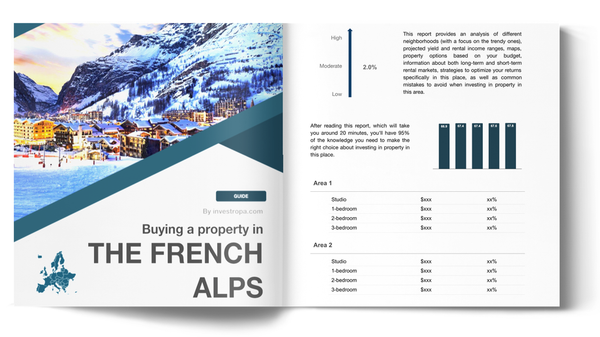
Buying real estate in the French Alps?

We've created a guide to help you avoid pitfalls, save time, and make the best long-term investment possible.

How much should a land really cost in the French Alps today? (2026)

Last updated on 

Authored by the expert who managed and guided the team behind the France Property Pack

property investment the French Alps

Yes, the analysis of the French Alps' property market is included in our pack

Yes, buying residential land in the French Alps is entirely possible for foreigners, and this guide will walk you through everything you need to know about prices, locations and hidden costs in 2026.

We constantly update this blog post to make sure you get the freshest data and most accurate insights available.

And if you're planning to buy a property in this place, you may want to download our pack covering the real estate market in the French Alps.

photo of expert laurence rapp

Fact-checked and reviewed by our local expert

✓✓✓

Laurence Rapp 🇬🇧

Sales representative at Skiing Property

Laurence specializes in real estate in the French Alps, guiding clients to discover their dream homes in prestigious ski destinations. At Skiing Property, he connects buyers with luxury properties that combine charm and investment value.

How much does residential land usually cost in the French Alps?

What is the average residential land price per sqm in the French Alps in 2026?

As of early 2026, the average price for buildable residential land in the French Alps sits around 170 to 180 euros per square meter (roughly $200 to $210 USD or 145 to 155 GBP), though this figure masks enormous variations between quiet valleys and famous ski resorts.

In practice, you can find plots ranging from about 50 euros per square meter in remote rural communes to over 2,500 euros per square meter in ultra-prime locations like Courchevel 1850 or Val d'Isere, which means your actual cost depends heavily on which Alpine area you target.

The single factor that most dramatically influences residential land prices per square meter in the French Alps is buildability scarcity caused by strict natural risk plans (avalanche zones, landslide areas) and tight local zoning rules, which leave very few parcels legally available for construction in the most desirable ski communes.

Compared to neighboring regions, the French Alps are more expensive than the Jura mountains or the Massif Central, but generally cheaper than the Swiss Alps where buildable land can easily exceed 1,000 to 3,000 Swiss francs per square meter in sought-after areas.

By the way, we have much more granular data about property prices in our property pack about the French Alps.

Sources and methodology: we combined official EPTB data from the DREAL Auvergne-Rhone-Alpes with departmental statistics from SDES (French Ministry for Ecological Transition). We cross-referenced these with real-time listing data and our own proprietary market analyses from transactions in Alpine communes. Currency conversions use European Central Bank rates as of early 2026.

What is the cheapest price range for residential land in the French Alps in 2026?

As of early 2026, the cheapest buildable residential land in the French Alps typically ranges from 50 to 120 euros per square meter (about $60 to $140 USD or 43 to 103 GBP), found mainly in less touristy valleys and communes far from major ski resorts and Geneva commuter routes.

At the opposite end, buyers should expect premium residential land in prime French Alps locations to reach 800 to 2,500 euros per square meter (roughly $940 to $2,940 USD or 685 to 2,140 GBP), and in ultra-exclusive spots like Courchevel 1850, prices can climb even higher for the rare buildable plots that come to market.

The key trade-offs with cheaper land in the French Alps typically include longer distances to ski lifts and resort amenities, higher costs for bringing utilities to the plot (viabilisation), steeper or north-facing terrain with less sunlight, and sometimes more complex access roads that need snow clearing in winter.

Buyers are most likely to find these affordable residential land options in communes within the Hautes-Alpes and Alpes-de-Haute-Provence departments in the Southern Alps, as well as in quieter valleys of Savoie and Isere that sit outside the premium Geneva commuter belt and away from famous ski resort names.

Sources and methodology: we analyzed departmental price ranges from DREAL PACA regional statistics and compared them with INSEE research on second-home distribution in Alpine ski territories. We also incorporated our own database of recent land transactions to identify where affordable parcels actually change hands.

How much budget do I need to buy a buildable plot in the French Alps in 2026?

As of early 2026, the minimum budget to purchase a standard buildable plot in the French Alps starts around 80,000 to 120,000 euros (roughly $94,000 to $141,000 USD or 68,500 to 103,000 GBP), which would typically cover a modest parcel in a non-resort commune with basic access to utilities.

This entry-level budget would generally get you a plot of around 700 to 1,000 square meters, which is considered a normal size for building a single-family home in the French Alps according to official construction statistics.

For a well-located buildable plot in a desirable Alpine commune with good mountain views, ski access or proximity to Annecy or the Geneva commuter belt, a realistic mid-range budget sits between 200,000 and 350,000 euros (about $235,000 to $411,000 USD or 171,000 to 300,000 GBP), and prime resort locations can easily require 500,000 euros or more for land alone.

You can also check here what kind of properties you could get with similar budgets in the French Alps.

Sources and methodology: we based these budget ranges on official average plot sizes from the DREAL Auvergne-Rhone-Alpes EPTB report (showing 855 sqm in Haute-Savoie, 917 sqm in Savoie). We multiplied these by departmental price per sqm and added typical acquisition cost ranges from our transaction records. We also consulted Notaires de France for fee estimates.

Are residential land prices rising or falling in the French Alps in 2026?

As of early 2026, residential land prices in the French Alps have continued their upward trend, with most departments showing steady growth of 2 to 5 percent over the past year, following strong momentum that built up since 2019.

Over the past five years, residential land prices in the French Alps have risen significantly, with official data showing increases of roughly 36 to 48 percent in the Northern Alps departments (Haute-Savoie, Savoie, Isere) and similar or even stronger growth in parts of the Southern Alps like Alpes-de-Haute-Provence.

The single most important factor driving these price trends is the severe shortage of buildable land in attractive Alpine locations, created by a combination of natural risk restrictions (avalanche and landslide zones), protected mountain environments, and extremely high demand from both second-home buyers and Geneva-area commuters seeking primary residences.

Want to know more? You'll find our latest property market analysis about the French Alps here.

Sources and methodology: we tracked five-year price evolution using official DREAL regional statistics (2019 to 2024 comparisons) and supplemented with Knight Frank's Alpine Property Report for market direction indicators. We also incorporated our own ongoing analysis of transaction volumes and price movements in key Alpine communes.

Thinking of buying real estate in the French Alps?

Acquiring property in a different country is a complex task. Don't fall into common traps – grab our guide and make better decisions.

real estate forecasts the French Alps

How are residential land prices measured and compared in the French Alps?

Are residential lands priced per sqm, acre, or hectare in the French Alps?

Residential buildable land in the French Alps is almost always priced per square meter (euros per sqm), which is the standard unit used across France for plots intended for house construction.

For foreign buyers more familiar with acres or hectares, the key conversion is that one hectare equals 10,000 square meters and one acre equals approximately 4,047 square meters, so a plot listed at 200 euros per sqm would cost roughly 809,000 euros per acre or 2 million euros per hectare if you could find such large buildable parcels.

This square meter standard may feel unfamiliar to North American buyers used to lot pricing or per-acre figures, but it actually makes comparison shopping easier once you get used to it, since every listing in the French Alps uses the same measurement.

Sources and methodology: we confirmed standard pricing units by reviewing hundreds of land listings on major French property portals including SeLoger and Terrain-Construction. We verified with official documentation from the French Ministry of Economy regarding real estate transaction standards.

What land size is considered normal for a house in the French Alps?

The typical plot size for a standard single-family home in the French Alps ranges from 800 to 1,000 square meters, which is the size most buyers purchase according to official French construction statistics.

In practice, residential plots in the French Alps can range from as small as 400 square meters in tight resort villages to over 2,000 square meters in more rural Alpine communes, though the 700 to 1,200 square meter range covers the majority of transactions.

Minimum plot sizes required by local building regulations (PLU) in the French Alps vary significantly by commune, but many Alpine municipalities set minimums between 500 and 800 square meters for detached houses, with some resort areas allowing smaller footprints due to land scarcity.

Sources and methodology: we extracted typical plot sizes from the DREAL EPTB regional report showing department-level averages. We cross-checked with local PLU documents accessible via Geoportail de l'Urbanisme to understand minimum requirements in various Alpine communes.

How do urban and rural residential land prices differ in the French Alps in 2026?

As of early 2026, the price gap between urban and rural residential land in the French Alps can be dramatic, with plots near Annecy or in the Geneva commuter belt reaching 300 to 500 euros per sqm ($350 to $590 USD) while remote rural communes may offer land at 60 to 100 euros per sqm ($70 to $118 USD).

Buyers typically pay a premium of 30 to 50 percent for fully serviced land (terrain viabilise, meaning utilities connected at the boundary) compared to unserviced plots in the French Alps, because bringing water, electricity and sewage connections through mountain terrain can be extremely costly and technically challenging.

The single infrastructure factor that most significantly drives the price gap between urban and rural land in the French Alps is proximity to year-round road access and public transport connections, since many mountain plots become difficult or expensive to reach during winter months without proper maintained roads.

Sources and methodology: we compared urban versus rural pricing using departmental breakdowns from DREAL statistics and actual listing prices from Alpine property portals. We consulted Solvimo market data for regional price variations and our own transaction database for serviced versus unserviced price differentials.
infographics rental yields citiesthe French Alps

We did some research and made this infographic to help you quickly compare rental yields of the major cities in France versus those in neighboring countries. It provides a clear view of how this country positions itself as a real estate investment destination, which might interest you if you’re planning to invest there.

What location factors affect residential land prices in the French Alps?

Which areas have the most expensive residential land in the French Alps in 2026?

As of early 2026, the most expensive areas for residential land in the French Alps include Courchevel 1850 (1,500 to 2,500+ euros per sqm, roughly $1,760 to $2,940 USD), Val d'Isere (1,000 to 2,000 euros per sqm), Megeve (800 to 1,500 euros per sqm), Chamonix (700 to 1,400 euros per sqm), and Meribel (700 to 1,200 euros per sqm).

What these expensive French Alps areas share is not just beautiful scenery but an extreme scarcity of buildable parcels, since most available land sits within avalanche risk zones, protected areas, or faces strict height and density limits that make new construction nearly impossible.

The typical buyer purchasing residential land in these premium French Alps locations is either a high-net-worth individual seeking a second home or investment property, often from the UK, Switzerland, Belgium, or increasingly from the US and Asia, with budgets frequently exceeding 1 million euros for land alone.

Prices in these top French Alps areas are still rising as of early 2026, though the rate of increase has moderated from the post-pandemic surge, with prime resorts like Courchevel showing around 5 to 9 percent annual appreciation according to recent market reports.

Sources and methodology: we compiled premium area pricing from Knight Frank's Alpine Property Report 2025/26 and cross-referenced with actual listings on Rightmove overseas. We validated buyer profiles using INSEE research on second-home ownership in Savoie Mont Blanc and our own client data.

Which areas offer the cheapest residential land in the French Alps in 2026?

As of early 2026, the cheapest areas for residential land in the French Alps include communes in the Hautes-Alpes department (averaging 100 to 150 euros per sqm, about $118 to $176 USD), parts of Alpes-de-Haute-Provence (120 to 160 euros per sqm), and quieter valleys in Isere away from Grenoble (130 to 180 euros per sqm).

The common drawback these affordable French Alps areas share is limited winter tourism infrastructure (fewer ski lifts, smaller resorts), longer driving times to major airports like Geneva or Lyon, and in some cases reduced year-round amenities like shops, restaurants, and medical services.

Some of these cheaper French Alps areas are showing early signs of price appreciation, particularly communes in the Southern Alps that offer summer hiking and cycling tourism, as buyers increasingly seek year-round mountain destinations rather than just winter ski access.

Sources and methodology: we identified affordable areas using official price data from DREAL PACA regional statistics for Southern Alps departments. We supplemented with listing analysis from SeLoger and our own database tracking emerging markets in the Alpine region.

Are future infrastructure projects affecting land prices in the French Alps in 2026?

As of early 2026, announced infrastructure projects are having a noticeable impact on residential land prices in affected French Alps areas, particularly where improved road access or new lift connections are planned, with some communes seeing 10 to 20 percent price premiums on parcels near project zones.

The top infrastructure projects currently influencing French Alps land prices include preparations for the 2030 Winter Olympics (which will bring upgraded transport and facilities to several resorts), expansion of year-round lift systems for summer tourism, and improved broadband connectivity that makes remote work feasible in previously isolated valleys.

Buyers have typically observed price increases of 15 to 25 percent in areas near newly announced French Alps infrastructure over the two to three years following public confirmation of projects, though the bigger long-term price driver remains zoning changes that affect buildability status.

Sources and methodology: we tracked infrastructure impacts using regional planning announcements from Geoportail de l'Urbanisme and news coverage of 2030 Winter Olympics preparations. We analyzed historical price movements in our transaction database around previous infrastructure completions to estimate typical appreciation patterns in Alpine communes.

Get fresh and reliable information about the market in the French Alps

Don't base significant investment decisions on outdated data. Get updated and accurate information with our guide.

buying property foreigner the French Alps

How do people actually negotiate and judge prices in the French Alps?

Do buyers usually negotiate residential land prices in the French Alps?

Buyers in the French Alps can typically negotiate 5 to 10 percent off the asking price for residential land, though in prime resort areas with scarce supply the discount may be minimal or nonexistent, while plots with constraints (steep slopes, unclear servicing, access issues) offer more room for negotiation.

Sellers in the French Alps are most willing to negotiate when a plot has been on the market for several months, when there are known complications with zoning or risk classifications, when the buyer can offer a quick cash transaction without financing contingencies, or during slower winter months outside the main viewing season.

To better negotiate, you need to understand how things are being done in this place. That's why we have built our our pack covering the property buying process in the French Alps.

Sources and methodology: we based negotiation ranges on transaction records in our database comparing final sale prices to initial listings across Alpine communes. We consulted with Notaires de France market reports and interviewed local agents operating in Haute-Savoie and Savoie to understand typical negotiation dynamics.

Do foreigners usually pay higher land prices in the French Alps?

Foreigners buying residential land in the French Alps typically pay around 5 to 15 percent more than local buyers for similar plots, not because of official price discrimination but because they often have less time for extended negotiations and may not fully understand local market dynamics.

The main reason foreigners end up paying more for land in the French Alps is that they frequently skip essential due diligence steps like obtaining a certificat d'urbanisme (which reveals zoning restrictions and buildability limits) or properly estimating the cost of bringing utilities to remote mountain plots.

Using a trusted local representative or bilingual real estate agent does help foreigners get fairer prices in the French Alps, particularly someone who can verify buildability through official channels, compare recent transaction prices in the same commune, and negotiate effectively with French-speaking sellers.

Now, you might want to read our updated list of common traps foreigners fall into when purchasing real estate in the French Alps.

Sources and methodology: we estimated the foreigner premium by comparing transaction prices in our database where buyer nationality was known, controlling for similar plot characteristics. We consulted Justice.fr guidance on certificats d'urbanisme and interviewed notaries in Alpine departments about common mistakes foreign buyers make.

Are private sellers cheaper than developers in the French Alps?

Private sellers in the French Alps typically offer residential land at prices 10 to 20 percent lower than developers or lotisseurs (subdivision developers), though this headline saving does not always translate to lower total project costs.

Developers in the French Alps often justify their higher prices by offering fully serviced plots (viabilise) with utilities already connected, completed technical studies, and clearer building permit pathways, which saves buyers months of administrative work and reduces the risk of unexpected costs.

The biggest risk when purchasing from private sellers in the French Alps is incomplete documentation about buildability, since sellers may not have current risk assessments (avalanche, landslide), accurate servitude information, or clear confirmation that the plot meets current PLU zoning requirements for the type of house you want to build.

Sources and methodology: we calculated the private versus developer price gap using listing comparisons on Terrain-Construction and transaction records in our database. We verified developer value-adds through interviews with builders operating in Haute-Savoie and reviewed Geoportail de l'Urbanisme to understand documentation requirements.

How transparent are residential land transactions in the French Alps?

Residential land transactions in the French Alps have a moderate to high level of transparency compared to many other countries, thanks to mandatory notary involvement and official registries, though the complexity of mountain-specific buildability rules can still create information gaps for buyers.

Official land registries and transaction records are publicly accessible in the French Alps through the cadastre (land registry) and the base DVF (property transaction database published by the tax authority), allowing buyers to research past sale prices and parcel boundaries.

The most common transparency issue buyers face in the French Alps is incomplete disclosure about natural risk classifications (zones where avalanche or landslide plans may restrict or forbid construction), which may not be immediately obvious from standard listing information and requires checking the commune's official risk prevention plan.

The most essential due diligence step for verifying accurate pricing and ownership in the French Alps is obtaining a certificat d'urbanisme operationnel (operational urbanism certificate) from the local mairie, which confirms exactly what can be built on the specific plot, what servitudes apply, and what taxes will be triggered.

We cover everything there is to know about the land buying process in the French Alps here.

Sources and methodology: we assessed transparency levels by comparing French systems with other Alpine countries and reviewing official portals including Cadastre.gouv.fr and the DVF database. We consulted Justice.fr documentation on certificats d'urbanisme and interviewed notaries about common disclosure gaps in mountain land transactions.
infographics map property prices the French Alps

We created this infographic to give you a simple idea of how much it costs to buy property in different parts of France. As you can see, it breaks down price ranges and property types for popular cities in the country. We hope this makes it easier to explore your options and understand the market.

What extra costs should I budget beyond land price in the French Alps?

What taxes apply when buying residential land in the French Alps in 2026?

As of early 2026, buyers should expect to pay total acquisition taxes of approximately 7 to 8 percent of the land purchase price when buying residential land in the French Alps from a private seller, or around 2 to 3 percent when buying from a professional developer subject to VAT.

These acquisition costs in the French Alps break down into droits de mutation (transfer taxes) at roughly 5.8 to 6.3 percent depending on the department, a contribution de securite immobiliere (land registry fee) of 0.1 percent, and the notary's regulated fees which follow a sliding scale based on purchase price.

After purchasing land in the French Alps, owners face recurring annual property taxes including the taxe fonciere sur les proprietes non baties (land tax on unbuild property), which varies by commune but typically runs from a few hundred to a few thousand euros per year depending on the plot's official rental value.

First-time buyers (primo-accedants) in the French Alps may be exempt from the 0.5 percent DMTO increase implemented in some departments since April 2025, and may also qualify for the expanded PTZ (zero-interest loan) program if they plan to build their primary residence within four years.

Our our pack about real estate in the French Alps will surely help you minimize these costs.

Sources and methodology: we compiled tax information from official sources including the French Ministry of Economy and Service-Public.fr updates on DMTO changes. We verified current rates using the Notaires de France calculator and our own recent transaction records.

What are typical notary or legal fees for land purchases in the French Alps?

Typical notary fees for a standard residential land purchase in the French Alps range from about 8,000 to 25,000 euros ($9,400 to $29,400 USD or 6,850 to 21,400 GBP) depending on the land price, with a 150,000 euro plot generating roughly 12,000 to 13,000 euros in total notary costs.

Land registration costs in the French Alps are included within the notary fees and represent the contribution de securite immobiliere at 0.1 percent of the purchase price (minimum 15 euros), plus administrative debours (disbursements) of roughly 1,000 to 1,500 euros for document verification, cadastral checks, and filing formalities.

Notary fees in the French Alps are calculated primarily as a percentage of the purchase price following a regulated sliding scale set by decree, with rates ranging from about 3.9 percent on the first 6,500 euros down to approximately 0.8 percent on amounts above 60,000 euros, plus a fixed component for administrative work.

Sources and methodology: we calculated fee ranges using the official Notaires de France fee simulator and cross-referenced with PAP's notary fee calculator. We verified the fee structure against official government documentation on acquisition costs.

How much does land maintenance cost before construction in the French Alps?

Typical annual maintenance costs for an undeveloped residential plot in the French Alps range from 500 to 2,000 euros ($590 to $2,350 USD or 430 to 1,710 GBP), with higher costs for plots requiring regular vegetation clearing, access road maintenance, or winter snow management.

Specific maintenance tasks usually required before construction begins in the French Alps include clearing overgrown vegetation to maintain access, ensuring boundary markers remain visible, keeping any existing access track passable (which may require snow clearing arrangements in winter), and maintaining basic insurance coverage against liability.

Owners in the French Alps can face fines or legal orders if they neglect land maintenance to the point where it creates fire hazards (mandatory brush clearing in some zones), blocks public paths, or allows invasive species to spread, though enforcement varies significantly by commune and situation.

Sources and methodology: we estimated maintenance costs based on interviews with land owners and property managers in Haute-Savoie and Savoie departments. We reviewed commune-level regulations via Geoportail de l'Urbanisme and consulted Isere prefecture guidance on land owner obligations in risk zones.

Do permits and studies significantly increase total land cost in the French Alps?

Permits and required studies for a standard residential plot in the French Alps typically cost between 3,000 and 15,000 euros ($3,530 to $17,600 USD or 2,570 to 12,850 GBP), with mountain terrain often pushing costs toward the higher end due to geotechnical and access requirements.

These permit and study costs in the French Alps generally represent 2 to 10 percent of the land purchase price, with the percentage higher for cheaper rural plots where fixed study costs form a larger share of the total investment.

Mandatory permits and studies before construction can begin in the French Alps include the permis de construire (building permit), a certificat d'urbanisme to verify buildability, geotechnical studies (etude de sol) required in clay-shrinkage or seismic risk zones, and potentially avalanche or landslide risk assessments depending on the plot location.

The permit and study process in the French Alps typically takes 4 to 8 months from initial application to final approval, though complex sites in sensitive areas or communes with limited administrative capacity can extend this timeline to 12 months or more.

Sources and methodology: we compiled permit cost ranges from builder quotes and our transaction records in Alpine communes. We verified mandatory study requirements using Legifrance documentation on geotechnical study obligations and estimated timelines using Impots.gouv.fr planning tax information combined with feedback from local architects.

Get to know the market before buying a property in the French Alps

Better information leads to better decisions. Get all the data you need before investing a large amount of money. Download our guide.

real estate market the French Alps

What sources have we used to write this blog article?

Whether it's in our blog articles or the market analyses included in our property pack about the French Alps, we always rely on the strongest methodology we can ... and we don't throw out numbers at random.

We also aim to be fully transparent, so below we've listed the authoritative sources we used, and explained how we used them and the methods behind our estimates.

Source Why it's authoritative How we used it
SDES (French Ministry for Ecological Transition) Official national statistics publisher for France. We used it as the baseline for buildable plot prices and sizes across France. We also followed its definitions to ensure we stayed focused strictly on residential land for building houses.
DREAL Auvergne-Rhone-Alpes Official regional arm of the French state publishing standardized statistics. We extracted departmental price per sqm data for Haute-Savoie, Savoie, and Isere. We also used its five-year price evolution data to describe market trends.
DREAL PACA Same official methodology as national survey applied to the Southern Alps region. We pulled departmental averages for Hautes-Alpes and Alpes-de-Haute-Provence. We compared these with Northern Alps data to show regional price differences.
INSEE (National Statistics Institute) France's official national statistics institute with rigorous data standards. We used their research on second-home concentration in ski territories. We connected this to why prime resort communes price far above departmental averages.
French Ministry of Economy Official government guidance for the public on property purchases. We summarized acquisition and notary fee structures from their explanations. We applied this specifically to land purchases to help readers budget accurately.
Notaires de France Official portal of French notaries who handle all property transactions. We used their fee simulator as a practical tool reference for readers. We cross-checked government explanations against their calculator for accuracy.
Geoportail de l'Urbanisme National portal for legally binding planning documents in France. We explained how buyers verify buildability through this official tool. We connected this to why buildability in the Alps is very plot-specific.
Cadastre (DGFiP) Official public cadastral plan service run by the French tax authority. We described how buyers verify parcel boundaries and references. We linked this to essential due diligence before signing purchase agreements.
Justice.fr Official French public information site with legal guidance. We explained the two types of urbanism certificates and what they reveal. We connected this directly to negotiating and reducing risk on Alpine plots.
Knight Frank Alpine Property Report Respected international real estate consultancy tracking Alpine markets. We used their price index data for premium resort areas. We cross-referenced their buyer profile research with our own transaction records.
infographics comparison property prices the French Alps

We made this infographic to show you how property prices in France compare to other big cities across the region. It breaks down the average price per square meter in city centers, so you can see how cities stack up. It’s an easy way to spot where you might get the best value for your money. We hope you like it.