
Authored by the expert who managed and guided the team behind the Czechia Property Pack

Everything you need to know before buying real estate is included in our The Czech Republic Property Pack
Buying property in the Czech Republic as a foreigner in 2026 is legally straightforward, but the real risks hide in paperwork traps, cooperative apartment confusion, and pressure tactics in a fast-moving market.
This guide walks you through the specific scams, grey areas, and insider knowledge that other foreigners wish they had known before signing anything in the Czech Republic.
We constantly update this blog post to reflect the latest changes in Czech real estate practices and regulations.
And if you're planning to buy a property in this place, you may want to download our pack covering the real estate market in the Czech Republic.
How risky is buying property in the Czech Republic as a foreigner in 2026?
Can foreigners legally own properties in the Czech Republic in 2026?
As of early 2026, any individual regardless of nationality can legally purchase and own residential property in the Czech Republic without needing special permits or approvals.
The main restriction foreigners should know about applies to agricultural and forest land, which has special rules for non-residents, but this typically does not affect buyers looking for apartments or houses in cities like Prague or Brno.
Because direct ownership is allowed for residential property in the Czech Republic, foreigners generally do not need to use legal structures like companies or trusts, though some investors still choose corporate ownership for tax or inheritance planning reasons.
However, if you are buying a property with land attached, your lawyer should verify whether any portion is classified as agricultural land under Czech law, as this could trigger different requirements.
Not sure what your passport allows in Czech Republic? Tell us and we'll check.
What buyer rights do foreigners actually have in the Czech Republic in 2026?
As of early 2026, foreigners buying residential property in the Czech Republic have the same core legal protections as Czech citizens because rights are tied to the property and contract, not to your nationality.
If a seller breaches a contract in the Czech Republic, foreign buyers can enforce remedies through Czech courts, including specific performance or damages, though this requires time and legal costs that make prevention far better than litigation.
The most common mistake foreigners make in the Czech Republic is assuming that a signed purchase contract means they own the property, when in reality ownership only transfers once the Czech Cadastre officially registers the buyer as the new owner.
This registration requirement is why Czech property transactions almost always use escrow arrangements, where your money is released only after the Cadastre confirms your ownership entry.


Got a question about the paperwork in Czech Republic?
Notary, tax number, bank, residence permit: ask us. We reply within 12 hours, for free.
Ask us your question →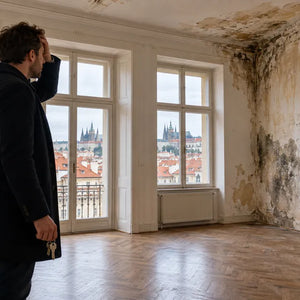
How strong is contract enforcement in the Czech Republic right now?
Contract enforcement for real estate transactions in the Czech Republic is comparatively reliable by European standards, with the EU Justice Scoreboard 2025 confirming that Czech courts rank well for efficiency and case resolution times compared to countries like France, Italy, or Spain.
The main weakness foreigners should know about in the Czech Republic is that even with a functioning court system, litigation takes months or years and costs significant legal fees, so the real goal is structuring your deal with escrow and proper documentation so you never need to sue anyone.
By the way, we detail all the documents you need and what they mean in our property pack covering the Czech Republic.
Something in the paperwork worrying you? Write to us.
Buying real estate in the Czech Republic can be risky
An increasing number of foreign investors are showing interest. However, 90% of them will make mistakes. Avoid the pitfalls with our comprehensive guide.

Which scams target foreign buyers in the Czech Republic right now?
Are scams against foreigners common in the Czech Republic right now?
Real estate scams specifically targeting foreigners in the Czech Republic are not epidemic, but the more common problem is what we call "death by paperwork," where buyers get burned through reservation fee traps, cooperative apartment confusion, or skipping ownership verification rather than encountering Hollywood-style con artists.
The property transactions most frequently targeted by problematic practices in the Czech Republic are quick apartment purchases in hot neighborhoods like Prague's Vinohrady, Karlín, or Smíchov, where market pressure encourages rushed decisions and sloppy due diligence.
The profile of foreign buyer most commonly burned in the Czech Republic is someone who relies entirely on the real estate agent's paperwork, does not hire an independent lawyer, and treats reservation agreements as mere formalities rather than binding contracts with real financial consequences.
The single biggest warning sign that a deal may be problematic in the Czech Republic is pressure to pay a large reservation fee quickly before you have verified ownership in the Cadastre or had a lawyer review the terms.
What are the top three scams foreigners face in the Czech Republic right now?
The three scams foreigners most commonly face in the Czech Republic are the reservation fee trap where you pay money under weak contract terms, the seller authority problem where someone signs without proper legal right to sell, and the cooperative apartment misunderstanding where buyers think they are getting standard ownership when they are actually buying a share in a housing cooperative.
The most common scam in the Czech Republic unfolds when an agent pressures you to sign a reservation agreement quickly and pay a substantial fee, then you discover the contract does not properly bind the seller, the fee is non-refundable under broad conditions, or the escrow arrangement favors the other party.
The most effective protection against these three scams in the Czech Republic is to verify ownership yourself through the official Cadastre before paying anything, always use attorney or bank escrow with clear refund conditions, and ask bluntly whether the property is personal ownership or cooperative before proceeding further.

We did some research and made this infographic to help you quickly compare rental yields of the major cities in the Czech Republic versus those in neighboring countries. It provides a clear view of how this country positions itself as a real estate investment destination, which might interest you if you’re planning to invest there.
How do I verify the seller and ownership in the Czech Republic without getting fooled?
Buying in Czech Republic? Get a free answer in 12 hours
Ask our team anything about buying property in Czech Republic. No sales pitch, no newsletter.
Ask us your question →
How do I confirm the seller is the real owner in the Czech Republic?
The standard verification process in the Czech Republic is to search the property in the official Cadastre database yourself, rather than relying on documents provided by the seller or agent, to confirm the registered owner matches who claims to be selling.
The official registry foreigners should check in the Czech Republic is the free public Cadastre viewer called "Nahlížení do katastru nemovitostí" at nahlizenidokn.cuzk.gov.cz, where you can see owner names, property identifiers, and any ongoing proceedings.
The most common trick in the Czech Republic is not outright identity theft but rather someone acting under a questionable power of attorney, a family member selling without proper consent, or missing spouse approval for jointly held marital property, and while these situations are not extremely common, they happen often enough that you should always verify signing authority through official channels.
Where do I check liens or mortgages on a property in the Czech Republic?
The official registry for checking liens and mortgages on property in the Czech Republic is the same Cadastre system run by ČÚZK, where encumbrances like mortgages, easements, and other rights are recorded alongside ownership information.
When checking for liens in the Czech Republic, you should request the ownership folio extract called "Výpis z listu vlastnictví" or LV, which is the standard proof document showing both the owner and all registered encumbrances on the property.
The type of encumbrance most commonly missed by foreign buyers in the Czech Republic is easements, such as rights of way or utility access rights, which may not seem important at first but can significantly affect how you use or develop the property later.
It's one of the aspects we cover in our pack about the real estate market in the Czech Republic.
Got a question about the market in Czech Republic?
Prices, areas, rentals: ask us what you'd ask a friend who knows. Free reply within 12 hours.
Ask us your question →How do I spot forged documents in the Czech Republic right now?
The most common type of document problem in Czech property transactions is not outright forgery but rather forged or abused powers of attorney, and while this is relatively rare in mainstream deals, it happens often enough that you should always verify documents through official channels rather than trusting PDFs sent by email.
The key procedural red flag in the Czech Republic is any document claiming ownership or authority that does not match what the official Cadastre shows, because the Cadastre is your source of truth and any paper trail that contradicts it should be treated as suspicious.
The official verification method in the Czech Republic is to obtain formal extracts through ČÚZK's Remote Access service, which provides documents identical to what the cadastral office issues in person, and to use verified signature services for any signing authority questions.
Get the full checklist for your due diligence in the Czech Republic
Don't repeat the same mistakes others have made before you. Make sure everything is in order before signing your sales contract.
What "grey-area" practices should I watch for in the Czech Republic?
What hidden costs surprise foreigners when buying a property in the Czech Republic?
The three most common hidden costs foreigners overlook when buying property in the Czech Republic are legal and translation fees (typically 30,000 to 80,000 CZK or 1,200 to 3,200 USD or 1,100 to 3,000 EUR), the official Cadastre registration fee (2,000 CZK or about 80 USD or 75 EUR), and ongoing building fund contributions that can include surprise special assessments for major repairs.
The hidden cost most often deliberately downplayed by sellers or agents in the Czech Republic is upcoming building repairs or HOA special assessments, and while outright concealment is not extremely common, it sometimes happens that sellers minimize how much the building fund will demand for planned roof, facade, or elevator work.
Residency rules change often. Ask us about your case.
Are "cash under the table" requests common in the Czech Republic right now?
Cash under the table requests in mainstream residential property transactions in the Czech Republic are not the default practice, but they still appear occasionally, particularly as "discounts for partial cash payment" or pressure to speed up paperwork through informal channels.
The typical reason sellers give for requesting undeclared cash in the Czech Republic is to reduce the declared sale price and therefore lower their tax exposure or other financial obligations, framing it as a benefit for both parties.
The legal risks foreigners face in the Czech Republic if they agree to undeclared payments include losing legal recourse if something goes wrong, because courts will enforce the declared contract price rather than what you actually paid, plus potential tax fraud liability and difficulty proving your investment if you sell later.
Property question in Czech Republic? We answer you.
If you're buying in Czech Republic and something isn't clear, ask us. A real person answers within 12 hours, for free.
Ask us your question →Are side agreements used to bypass rules in the Czech Republic right now?
Side agreements that bypass official rules in Czech property transactions are not widespread in mainstream deals, but they sometimes appear as informal promises about furniture, repairs, or rental possibilities that never make it into the signed contract.
The most common type of side agreement in the Czech Republic involves verbal assurances like "you can definitely Airbnb this apartment" that contradict building rules or local regulations, or promises about cooperative apartment rights that conflict with the actual cooperative statutes.
The legal consequence foreigners face in the Czech Republic if a side agreement is discovered or simply fails is that they have no enforceable claim, because Czech courts will look at the registered contract and Cadastre records rather than informal understandings, leaving you with no recourse if the seller or building association says otherwise.

We made this infographic to show you how property prices in the Czech Republic compare to other big cities across the region. It breaks down the average price per square meter in city centers, so you can see how cities stack up. It’s an easy way to spot where you might get the best value for your money. We hope you like it.
Can I trust real estate agents in the Czech Republic in 2026?
Are real estate agents regulated in the Czech Republic in 2026?
As of early 2026, real estate agents in the Czech Republic are regulated under the Real Estate Brokerage Act (Act No. 39/2020 Coll.), which introduced qualification requirements, professional liability insurance, and consumer protections that did not exist under the previous light-regulation era.
A legitimate real estate agent in the Czech Republic should hold a trade license (živnostenský list) for real estate brokerage and meet the professional qualification requirements specified in the 2020 Act, which include either relevant education or passing a professional exam.
Foreigners can verify whether an agent is properly licensed in the Czech Republic by checking the public trade register (živnostenský rejstřík) online, though in practice the more important protection is understanding that even licensed agents typically work for the seller's economic interest, not yours.
Please note that we have a list of contacts for you in our property pack about the Czech Republic.
Ask us about Czech Republic
Buying property there and stuck on something? Tell us, and we'll reply within 12 hours. Free.
Ask us your question →What agent fee percentage is normal in the Czech Republic in 2026?
As of early 2026, the normal agent commission for residential property transactions in the Czech Republic is between 3% and 4% of the purchase price plus VAT, though fees can range from 2.5% to 5% depending on the property value and negotiation.
The typical range covering most residential transactions in the Czech Republic clusters around 3% to 4% in larger cities like Prague and Brno, with some agents charging fixed fees for lower-priced properties rather than a percentage.
In the Czech Republic, the seller typically pays the agent commission, but buyers should understand that this cost is usually built into the asking price, so economically you are contributing to the fee regardless of who writes the check.
Want us to check the numbers for your case? Write to us, it's free.
Get the full checklist for your due diligence in the Czech Republic
Don't repeat the same mistakes others have made before you. Make sure everything is in order before signing your sales contract.
What due diligence actually prevents disasters in the Czech Republic?
What structural inspection is standard in the Czech Republic right now?
The standard structural inspection process for apartment purchases in the Czech Republic is often weaker than foreigners expect, with many buyers relying on superficial viewings unless they intentionally hire an independent inspector.
A qualified inspector in the Czech Republic should check foundations and load-bearing walls, roof condition and insulation, moisture and damp issues, heating and electrical systems, and window and facade integrity, particularly in the older housing stock common in cities like Prague.
The professionals qualified to perform structural inspections in the Czech Republic include certified building engineers (autorizovaný inženýr) and specialized inspection companies, though for apartments you may also want someone familiar with multi-unit building assessments.
The most common structural issues revealed by inspections in the Czech Republic are hidden moisture and mold damage, inadequate insulation in older buildings, and deferred maintenance that sellers covered with quick cosmetic renovations.
How do I confirm exact boundaries in the Czech Republic?
The standard process for confirming property boundaries in the Czech Republic is to check the cadastral map and parcel records through ČÚZK, matching the property identifiers to ensure you are looking at exactly the right unit or land plot.
The official document showing legal boundaries in the Czech Republic is the cadastral map combined with the property's entry in the Cadastre register, which together define what you are legally purchasing.
The most common boundary dispute affecting foreign buyers in the Czech Republic involves houses with land where the physical fences or usage patterns do not match the official cadastral boundaries, leading to conflicts with neighbors after purchase.
For physical verification of boundaries on the ground in the Czech Republic, you should hire a licensed surveyor (geodet) who can compare the cadastral records to the actual property markers and identify any discrepancies before you finalize the purchase.
Got a question about property in Czech Republic?
Buying, owning or renting out: ask us and get a real answer within 12 hours. Free.
Ask us your question →What defects are commonly hidden in the Czech Republic right now?
The three defects sellers most frequently conceal from buyers in the Czech Republic are moisture and mold problems disguised by fresh paint (common), noise issues from thin walls or nearby tram lines and nightlife (common in certain Prague neighborhoods like parts of Žižkov), and poor energy performance that sellers minimize when discussing the mandatory Energy Performance Certificate (sometimes happens).
The most effective inspection techniques for uncovering hidden defects in the Czech Republic include using moisture meters to detect damp behind fresh paint, visiting the property at different times including evenings and weekends to assess noise, and carefully reviewing the Energy Performance Certificate rather than accepting verbal assurances about utility costs.
Worried about what you can't see? Tell us about the place and we'll tell you what to check.

We have made this infographic to give you a quick and clear snapshot of the property market in the Czech Republic. It highlights key facts like rental prices, yields, and property costs both in city centers and outside, so you can easily compare opportunities. We’ve done some research and also included useful insights about the country’s economy, like GDP, population, and interest rates, to help you understand the bigger picture.
What insider lessons do foreigners share after buying in the Czech Republic?
What do foreigners say they did wrong in the Czech Republic right now?
The most common mistake foreigners say they made when buying property in the Czech Republic is trusting the real estate agent's paperwork completely instead of hiring their own independent lawyer from the very beginning of the process.
The top three regrets foreigners mention after buying in the Czech Republic are paying a reservation fee before verifying ownership and encumbrances in the Cadastre, not understanding the difference between personal ownership and cooperative apartments until too late, and assuming that signing a contract meant they owned the property when registration had not yet happened.
The single piece of advice experienced foreign buyers most often give to newcomers in the Czech Republic is to treat Cadastre registration as the real finish line, not the contract signing, and structure everything around that reality.
The mistake foreigners say cost them the most money or stress in the Czech Republic is discovering cooperative apartment restrictions after purchase, because financing, subletting, and resale work completely differently than standard ownership and reversing course is expensive or impossible.
What do locals do differently when buying in the Czech Republic right now?
The key difference in how locals approach buying property in the Czech Republic is that they treat the Cadastre check as a completely routine first step before any serious discussion, while foreigners often skip this or do it too late after emotional commitment to a property.
The verification step locals routinely take in the Czech Republic that foreigners often skip is immediately distinguishing between personal ownership (osobní vlastnictví) and cooperative apartments (družstevní byt), because locals know this single question changes everything about financing, rights, and resale.
The local knowledge advantage that helps Czech buyers get better deals is understanding building dynamics, such as knowing which SVJ (homeowner associations) have strong reserve funds versus which are facing expensive repairs, and having connections who can share this information before it shows up in formal disclosures.
Don't buy the wrong property, in the wrong area of the Czech Republic
Buying real estate is a significant investment. Don't rely solely on your intuition. Gather the right information to make the best decision.

What sources have we used to write this blog article?
Whether it's in our blog articles or the market analyses included in our property pack about the Czech Republic, we always rely on the strongest methodology we can … and we don't throw out numbers at random.
We also aim to be fully transparent, so below we've listed the authoritative sources we used, and explained how we used them and the methods behind our estimates.
| Source | Why It's Authoritative | How We Used It |
|---|---|---|
| Czech Government Portal (gov.cz) | Official government guidance written to explain real legal rules to the public. | We used it to confirm foreigners can legally buy residential property. We anchored baseline ownership rules before discussing practical risks. |
| Czech Cadastre Authority (ČÚZK) | ČÚZK runs the official property register that determines legal ownership. | We used it to explain when ownership actually transfers in the Czech Republic. We built verification checklists around their registration process. |
| Cadastre Public Viewer (Nahlížení do KN) | The official free tool for checking property records run by ČÚZK. | We used it to show where buyers can independently verify ownership. We made it the backbone of our anti-scam verification steps. |
| Real Estate Brokerage Act (Act 39/2020) | The actual Czech statute regulating real estate agents since 2020. | We used it to confirm agents are now specifically regulated. We explained what protections buyers can reasonably expect. |
| Transparency International CPI 2024 | The most widely cited cross-country corruption index with transparent methodology. | We used it to frame corruption risk as moderate by international standards. We informed where grey-area requests might appear. |
| World Justice Project Rule of Law Index 2025 | Independent global index used by institutions to compare legal system strength. | We used it to verify contract enforcement is reasonably reliable. We avoided over-relying on local self-assessments. |
| EU Justice Scoreboard | The EU's official comparative data on justice system performance across member states. | We used it to benchmark Czech courts against other European countries. We grounded enforcement claims in measurable indicators. |
| Czech National Bank Housing Analysis | The central bank analyzing housing market conditions using official data. | We used it to describe market pressure in early 2026. We explained why rushed decisions happen in hot segments. |
| Czech Statistical Office Crime Data | Official statistics on police-registered offenses with clear definitions. | We used it to set realistic expectations about fraud prevalence. We avoided unsupported claims about scam frequency. |
| ČÚZK Administrative Fee Schedule | The official fee list used by cadastral offices for all filings. | We used it to give the exact 2,000 CZK registration fee. We separated real costs from invented processing charges. |

We created this infographic to give you a simple idea of how much it costs to buy property in different parts of the Czech Republic. As you can see, it breaks down price ranges and property types for popular cities in the country. We hope this makes it easier to explore your options and understand the market.
